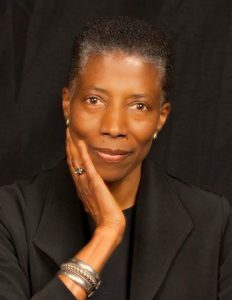
The Rev. Dr. Thandeka’s comments on my work

Dr. Zhenbao Jin re-affirms what Western Process Studies sometimes neglects: its experiential, non-speculative  foundation. 

Alfred North Whitehead, the founder of process thought,  affirmed this foundation in his magnum opus Process and Reality, when noting: “Your acquaintance with reality grows literally by buds or drops of perception. Intellectually and on reflection you can divide these into components, but as immediately given, they come totally or not at all.”

The revered scholar, beloved teacher and process philosopher Dr. John B. Cobb Jr. affirmed this foundational claim of Whiteheadian studies when noting process studies can be thought of as a “philosophy of emotions.”

 Dr. Jin explores these percepts of process thoughts—the emotions—as Qi: “The ability to directly experience the flow of energy in us,” which can strengthen and mobilize the flow of energy in us and restore “the balance of energy flow in our body, which is the basis of physical and mental health.”

His practice of creating these actual occasions of experience cured him of cancer.

As a consequence, Dr. Jin not only analyzes Process Studies, but also leads workshops to help participants achieve healing experiences.

Dr. Jin’s thus uses insights from ancient Chinese wisdom to rescue process studies from the realm of speculative Western metaphysics. He also readily acknowledges his indebtedness to it, when noting he would not be able to fully understand the this-worldly experience of life itself that permeates in his culture profound meaning without his research in the Western way of thinking of process studies: how these philosophers structure their reasoning when trying to understand true reality.

Dr. Jin’s work thus enriches process thought as it enriches his ability to reaffirm Qi as a life-transforming practice.

This meeting of East and West in his work makes him a master teacher and practitioner.

In April, Dr. Jin and I will offer a  biweekly, five-week workshop and course called Qi and Universal Connections. It’s goal: the creation of new small groups as a USA/Chinese cultural exchange program for spiritual health and wellbeing.

The Rev. Dr. Thandeka, Ph.D.

Newton, Massachusetts, USA

Founder and co-Director of Universal Connections small group workshops

https://revthandeka.org/small-groups

universalconnections.world

Co-director and co-writer of The Untrolling Project
https://revthandeka.org/the-untrolling-project

untrolling.org

East Connects with West in this Meditation, Philosophy and Dialogue Workshop

East Connects with West in this Meditation, Philosophy and Dialogue Workshop

with The Rev. Dr. Thandeka and Dr. Zhenbao Jin

At your deepest level, you know you are connected to all beings in the world, to your families and friends, to your neighbors and to people on the other side of the globe, to all animals, plants, mountains and rivers, planets and stars.

But these connections are conditioned by your connection to your body, and by the relationship between your body and mind. Those connections get blocked in today’s world.

The Rev. Dr. Thandeka and Dr. Zhenbao Jin help people cultivate those connections.

Thandeka in the West and Zhenbao in the East.

You’re invited to participate in this exciting new workshop. We will Zoom together across the globe––4 Chinese participants and 4 American participants––to connect using a powerful combination of philosophic and meditation practices formulated by Thandeka and Zhenbao.

The group is small. The goal is global: a bridge connecting the divides between individuals, classes, societies and cultures, between religions and science, and between mind and body.

Would you like to participate?

The workshop takes place March 31-May 1 in the West and April 1-May 2 in the East. We will meet via Zoom Monday and Thursday evenings (6-7:30CT) in the West which will be Tuesday and Friday mornings (7-8:30 Beijing Time) in the East. Tuition is only $300 for this world-engaging workshop!

Register here:              As a Chinese participant                As an American participant

Dr. Zhenbao Jin has a PhD in law from China University of Politics and Law. He was a lawyer, law lecturer and his law-related research focused on philosophy of law. Since his diagnosis of lymphoma in 2012 (which he healed through his meditation practices), he has shifted his focus of research to Taoism, Buddhism, Confucianism and related branches of science, as well as philosophy, especially process philosophy as developed by Alfred N. Whitehead (1861-1947) and John B. Cobb, Jr. (1925-2024).   He has developed an integrative approach to meditation which is undertaken as a practice of philosophy rather than religious belief. It focuses on the flow and circulation of life energy or Qi and maximizes your potential as a living being in healing yourself from various mental and physical problems, while providing a promising path for each individual to explore the infinite potential of oneself and humanity.

Dr. Zhenbao Jin have translated 5 books from German into Chinese: Einfuehrung ins Recht (Introduction of Law, by Prof. Reinhold Zippelius, Chinese version 2007), Juristische Methodenlehre (Methodology of Law, by Prof. Reinhold Zippelius, Chinese version 2009), Rechtsphilosophie (Philosophy of Law, by Prof. Reinhold Zippelius, Chinese version 2011), Was ist Anthroposophie (What is Anthroposophy, by Heinz Zimmermann, Chinese version 2015) and Wo Stehe Ich und Wo Geht’s Jetzt Hin (Where am I now and Where am I Going: Biography Work in the Light of Anthroposophy, by Dr. Med. Susanne Hofmeister, Chinese version 2018), all of which have been published in China. His work on meditation——The Power of Quietness: the Philosophy, Methodology and Practice of Meditation is going to be published in China in 2025.

The Rev. Dr. Thandeka, PhD, is one of America’s leading theologians and a student of one of the fathers of process studies John B. Cobb, Jr. Thandeka is the creator of the Love Beyond Belief™ initiative for moderate, liberal, and progressive congregations and the founder of Contemporary Affect Theology, which studies how traumatized emotions get transformed into life-affirming feelings of interconnection revealing something universal: humans are inextricably interconnected with all of life and have an innate capacity to experience our interconnectedness––affirming the inherent worth and dignity of every person across partisan, political and religious divides. Thandeka’s insights and contemplative practices led her to create a meditation strategy and philosophy aligned with the affective philosophic of Friedrich Schleiermacher (1768-1834)—the father of modern theories of human understanding and the father of liberal theology. As a result, Thandeka freed herself from the trauma of her early childhood experiences. She creates Universal Connections groups so others can gain access to a liberation practice of freedom.

Thandeka is author of:

 The Embodied Self: Friedrich Schleiermacher’s Solution to Kant’s Problem of the Empirical Self (1995),

Learning to be White: Money, Race and God in America (1999, German edition 2009),

and Love Beyond Belief: Finding the Access Point to Spiritual Awareness (2018).

Her essays include work in The Oxford University Handbook on Feminist Theology and Globalization (2011), and The Cambridge Companion to Schleiermacher (2005).

Her books and essays have helped secure her place as a “major figure in American liberal theology”,as Gary Dorrien notes in The Making of American Liberal Theology: Crisis, Irony, and Postmodernity, 1950-2005  (John Knox Press, 2006).

The Practice of Meditation is to Become Related

Fresco by Bo Beskow for the Meditation Room in the General Assembly Building of the UN.

The practice of meditation is to become aware of the relatedness, the relatedness between mind and body, between all the cells in the body, between human beings, between human and nature, between human and the Cosmos.

Relatedness is the final and true reality of the Cosmos. All the events and all the elements in the Cosmos are related to each other and are one with each other. There is no separate event, no separate element, and no separate human being as well.

The separation is a passing impression, an impression in which our senses, especially the eyes tend to be trapped. With our eyes, all the things seem to be separate from each other. The mountain is the mountain, the river is the river, you are you, I am I, the head is the head, the arm is the arm.

If we take what we see through the eyes as the final reality, and fail to see the oneness of the mountain and the river, you and I, the head and the arm, our existence in the world will become more and more boring, more and more weakened. Various forms of pain will occur, and  death becomes unsurmountable.

Because being trapped in a passing impression weakens the relatedness between each other, blocks the energy flow between each other and debilitate the life.

The energy is not tangible and measurable stuff. It’s simply the experience of the relatedness. It’s the evidence that the relatedness does exist and function.

To experience the fact that all the events, all the elements, including ourselves and the whole Cosmos as well are by their nature related to each other, we need to close our senses, our eyes, return to our being and consciousness as a whole,  return to the meditation.

It’s the deepest longing of each life and each human being to become aware of our relatedness with the other beings, the nature and the Cosmos. We can even say that it’s exactly for the purpose of experiencing this relatedness that the life is born out of the nothingness.

Relatedness is the major theme of all the religions and spiritual traditions and the major theme of science and philosophy as well.

With the concept of God, Allah, etc. as the creator of the cosmos, monotheism such as Christianity, Islam, etc. hints at the oneness of the Cosmos, while Buddhism, Taoism and Confucianism hint at the oneness of the Cosmos with the concept of emptiness, nothingness, Tao, etc. Oneness reveals the fundamental interrelatedness of the Cosmos.

Modern science is deeply influenced by materialism so that it‘s difficult for many scientists to understand the inherent oneness and interrelatedness of the Cosmos. However,  materialism also aims to find the final common basis of all the phenomena in the Cosmos so that their relationship between each other can be fully understood.

Scientists focus their research upon the particular phenomena and are inclined to be solely concerned with the phenomena. By contrast, religion and philosophy shift our concern back to the true nature of life and the Cosmos, in case we lose the consciousness that all the beings are one and related to each other actually.

Our pursuit of truth is about the forms, patterns and modes of the relatedness. Our pursuit of beauty is about the subjective experience of the relatedness. Both truth and beauty are relative and in flux constantly.

Due to our inherent nature of being related and one with the Cosmos, we long to experience this reality, and deepen our relationship with the Cosmos.

Accordingly there is this pursuit of goodness. Goodness is the balance between truth and beauty, the mediation between the objective and the subjective.  The practice of meditation is our constant exploration of truth, beauty and goodness, so that we can step by step come close to the eternity, to the final reality of the Cosmos and our existence in the world.