Experience Our Interconnectedness
In this Intercultural Meditation, Philosophy and Dialogue Workshop
with The Rev. Dr. Thandeka and Dr. Zhenbao Jin
Facing ecological crises and our existential ennui, there is an urgent need for a deeper understanding of our interconnectedness.
This understanding can usher in a brighter story of human nature and its potential.
Our physical and mental health and our ability to thrive are dependent upon our capacity to connect with our inner-most feelings, with others, with nature and with the Cosmos.
A deeper understanding of our interconnectedness won’t be gained in a science laboratory, but has to be explored by each individual through a systematic practice of self-observation and deep dialogue with others, drawing on resources from different traditions and insights from the latest findings in science and philosophy. And the process has to be experienced in an environment of safety, trust, joy, love, compassion, hope, vitality and the flow of Qi—the energy that nourishes life and sustains emotional, mental and physical development.
We invite you to participate in this world-engaging workshop. We will Zoom together across the globe to connect using a powerful combination of ancient Chinese wisdom, modern Western spiritual insights and contemporary findings in science and philosophy, so we can embark together on a new journey for humankind’s wellbeing, happiness and care.
The group will be small. The goal global: connecting the current divides between individuals, classes, societies and cultures, between religions and science, between mind and body, and between human beings, nature and the Cosmos.
Would you like to participate?
The workshop takes place Sundays, October 5-December 7 8amET/8pmBT. each session lasts 2 hours.
Tuition is only $300 for this world-engaging workshop!
Register here: https://www.paypal.com/ncp/payment/3ER66U6UZ6SFE
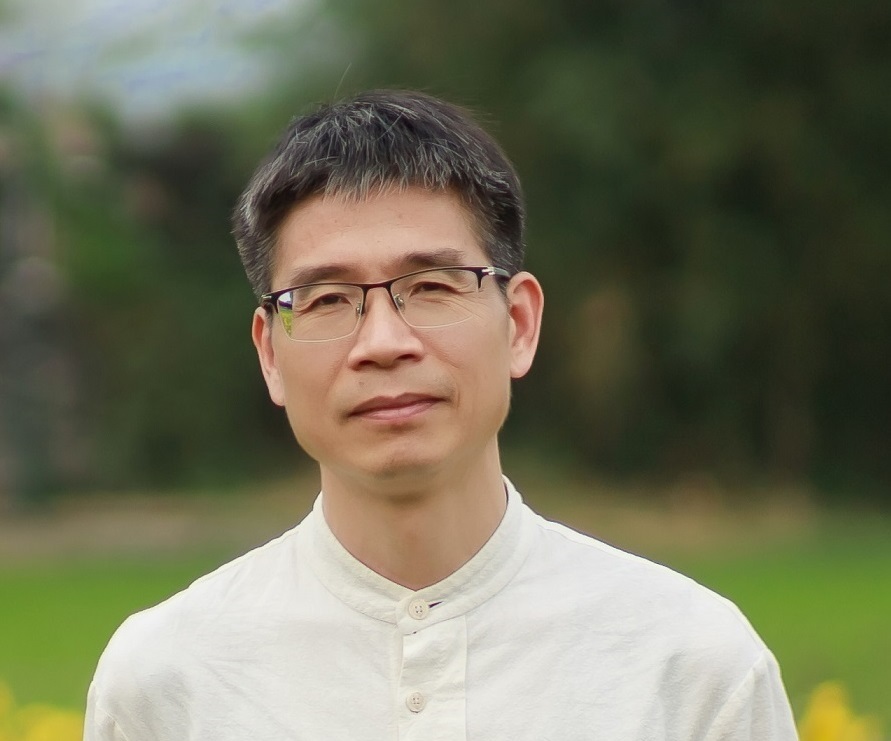
Dr. Zhenbao Jin has a PhD in law from China University of Politics and Law. He was a lawyer, law lecturer and his law-related research focused on philosophy of law. Since his diagnosis of lymphoma in 2012 (which he healed through his meditation practices), he has shifted his focus of research to Taoism, Buddhism, Confucianism and related branches of science, as well as philosophy, especially process philosophy as developed by Alfred N. Whitehead (1861-1947) and John B. Cobb, Jr. (1925-2024). He has developed an integrative approach to meditation which is undertaken as a practice of philosophy rather than religious belief. It focuses on the flow and circulation of life energy or Qi and maximizes your potential as a living being in healing yourself from various mental and physical problems, while providing a promising path for each individual to explore the infinite potential of oneself and humanity.
His work on meditation––The Power of Quietness: the Philosophy, Methodology and Practice of Meditation is expected to be published in 2025. Additionally, Dr. Zhenbao Jin has translated 5 books from German into Chinese: Einfuehrung ins Recht (Introduction of Law, by Prof. Reinhold Zippelius, Chinese version 2007), Juristische Methodenlehre (Methodology of Law, by Prof. Reinhold Zippelius, Chinese version 2009), Rechtsphilosophie (Philosophy of Law, by Prof. Reinhold Zippelius, Chinese version 2011), Was ist Anthroposophie (What is Anthroposophy, by Heinz Zimmermann, Chinese version 2015) and Wo Stehe Ich und Wo Geht’s Jetzt Hin (Where am I now and Where am I Going: Biography Work in the Light of Anthroposophy, by Dr. Med. Susanne Hofmeister, Chinese version 2018), all of which have been published in China.
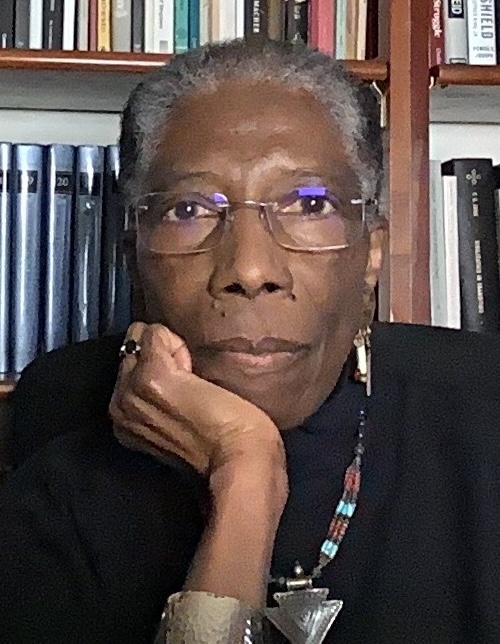
The Rev. Dr. Thandeka, PhD, is a Unitarian Universalist minister and one of America’s leading theologians. She is the founder of Contemporary Affect Theology, which uses research from the brain science of emotions, Affective Neuroscience (AN) to study how traumatized emotions get transformed into life-affirming feelings of interconnection revealing something universal: humans are inextricably interconnected with all of life and have an innate capacity to experience our interconnectedness––affirming the inherent worth and dignity of every person across partisan, cultural and religious divides.
Thandeka used insights from AN to track down the trauma foundational to 2000 years of Christian antisemitism (as documented in her book Love Beyond Belief: Finding the Access Point to Spiritual Renewal), 300 years of American racism (as documented in her book Learning to Be White: Money, Race, and God in America) and the emotional disarray in America today. These insights have been combined into a new body of work called The Untrolling Project, which reveals the sources of our divisions and the relational bridge we can use to reconnect––Universal Connections small group work. Her other publications include her book, The Embodied Self: Friedrich Schleiermacher’s Solution to Kant’s Problem of the Empirical Self, and essays in The Oxford University Handbook on Feminist Theology and Globalization and The Cambridge Companion to Schleiermacher. Her books and essays have helped secure her place as a “major figure in American liberal theology,” as Gary Dorrien notes in The Making of American Liberal Theology: Crisis, Irony, and Postmodernity, 1950-2005 (John Knox Press, 2006). Thandeka has taught at The Czech Unitarian Academy in Prague, Williams College, Harvard Divinity School and Brandeis University, and has been a Fellow at the Stanford Humanities Center at Stanford University, a Visiting Scholar at the Center for Process Studies at Claremont School of Theology in Claremont California and Union Theological Seminary in New York City.
 meditationtaoist