A Life in Which Faith and Academic Work Resonate with Each Other

In Memory of Professor John B. Cobb Jr.
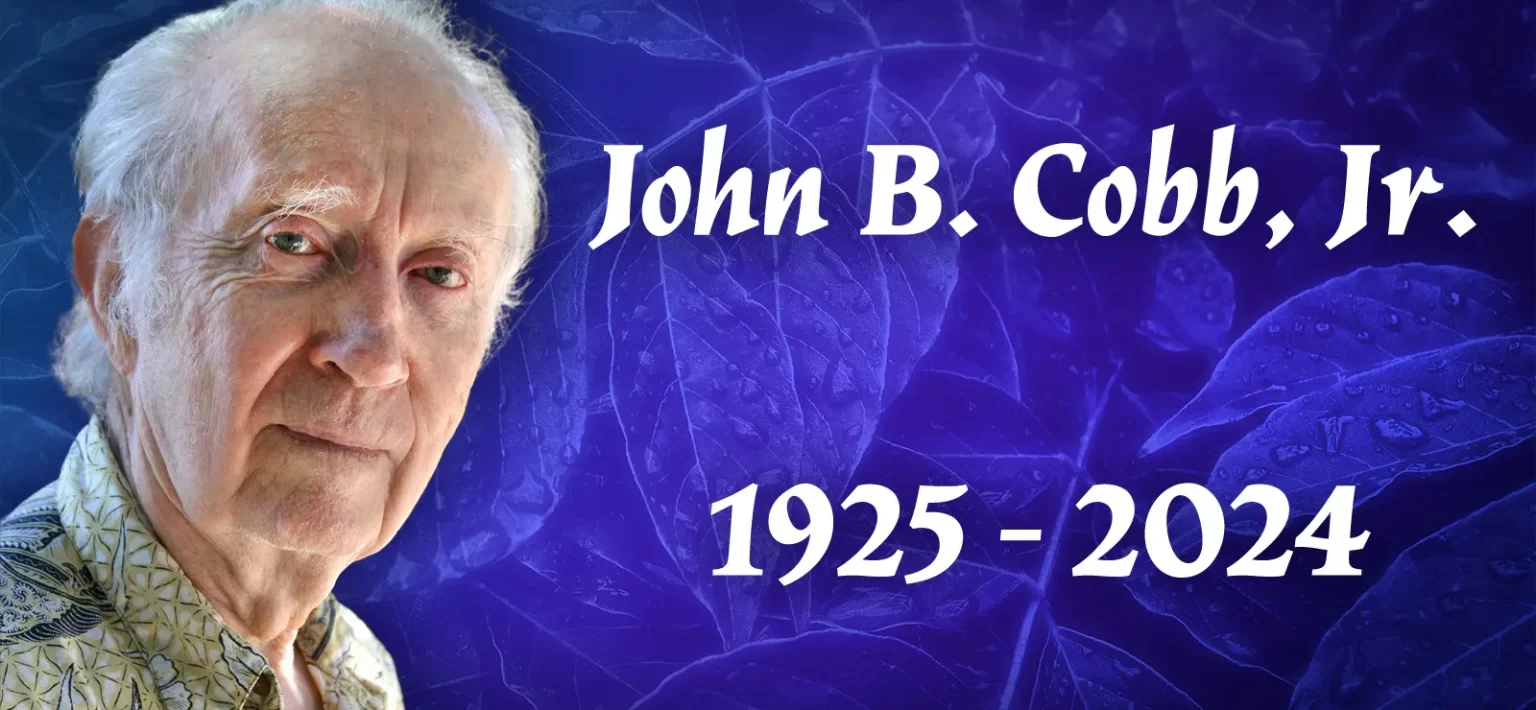
On the afternoon of Friday, December 27, just after Christmas, I practiced meditation in my living room for two hours. When I finished and had a look at my WeChat, I saw in the  “Blue Planet” chat group news that Professor John B. Cobb Jr. had passed away.

That same day, I also received an email announcement from the Center for Process Studies in the United States. It said that Professor Cobb had remained active until the very last days of his life, continuing to care deeply about the things that mattered most to him. A few days earlier, he had suffered a fall, after which his health declined rapidly. On the evening of December 26, he passed away peacefully at home, accompanied by his family. At that moment, there were only six weeks left until his one-hundredth birthday, on February 9, 2025.

To be able to live a life such as Professor Cobb’s is a profound blessing. Part of that blessing may be attributed to fortunate circumstances, but more importantly, I believe, it came from his lifelong, unrelenting search for truth and for the true reality of life itself.

He was a theologian, a devout Christian, and at the same time an outstanding philosopher who bridged past and future in the history of philosophy. His faith did not remain confined to the church; it permeated every aspect of his life. His philosophy did not remain in the realm of the intellect; it penetrated his entire being—body and soul alike. Precisely because of this, he was able to maintain physical health, mental clarity, and inner vitality throughout what can only be described as a long life, right up to its final stage.

On Christmas Eve last year, I received a holiday greeting email he had sent out through the Center for Process Studies. In the message, he mentioned that he was ninety-eight years old. At that age, his eyesight, hearing, and even his cognitive abilities were still fairly good. The only thing he complained about was his memory. While he still could, he said, he wanted to look back on his “legacy.”

He wrote that his most important legacy consisted of the institutions he had helped to found. These institutions were all doing their work responsibly, responding to what was happening in the world. He hoped that they would not prioritize his own opinions, which he considered outdated.

Among these institutions, the first was the Center for Process Studies. Through its work, process philosophy moved from the margins of American academia into the mainstream. The second was the Process and Faith network. This project emerged because, from the very beginning, a significant portion of those most interested in process thought came from church communities. These people could not fully accept traditional Christian dogma, yet they believed that Christianity contained elements that were profoundly important both for themselves and for the world as a whole.

Professor Cobb explained that the process theology that emerged from this context belongs to Christian theology, yet it is a form of Christian theology that appreciates and learns from other spiritual traditions. The Process and Faith network serves Christian faith, but it also serves other spiritual traditions. One of the most important contributions of process philosophy, he emphasized, is that it provides an inclusive perspective through which diverse spiritual traditions can be understood in a positive way.

He also mentioned the Institute for the Postmodern Development of China, founded by Dr. Wang Zhihe—one of the pioneers of contemporary process philosophy in China—and his wife, Dr. Fan Meijun. Thanks to the efforts of this institute, process thought has gained growing influence in China.

Beyond the development of process thought itself, the pressing issues that concerned Professor Cobb most deeply were ecological civilization and Sino–American relations. Together with some of his colleagues, he felt profound anxiety about the fact that the United States, in its attempt to control the world, had come to see China as its greatest obstacle. He noted that some prominent Americans had even stated that nuclear war might be acceptable. The space for dialogue was shrinking, replaced by mutual demonization.

In response, they launched the Living Earth Movement, with the aim of promoting open discussion among nations, especially between China and the United States.

He believed that unless China and the United States—the world’s two largest economies and most powerful nations—could cooperate and exercise leadership together, there would be no hope for the planet. Among all American nongovernmental organizations and initiatives, he believed that none were better positioned to cooperate with China than those guided by process philosophy.

The institutional “legacies” he mentioned in this letter also included the Cobb Institute and the Institute for Ecological Civilization.

He concluded by saying that he was deeply pleased that all these institutions were engaged in important work, led by excellent leaders, and keenly attuned to their environments. Moreover, when necessary, they were able to support one another. Together, they had formed a process community. He himself, he said, was only one among many who had participated in creating this community. Even so, he regarded it as his legacy and was glad to see that his departure would not disrupt its functioning.

As a theologian and philosopher who reportedly published more than fifty books, when Professor Cobb reflected on the legacy he would leave behind at the end of his life, he did not emphasize the unique ideas he had contributed in comparison with his predecessors, nor did he single out his innovations within process philosophy. Instead, he listed the institutions he had helped to establish. To me, this reflects the fact that he saw himself first and foremost as a Christian whose entire life should be an effort to live his faith.

Like philosophy, faith concerns our understanding of the nature of life and the universe. Unlike philosophy, however, faith requires more than forming concepts and theories in the mind; it demands that these ideas be embraced as convictions and lived out in every aspect of one’s life.

For a genuine believer, it is not enough merely to claim what is the true nature of life and the universe, or to publish one’s reflections in articles and books. What truly matters in life is not knowledge in itself, but whether we experience our existence as meaningful, valuable, and hopeful. Knowledge about life and the universe deserves to be called knowledge only when it enables us to genuinely feel the meaning, value, and hope of being alive.

In this light, I believe I can understand why Professor Cobb regarded the institutions he helped to found as his primary legacy. As a Christian, a process philosopher, and a theologian, he had internalized the core ideas of process philosophy and process theology to the very marrow of his being.

The core perspective of process thought can be said to overturn prevailing mainstream assumptions. It denies that the essence of the universe is static, material substance; instead, it understands reality as pure experience, relationship, process, and event. Everything exists in perpetual change, and within this eternal flux there is no material substance that can be firmly grasped as fixed reality.

Eternal change does not, however, reduce the world to meaningless chaos, because the fundamental principle of a universe in flux is creativity—or innovation. It continuously brings forth the new, generating order and structure, and on that basis developing further novelty in an unending, self-renewing process.

For this reason, process philosophy also includes a concept of God. This concept does not arise from arbitrary belief, but from the necessity of forming a coherent framework capable of explaining the world. On the one hand, God is manifest as the phenomenal world; on the other, God is the fundamental cause that propels the development and transformation of that world. These constitute God’s two basic natures.

It is clear that even if one were to arrive at these insights purely through rational inquiry, one would recognize that writing them down and publishing them is only part of the task. A universe that is essentially dynamic and continuously self-renewing demands that we live out this life-generating principle within our own lives.

Likewise, given the finitude of our individual lives, it is entirely reasonable to ensure that the principles we have recognized and lived by can continue to be disseminated and developed through others, in an organized way, so that humanity may have hope of sustaining peace and flourishing over the long term.

In both respects, Professor Cobb’s diligence, focus, consistency, and extraordinary achievements reached nearly the limits of what a human being can accomplish in a single lifetime. Through more than fifty books—both single-authored and co-authored—he recorded his lifelong research and reflections on theology, philosophy, and related fields such as ecology and economics. At the same time, through concrete, sustained practical efforts, he influenced countless outstanding individuals and established the institutions that would carry his work forward.

For many of us, abandoning a mechanistic materialist worldview during our lifetime would be an immense challenge. For Professor Cobb, however, this was never an issue. He was born into a family in which both parents were Christian missionaries.

While many children raised in Christian families suffer psychological harm due to overly conservative beliefs, Christianity’s influence on Professor Cobb was consistently positive. In his autobiography, he states at the outset that his basic faith and sense of mission were rooted in his childhood, and he always expressed deep gratitude toward his parents.

For those who have not experienced such a family and cultural environment—especially those raised in more materialist households—understanding this sentiment can be difficult. At its core, faith is not merely an intellectual matter; it is a deeply embodied experience of mind and body, sometimes even carrying a mystical dimension.

In his autobiography, Professor Cobb recounts an experience from around the age of twenty-one. One evening, as he knelt by his bed to pray before sleep, he suddenly felt as though the room was filled with the presence of the divine. He experienced an unprecedented warmth—and unmatched ever since—along with a sense of love and complete acceptance. The feeling may have lasted about a minute before gradually fading. Yet the pure joy of that moment remains precious to him even in retrospect.

Nevertheless, when he entered the humanities program at the University of Chicago at age twenty-two, he underwent a crisis of faith. Influenced by his prior experience in the military, he did not want to base his life on beliefs that could not withstand scrutiny. He sought to immerse himself in the rational world, subjecting his faith to thorough examination.

He pursued this effort rigorously. When studying the works of any thinker, he said, he always tried to place himself within that person’s perspective, temporarily viewing the world as they did. He studied one thinker after another, most of whom lived in intellectual worlds in which God played no role. As a result, he found that he could no longer return to the earlier world in which God had been omnipresent. For him, this constituted a genuine crisis of faith.

In order to resolve this crisis—and to affirm God within a modern framework of thought—he encountered process philosophy and the founder of process theology, Professor Charles Hartshorne (1897–2000) of the University of Chicago Divinity School.

He completed his master’s program in the humanities ahead of schedule and transferred to the Divinity School to pursue his doctorate. The atmosphere there provided him with strong support, enabling him to conduct an open-ended inquiry into whether belief in God was still possible in that historical context.

While it may be natural for a child or adolescent to feel and believe in God’s presence, affirming such belief through speculative reasoning in an era dominated by mechanistic materialism and scientism is a formidable challenge.

From Hartshorne, however, Professor Cobb realized that another coherent mode of thought was possible: one need not explain the world in terms of matter in motion, but could instead understand it as a field composed of interrelated events. Moreover, each event is itself a self-sustaining existence. “In this sense,” he explained, “each event is first a subject that cares about other events, and only then an object cared about by others.”

Gradually, through this process of intellectual exploration and reconstruction, Professor Cobb felt that he “slowly recovered a rational faith in God and the ability to speak about God.”, although this did not restore the intimacy he had felt with God in his youth. Even as his conviction in God’s reality deepened, that earlier intimacy did not return.

The core ideas that enabled him to rebuild his faith came from process philosophy, which had been greatly developed by the British mathematician and philosopher Alfred North Whitehead (1861–1947). Hartshorne, notably, had been Whitehead’s teaching assistant during Whitehead’s years at Harvard.

Professor Cobb commented on Whitehead’s thought in these words: “Whitehead awakened in me such a confidence that the deeper I probed, the more I would like to know. I discovered a unique, comprehensive perspective. It offered extraordinary originality and insight into physics, personal faith, education, and many other issues. I encountered a combination of professional rigor and personal wisdom that I had found nowhere else.”

He even characterized his own role in this way: “If my personal career proves to have genuine historical significance, it will be because, in a time highly unsympathetic to Whitehead’s thought, I managed to keep interest in it alive.”

Professor Cobb did not see himself as an original philosopher. He said that his role was “simply to clarify and recommend Whitehead’s thought as I understand it, to support people in relating it to other philosophies, and especially to encourage its application to new fields.” He added, “I am not especially concerned with revising the details of the system. What matters more to me is using its fundamental insights to reshape the way modern Western thought guides our view of the world.”

My own study of Whitehead and Professor Cobb is not deep enough for me to judge whether these are over modest remarks. What is beyond doubt is their sincerity, which enhances my respect for Professor Cobb. For a scholar to so genuinely devote himself to another thinker’s insights, and to commit his entire life to bringing those insights into every dimension of the society—rather than striving for academic novelty—can only arise from deep fidelity to truth and to life itself.

Unlike Professor Cobb, I did not come to process philosophy through a crisis of faith, but through a health crisis. Faith does not appear to be a pressing issue for most Chinese people. This may not be a good thing, but neither is it necessarily bad. Most Chinese do not habitually reflect on the ultimate nature of life and the universe; living each day steadily and pragmatically constitutes a mainstream life philosophy.

Yet just as Professor Cobb inevitably faced a crisis of faith in his twenties, crises that shake the foundations of life will eventually confront us as well—if not spiritually, then physically.

What helped prepare me, to some extent, for my diagnosis of lymphoma at the age of thirty-eight was my doctoral research in philosophy of law. This research made me aware that humanity has never reached a final answer to the question of what it means to be human. It remains an open question. Scientific inquiry represents another path—outside of religious belief—through which humanity attempts to respond to this question. Contrary to common assumptions, however, the essence of science is not the discovery of definitive answers, but the ongoing pursuit of dialogue and the cultivation of shared understanding.

Growing up in a cultural context more deeply influenced by Daoist, Confucian, and Buddhist traditions made it easier for me to respond to my health crisis in a different way than a purely Western framework might allow. Especially after my studies in legal philosophy had already revealed how deeply my understanding of health and illness had been shaped by Western assumptions, I knew I had every reason—and indeed every necessity—to explore life’s reality and potential from another perspective.

For most people, a cancer diagnosis is terrifying, and they cannot imagine the possibility of discovering an inner capacity for self-healing. For me, however, this was a natural inference and choice. This, I believe, is precisely the significance of consciously engaging in rigorous reflection on questions of truth. Without such training, people are often governed by instinctive reactions, impulses, and emotions, and are unable to make rational judgments.

As I began to experience, through the practice of qigong and meditation, the innate energy and power of the body itself—and to witness the resulting effects of healing and improved health—I knew this was neither accidental nor trivial.

I began to understand why, as Chinese, we do not share the Christian tradition’s belief in a supernatural personal God. From their inception, Daoist and Confucian thought had already articulated a cosmology and a corresponding view of life that closely parallel Whitehead’s process philosophy.

The essence of the universe is not immutable material substance, but a process endowed with intrinsic creativity and developmental momentum. Our lives, accordingly, are the same. We do not need to place our hope for salvation in an external God or savior. What we need to have faith in is ourselves—in the innate, natural life force within us.

Naturally, as I approached the age of forty, I found my own faith—not faith in an external supernatural power, but faith in a cosmology rooted in China’s ancient traditions, and faith in my own inner vitality.

It was a faith that arrived late, yet at exactly the right moment. It did not arise spontaneously when my cognitive capacities were still underdeveloped, but emerged when those capacities had matured, in the midst of confronting a major life crisis, through a mode of inquiry that was highly rational and reflective, yet also deeply empirical.

As my thinking, research, and empirical practice—mainly various forms of meditation including sitting and moving—progressively confirmed the robustness of my understanding of core Daoist and Confucian principles, I began to form an intuition: within Western intellectual traditions, there must exist forms of thought capable of resonating with Daoist and Confucian cosmology.

Guided by this intuition, my interest in process philosophy deepened. I first encountered process philosophy during discussions on ecovillages, where I met Dr. Wang Zhihe. Although I did not immediately immerse myself in its study, my repeated encounters with process thought soon convinced me that it was an area worthy of deeper exploration, particularly as I searched more consciously for Western counterparts to Daoist and Confucian cosmology.

Whitehead integrated physics, mathematics, and philosophy, and articulated a worldview that—while not entirely new—was radically subversive of the dominant consciousness of our time: namely, that the essence of the universe is life, not matter.

He argued that unless we unite matter and life, with life as the essential nature of the “true reality,” we can understand neither matter nor life.

This insight broke down the barriers between my Daoist- and Confucian-inspired cosmology and science—especially physics—bringing my understanding of the world to an unprecedented sense of harmony and wholeness. While the full implications of this insight still await further exploration and empirical validation, the confidence it inspired was already immensely strengthened.

My writings on these ideas, as well as my work in meditation-based healing, drew the attention of Dr. Wang Zhihe. In December 2022, at his introduction, I was invited by the Cobb Institute to deliver an online English-language lecture titled “Healing in a Chinese Process Way” to more than thirty Chinese and American scholars, including Professor Cobb himself.

Since Whitehead, process philosophy has exerted significant influence in theology, interreligious dialogue, ecology, education, psychology, and even physics and biology. Yet it has not produced any major impact in the field of medicine and healing. In my view, this may be precisely the domain in which process philosophy has the greatest potential to persuade the broader public, gradually replacing mechanistic materialism in mainstream consciousness.

Professor Cobb responded to my lecture with great enthusiasm. In his welcoming remarks, he said:

“You are a kind of marvelous ideal of what I think can be produced today best in China. I do think China has the potential, for example, to give spiritual leadership to the world, just because it has gone through a period in which the government had so minimized that dimension. You approached this simply open-mindedly, and looking for wisdom. So many of us are kind of stuck in one tradition or another and have difficulty in really being fully open to all the others.”

At the conclusion of the lecture, he commented:

“You open up a world of non-physicalistic ways of helping health. This is extremely important. But I’m so eager that the control over the university by scienticism can be broken. And I think the kind of evidence that you provide have a real chance of making breakthrough. … I so appreciate your openness to evidence. You encounter what you encounter. You evaluate. You don’t bring some advance notion of what is right or wrong, what is allowed and what is not allowed. Great achievement.”

For more than a decade, my research into meditation and Daoist, Confucian, and Buddhist traditions has been conducted independently, without affiliation to any academic institution or organization, guided solely by my own inquiry and empirical practice. To receive such high praise from a figure of Professor Cobb’s stature and influence moved and encouraged me deeply.

Moreover, I found myself entertaining a bold thought. In my view, meditation practices integrating Daoist, Confucian, and Buddhist traditions with process philosophy not only offer a thorough path to healing disease, but more importantly, reveal the principles of dynamic balance and development between body and mind—pointing toward a path of sustainable human flourishing.

For Professor Cobb, already ninety-eight at the time, if engaging in such practices could improve or even reverse aspects of his physical and mental condition—including strength and memory—it would powerfully demonstrate the relevance of the integrative approach of meditation for our age. It would also compellingly show that process philosophy is not merely abstract theorizing confined to academic ivory towers, but something directly connected to everyday life.

Process philosophy needs to be understood by ordinary people, and in combination with Eastern meditation traditions, to offer natural healing and cultivate confidence in the boundless potential of human life. Such a vision would represent an unprecedented liberation in human history.

I wrote Professor Cobb an email outlining these thoughts, offering to support him in this exploration and to serve as a dialogue partner. I was aware that this proposal might seem presumptuous or naïve. Yet he replied promptly.

He found my thinking inclusive and comprehensive. He foresaw a great impact on my part through bringing Chinese healing to the United States in a much stronger way. With healing we can teach a way of thinking. He said he did hope we could have hours of face-to-face conversation about this.

Regarding my suggestion that such practices might help him live longer, however, he confessed to having mixed feelings. He said he was ready to die. But if he could be useful, he wanted to do what he could before dying.

He said he had not had a strong sense of needing to meditate and had done very little. He was not looking for anything to add to his daily schedule. The Christian form of meditation, he explained, was to be open to God’s call. In Whiteheadian terms, this means trying to keep the subjective aim of each occasion close to the initial aim. But he would appreciate discussion.

I found Professor Cobb’s response entirely understandable, and it allowed me to glimpse his inner world more deeply. Even among the great figures who have offered humanity profound insight into itself—Buddha, Jesus, Laozi, Confucius—their fundamental dispositions and ways of experiencing the world were likely quite different.

Although I believe our era calls for deep integration of the wisdom of all great traditions, we cannot expect a sage like Professor Cobb—who spent his entire life immersed in Christian faith and Western intellectual traditions—to swiftly embrace and identify with another spiritual tradition, especially one as distant from Western modes of thought as Daoism.

Professor Cobb himself seemed aware of this. In his autobiography, he writes at the outset: “I have not subjected my childhood faith to sufficient criticism. I may still cling too strongly to aspects of that faith which I continue to value. That faith may still shape my perspectives and hopes more than it should.”

In April 2023, I planned a trip to the United States. In addition to visiting Zen master Reirin Gumbel of the Milwaukee Zen Center, retired NASA physicist and philosopher Timothy Eastman, and Dr. Matthew Segall of the California Institute of Integral Studies, I also intended to visit Dr. Wang Zhihe and Professor Cobb in Claremont. I hoped this would allow for deeper discussion of meditation, perhaps even inspiring Professor Cobb to practice more seriously.

Unfortunately, events did not unfold as hoped. I held a ten-year U.S. visa and needed only to complete an online registration. The simplicity of the process led me to neglect proper preparation, including failing to book a return ticket, since I was unsure how long I would remain in the United States.

Upon landing at San Francisco International Airport, I was stopped by customs officers. They found the online announcement concerning my workshop which said  donations were welcome at the website of the Milwaukee Zen Center, and concluded that my travel purpose violated the terms of a tourist visa. I was deported, my ten-year visa was canceled, and I was barred from entering the United States for five years.

When I informed Professor Cobb of this, he was deeply regretful. He even speculated that my deportation might have been related to mentioning him in my travel plans, since he had never supported American imperialism. He worried that his recent book Confessions, which directly criticized U.S. imperialism, might have drawn the attention of the government, and that my visit was therefore perceived as politically sensitive.

In this way, I permanently lost the opportunity for in-person, in-depth dialogue with one of the greatest thinkers of our time.

Even so, the honest record of his deep reflection on the faith that he had followed since his childhood and the strengthening of that faith in this process in his autobiography, his thoughtful comments on my explorations, and his sincere responses to my proposals have made him, in my mind, more than anyone else, a luminous lighthouse. He showed me how one might live an entire life.
Meditation as the Methodology of Process Philosophy

In his preface to Process and Reality, Whitehead said that “the true method of philosophical construction is to frame a scheme of ideas, the best that one can, and unflinchingly to explore the interpretation of experience in terms of that scheme.”[1] With experience, Whitehead meant all the experiences we, as a human being, have or can have, consciously or unconsciously: “it must be one of the motives of a complete cosmology to construct a system of ideas which brings the aesthetic, moral and religious interests into relation with those concepts of the world which have their origin in natural science.”[2]

The strength of the western intellectual tradition lies exactly in its ability of developing systematic ideas for the interpretation of the reality. However, when doing so, it is used to presuppose the existence of a reality that is absolutely independent from the being of the observer or the thinker and is absolutely unchanging, like the Forms or Ideas of Plato, God that is absolutely supernatural and transcendental or unchanging substance of matter or natural laws.

While the western philosophy focuses on objectivity or knowledge, by contrast, argued Mou Zongsan (1909-1995) , one of the most influential Confucian philosophers of the 20th century, the Chinese philosophy with Confucianism, Buddhism and Taoism as its main pillars, focuses on subjectivity.[3]

That means, the whole focus of the Chinese philosophy, is not speculative, but more meditative. Its purpose is not to frame a scheme of ideas under which all our experience can be interpreted, but to cultivate our subjectivity and morality, so that we can reach the highest level of humanity, or rather, be continuously on this process of transformation toward the higher level of human potential.

Obviously the Whiteheadian philosophy still lies in the western tradition as its ambition is first of all to elaborate a scheme of ideas under which all our experiences can be interpreted, but not to cultivate the human potential or humanity. However, by proposing that experiences, instead of bits of dead matter, or “thing-in-itself” that exists independently of our human perception as postulated in Immanuel Kant’s philosophy, are the final real things of which the world is made up, [4] Whitehead made a breakthrough in the tradition of the western philosophy so that it can now comfortably align with the core precepts of the Chinese philosophy. Indeed Whitehead himself was aware of this as he said that “the philosophy of organism seems to approximate more to some strains of Indian, or Chinese thought, than to western Asiatic, or European thought. One side makes process ultimate; the other side makes fact ultimate.”

Experience is a process. It never stays. Our subjectivity consists of experiences and thus never stays as well.

Of course Whitehead was not talking about our personal experiences,  but rather experiences as the fundamental building blocks of the universe. However, experiences as the fundamental building blocks of the universe should not be irrelevant or independent from our daily experience, as they are also the fundamental building blocks of our own experiences.

Strictly speaking, experience as the fundamental building blocks of the universe and our daily experiences should be one and the same. But what does this mean? Basically no one would say in his or her daily experiences, like having dinner, or talking to a customer, or working in the laboratory, he or she experiences the ultimate truth of the reality.

However, I argue that by trying to frame a coherent, logical and necessary scheme of general ideas in terms of which every element of our experience can be interpreted, Whitehead provided a way by which our experiences can be better understood, clarified, transformed and intensified. It’s not simply about interpretation, but also at the same time, and more important, in a way Whitehead himself was not fully aware of, about the cultivation of our subjectivity and our morality, and the transformation of our whole being in its constant interaction with the universe.

When this is made conscious, the effort to interpret and to understand in our philosophical speculation will then be transformed into the practice of meditation, which is not simply about producing new knowledge, but first of all, about the transformation and cultivation of our very own being. Thus a bridge is built between the western tradition and the eastern tradition, between mind and body, between the longing to know and the longing to become.

And accordingly, a methodology for process philosophy is made possible. Whitehead has introduced in the very beginning of Process and Reality his method of philosophical work, that is,  the play of a free imagination, controlled by the requirement of coherence and logic.[5] This method also has its problems. Our life experiences are limited and our capacity to experience seems to be doomed to weaken as we grow old. If this is true, that means we can never have a methodology that is sufficiently reliable for us to achieve the goal of philosophy,  that is, to know the true reality of our being and the universe.

Therefore, the method of imaginative generalization has to be continuously evaluated and tested against its performance in practice and refined accordingly, so that we know that we are in the right and reliable direction. For this purpose, the practical effect of philosophical reasoning, rather than its seemingly consistent and logic scheme of ideas, has to be clarified. And this practical effect has to be on the transformation of our very own being, which means our subjectivity, or our capacity to experience. Speculation has to be transformed into the practice of meditation, with whose practical effect a methodology of process philosophy is possible.

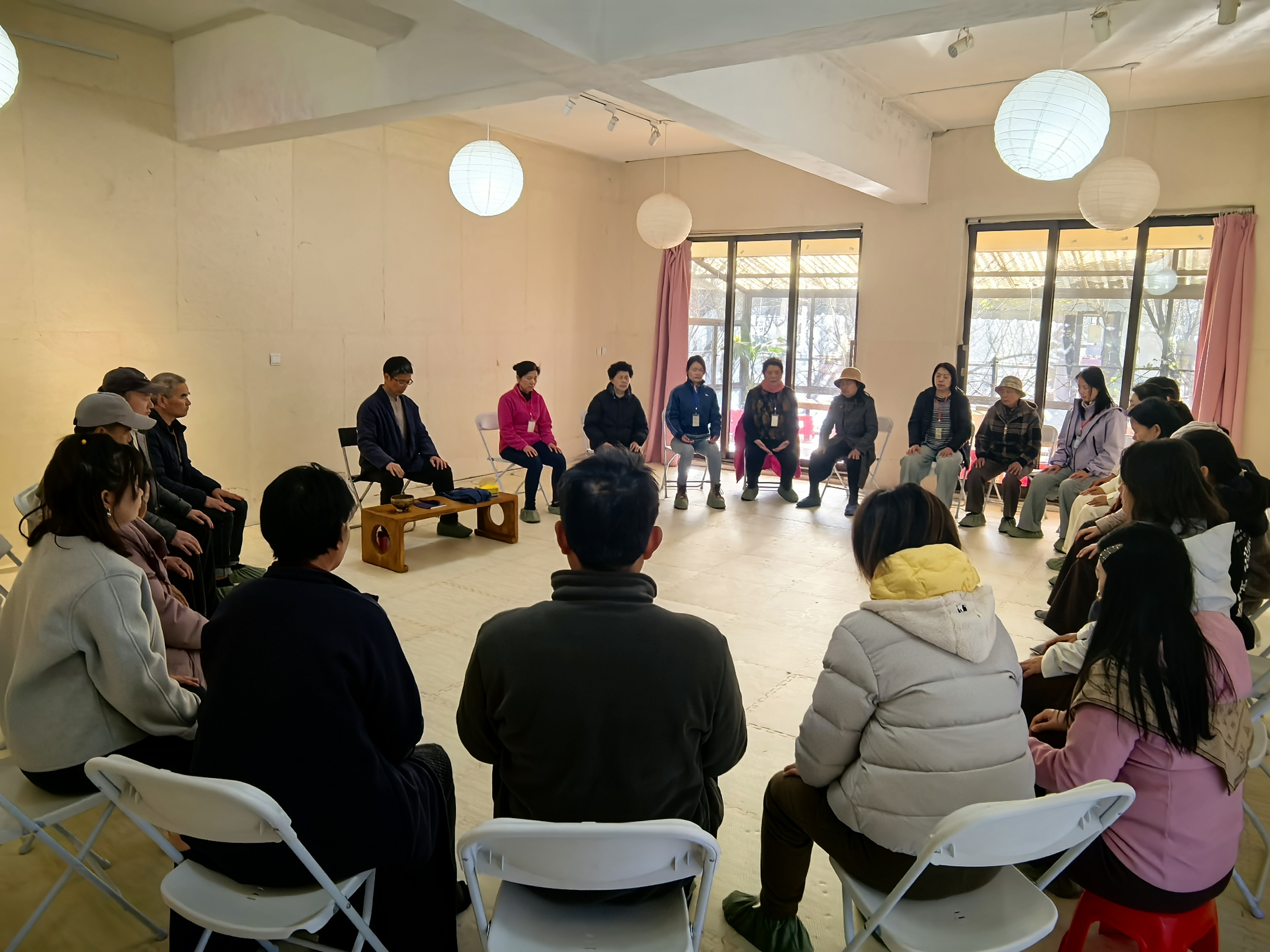
I will begin with an analysis of actual entity and prehension, arguing that interpretation by itself is actually the process of prehension, or more exactly, conceptual prehension. Thus, the work of philosophical reasoning is at the same time concrescence, the process of becoming. Secondly, a comparison with the cosmology of Taoism is made, with a focus on the experience of Qi circulation in Taoist meditation from the perspective of process philosophy. The third part will be an elaboration upon the practice of meditation as methodology of process philosophy, so that an integration of process philosophy with Taoism is possible, leading to a new understanding of humanity and its potential.

  1. Interpretation as prehension

According to Whitehead, “speculative philosophy is the endeavor to frame a coherent, logical, necessary system of general ideas in terms of which every element of our experience can be interpreted.”  By this notion of “interpretation”, he meant that “everything of which we are conscious, as enjoyed, perceived, willed, or thought, shall have the character of a particular instance of the general scheme.”

Karl Marx had argued that :” The philosophers have only interpreted the world, in various ways; the point, however, is to change it.”[6] This emphasis upon the importance of  changing the world is obviously not contradictory with Whitehead’s philosophy as he said: ”It is fundamental to the metaphysical doctrine of the philosophy of organism, that the notion of an actual entity as the unchanging subject of change is completely abandoned.…The ancient doctrine that ‘no one crosses the same river twice’ is extended. No thinker thinks twice; and, to put the matter more generally, no subject experiences twice.”[7]

If there is absolutely no unchanging subject that remains the same in this process of experiencing and what we have is simply experience, which ceaselessly changes, dances and evolves, what does “interpretation” mean? What does it mean that all our experiences can be understood as having the character of a particular instance of the general scheme?

According to Whitehead, “the essence of an actual entity consists solely in the fact that it is a prehending thing (i.e., a substance whose whole essence or nature is to prehend).… There are two species of prehensions, the ‘positive species’ and the ‘negative species’. An actual entity has a perfectly definite bond with each item in the universe. This determinate bond is its prehension of that item. A negative prehension is the definite exclusion of that item from positive contribution to the subject’s own real internal constitution. This doctrine involves the position that a negative prehension expresses a bond. A positive prehension is the definite inclusion of that item into positive contribution to the subject’s own real internal constitution. This positive inclusion is called its ‘feeling’ of that item. Other entities are required to express how any one item is felt. All actual entities in the actual world, relatively to a given actual entity as ‘subject’, are necessarily ‘felt’ by that subject, though in general vaguely. An actual entity as felt is said to be ‘objectified’ for that subject. Only a selection of eternal objects are ‘felt’ by a given subject, and these eternal objects are then said to have ‘ingression’ in that subject. But those eternal objects which are not felt are not therefore negligible. For each negative prehension has its own subjective form, however trivial and faint. It adds to the emotional complex, though not to the objective data. The emotional complex is the subjective form of the final ‘satisfaction.’ The importance of negative prehensions arises from the fact, that (i) actual entities form a system, in the sense of entering into each other’s constitutions, (ii) that by the ontological principle every entity is felt by some actual entity, (iii) that, as a consequence of (i) and (ii), every entity in the actual world of a concrescent actuality has some gradation of real relevance to that concrescence, (iv) that, in consequence of (iii), the negative prehension of an entity is a positive fact with its emotional subjective form, (v) there is a mutual sensitivity of the subjective forms of prehensions, so that they are not indifferent to each other, (vi) the concresence issues in one concrete feeling, the satisfaction.”[8]

Although with these words Whitehead did not directly talk about our personal experiences in our daily lives, he tried to provide a scheme of general ideas under which all our experiences can be interpreted. This process of interpretation by itself is also an act or event of experience, a process in which our feelings and emotions are involved. If the scheme of general ideas works well and sheds light on our experiences, that is, it’s successful in its application for the interpretation of our experiences, we might feel relieved, happy and satisfactory. With that, we have more or less some feelings of vitality. If we successfully find such a scheme of general ideas and live our lives accordingly, our experience intensifies itself continuously.

Put  in Whitehead’s own words, “some principle is now required to rescue actual entities from being undifferentiated repetitions, each of the other, with mere numerical diversity. This requisite is supplied by the ‘principle of intensive relevance.’ The notion of intensive relevance is fundamental for the meaning of such concepts as ‘alternative possibilities’, ‘more or less,’ ‘important or negligible’.  The principle asserts that any item of the universe, however preposterous as an abstract thought, or however remote as an actual entity, has its own gradation of relevance, as prehended, in the constitution of any one actual entity: it might have had more relevance, and it might have had less relevance, including the zero of relevance involved in the negative prehension; but in fact it has just that relevance whereby it finds its status in the constitution of that actual entity.”[9]

There are two types of prehensions: physical prehensions, that is, prehensions of actual entities,  and conceptual prehensions, that is, prehensions of eternal objects.  According to Whitehead, “the functioning of one actual entity in the self-creation of another actual entity is the ‘objectification’ of the former for the latter actual entity. The functioning of an eternal object in the self-creation of an actual entity is the ‘ingression’ of the eternal object in the actual entity. And the final phase in the process of concrescence, constituting an actual entity, is one complex, fully determinate feeling. This final phase is termed the ‘satisfaction’.”[10]

The process of interpretation of our experience under a scheme of general ideas, that is, the work of philosophy, and in fact also all branches of science, or any other rational work, is not like the process of mathematic computation, whereby no feeling or emotion is involved. This scheme of general ideas together with all its concepts and principles, are eternal objects. When our experiences are illuminated and made consistent and meaningful by means of these ideas, out of which a deeper order of consistency and meaning is revealed, we feel happy and enlightened. We feel energy starts to flow and our body gets warm. With the ingression of these ideas, concepts and principles into our consciousness, we are liberated from ignorance and feel heightened in our oneness with the cosmos.

As Whitehead puts it, “the ultimate metaphysical principle is the advance from disjunction to conjunction, creating a novel entity other than the entities given in disjunction. …The many become one and are increased by one.”[11]

So, how do we know this scheme of general ideas, which is produced through the method of imaginative generalization, is true or false? How should it be evaluated? The test is subjective, but also objective.

It’s subjective, as if it’s successful, it should be able to increase the intensity of our satisfaction. We, as a personal nexus of actual entities, through mastering this scheme of ideas and living our life accordingly, should be able to have our experiences in our life continuously integrated and intensified.

On the other hand, it is also objective, as this scheme of general ideas shall apply to anyone and to all the experiences any person has or can have. And the psychological and emotional benefits derived from the application of process philosophy should not remain in the mental realm, but have to lead to the transformation and integration of our whole being, body and mind together, as we are not divided into body and soul. They are simply two sides of one and the same coin, that is, our being, just like the physical pole and mental pole of an actual entity.

That’s why although Whitehead did not mean to provide a theory for the practice of meditation, he has indeed contributed very important teachings for the practice of meditation in our day. That is, the practice of meditation should not simply focus on the mental level, but it needs to penetrate into the physical level and leads to the transformation and integration of our being as a whole.

That also means, although Whitehead himself employed simply the method of speculation, or imaginative generalization in his work of philosophy, he has inadvertently pointed to the next step which is indispensable for his philosophy to be applied and tested in real life. That is, the study and research of process philosophy should not remain as a process of speculation, but also a process of meditation, which entails the involvement of the body as part of our whole being. Through the practice of meditation, the breakthrough that the Whiteheadian philosophy has made in the western tradition will not only be really applied and tested, but also further developed and improved.

For this purpose, the teachings and practice of Taoism, Confucianism and Buddhism  are highly relevant and can be very helpful and inspiring. Due to length limits of this paper, only Taoism is discussed.

2. The experience of Qi circulation

Although the whole focus of process philosophy is on experience, ironically the study, teaching and research of process philosophy remain very speculative. Basically only mental activities are involved. In the Certificate Program in Process Thought and Practice which I have attended twice in 2024 and 2025, the teaching and study are almost completely theoretical. Indeed, students are encouraged to put the ideas and principles of process philosophy in practice, like engaging in creative localization projects or some work of art. However, if it’s not made clear that the very activities of teaching, study and research of process philosophy are not only mental speculation, but by themselves are already at the same time practical and experiential, leading directly to the transformation of our experience and our whole being, body and soul together, the true essence and depth of process philosophy is not fully revealed and its great potential for the transformation of the mainstream consciousness of our time cannot be sufficiently achieved.

By proclaiming that actual entities, that is, drops of experience, are the final real things of which the world is made up, Whitehead removed the distinction between mind and body and made both of them different manifestations of the same process and reality. That means, any acts of one side necessarily and inevitably lead to the change and transformation of the other side. Any change of the mind or the mood, however trivial it might be, results in a change in the constitution of the whole body, and vice versa.

According to John Cobb, Jr., “The brains of these animals give rise to a unified experience that is quite different from the addition of all the neuronal experiences that contribute to it. …Whitehead called these momentary experiences ‘final percipient occasions’ or ‘dominant occasions.’ The sequence of these occasions he called a ‘living person.’…A question that is raised in many contexts about human persons is their embodiment. Some argue that a person is his or her body. Platonic and Cartesian philosophy separates the person as soul sharply from the body. Whitehead’s view lies between these poles. Strictly speaking, the person is distinct from the body. As the soul or psyche, it is not as such the bodily organism.…To a large extent, the living person sums up what is taking place in the body and functions for the sake of the well being of the body. Further, it is important to remember that whereas in Plato and Descartes the soul is metaphysically different from the body, for Whitehead it is not. The body is composed of occasions of experience, the soul or living person is also composed of occasions of experience. There are distinctions, but there is certainly no dualism.”[12]

A problem with this statement is that exactly how and in what way the body and the soul or living person, or mind, are distinct from each other is not made clear. Rather, the body and the person are regarded as two sets of occasions of experiences, which are distinct from each other, although related to each other in some way.

However, the relationship between the body and the person is not a static picture, but rather a dynamic and changing process, constantly in flux. When their relationship is not properly understood, we feel that we are different and separate from our body, which follows its own logic and get weakened inevitably after a certain turning point of aging.

When Whitehead reduces all the phenomena in the universe into different manifestations of experience, he is talking about experience that is pure and has no subject, no object, and no content. Such experience is very different from our daily experiences, in which we feel we are the subject of our experiences and which always have some object and some content, like I enjoy my meal and it’s rich in flavor, etc.. The pure experience can of course be perceived as we are directly made up of it. It has no content, but has a degree of intensity and quality and this degree of intensity and quality can be heightened and developed through the mutual attuning between the body and the mind, or the person/soul.

This experience is not foreign to us. It’s the permanent theme of poem, art, religion, spirituality and philosophic contemplation, as somehow conveyed in this poem of Robert Penn Warren (1905-1989):

Ornithology in a World of Flux

It was only a bird call at evening, unidentified,

As I came from the spring with water, across the rocky back-pasture;

But so still I stood, sky above was not stiller than sky in pail-water.

Years pass, all places and faces fade, some people have died,

And I stand in a far land, the evening still, and am at last sure

That I miss more that stillness at bird-call than some things

that were to fail later.

In the pure experience like this, the distinction between mind and body is melted and disappears. Even the ego is melted and disappears, merged with the vastness of the time and space, which also disappears in that moment. Such experience is pure, intensive and at the same time uplifting.

Obviously it’s desirable for us to cultivate our capacity to enjoy such experience. We can even say it’s the inherent longing of our life that we reach a state of consciousness in which such pure experience becomes our daily experience, which does not cancel nor conflict with all our experiences that are common to everyone, like the pleasure of food, sports, nature, the love and companion of our family and friends, sex, success in our work and career, etc. Rather, all these pleasures we can have will be further intensified as they are the peaks of the default mode of experience which is pure and has no content.

The way to cultivate our capacity to enjoy this experience is through philosophic work. It’s not a research that is limited in a particular topic or area, like physics or psychology, but an exploration into the true essence of all our experiences, that is, the reality.

As what is involved here is experience, or direct perception of the world, including our own being, it somehow deviates from the long cherished method of discursive-analytic cognition that is characteristic of the western tradition of intelligence. It relies on words and concepts to tap into the reality. By contrast, the eastern tradition of intelligence including Taoism, Confucianism and Buddhism focuses on experience, or direct perception, or intuition.

In the eastern tradition there is of course also the application of words and concepts, but they are more the work of imaginative generalization and description out of deep intuition, rather than meticulously organized schemes of ideas, concepts and principles produced through strict argumentation. Typic examples are Yi Ching, Tao Te Ching, Analects, Diamond Sutra, etc. There are serious cautions against the misleading effects of words and ideas in all the traditions of Taoism, Confucianism and Buddhism. With some extreme exceptions, the learning of classic works is required, especially in the mainstream tradition, but the emphasis is always far more placed on practice, including the practice of meditation and moral acts in one’s private and public life.

The shortcoming of this approach is clear. Without the assistance of discursive-analytic thinking, the authenticity of the direct experience or the advanced state of consciousness that is proclaimed cannot be verified. It leads to dogmatic and even superstitious belief easily. That’s why it’s of critical importance to integrate the western approach of discursive-analytic thinking and the eastern approach of direct experience so that the intellectual understanding of the true essence of reality and the state of consciousness can be deepened and improved simultaneously. As a matter of fact these two processes cannot be separated from each other and are conditioned upon each other.

All three traditions of Taoism, Confucianism and Buddhism have respectively provided important insights into the mystery of our being and the cosmos in their respective ways. The special contribution from Taoism is its understanding and experience of Qi and its circulation through the practice of meditation. The special contribution from Confucianism is its understanding of the relationship between morality and the experience of Qi.

In Taoism, Qi is understood as the fundamental texture of the cosmos, of which all phenomena is composed. According to Zhuangzi (c.a. BC 369- BC 286), one of the two major founders of Taoism in addition to Laozi, the whole cosmos is nothing else but Qi. Life is the condensation of Qi and death is the dispersion of Qi.

Qi is neither matter nor a supernatural being. It arises from nothingness, or Wu, which is close to emptiness or Sunyata in Buddhism. Qi has two modes of movement, that is, Yin and Yang. Yin is the transition from the immaterial to the material, and Yang is the transition from the material to the immaterial. In Tao Te Ching Chapter 42, it’s said: “Tao begets one, one begets two, two begets three and three begets myriad of things. All things carry with them Yin and Yang and are mediated into harmony through the flow of Qi.”

Qi can be compared to the concept of actual entity in process philosophy. Just like an actual entity has a physical pole and mental pole, Yin is the physical pole of Qi and Yang is the mental pole of Qi.

Qi is not simply an abstract concept that is only derived through metaphysical speculation. It’s totally perceptible and therefore has very important practical significance in the cultural tradition of China and in the daily life of the Chinese people. In Taoism it is clearly understood as the force of life that sustains our physical and mental health as well as the development of our life throughout our lifetime. Therefore the understanding of Qi constitutes the basis of traditional Chinese medicine, which is the most sophisticated traditional medicine of natural healing in the world. All the means it applies, including herbs, acupuncture, moxibustion, cupping, massage, etc., work at the Qi level, as the disturbance and blockage of Qi flow is believed to be the cause of all physical and mental disease and the principle of healing is to remove the blockage and restore the flow of Qi in the body through those means.

Although the long and established tradition of Chinese medicine which remains very popular now in China’s society proves its effectiveness, it’s believed a wise person does not need to rely on those means of healing as he can save himself from the suffering of disease by living a proper life according to Tao. The major way to avoid diseases is through the practice of meditation. In Inner Canon of Emperor Yellow, the earliest and very influential classic work of traditional Chinese Medicine compiled between 4th century BC and 3rd century AD, it says, “if one rests with his mind in quietness and emptiness, Qi starts to flow and there will be no danger of disease.” There is a similar quotation from Zhuangzi, that is “Without looking and without listening, rest one’s mind in peace, the body will rectify itself.”

And the flow of Qi has a particular pattern, that is, a circulation. It goes down in the front of the body, along the middle line of the chest and the belly, and up in the back of the body along the spine. It’s exactly on the basis of this balanced circulation of Qi that our health and the normal development of our life is sustained, as quoted from the Inner Canon of Emperor Yellow, “Qi, just like water, cannot stop flowing. It flows in a circle, with no beginning and no ending. It circulates ceaselessly. The Yin meridian and the Yang meridian nourish our inner organs as well as our muscles and skin. ”

It’s needed to mention here that although in works of traditional Chinese medicine Qi is often described as flowing along particular routes or so called meridians and seems to be a localized phenomenon, in more philosophical works of Taoism and Confucianism, it’s regarded as permeating throughout the whole cosmos, but not localized in the body.

I have practiced meditation with an awareness of Qi circulation for nearly 13 years. According to my experience, the first experience with Qi circulation, which was achieved after around 4 months of practice, each day around one hour, was more the feeling that it indeed flows in a circle constituted by the routes upwards along the spine and downwards along the middle line of the chest and the belly. However, in the following years, with my practice going on, the experience of the Qi circulation keeps intensifying itself and expanding its area. Now I can experience anytime that the circulation of Qi permeates throughout my body.

The practice of meditation according to Taoism is not only for the purpose of healing, but more important, for cultivating the awareness of the operation of Tao in one’s life and in the cosmos.  A person who lives following the operation of Tao is said to be able to enjoy longevity and even immortality, as said by the legendary Emperor Yellow in the Inner Canon of Emperor Yellow, “I heard that in ancient time there are true persons who master the secret of heaven and earth and the art of Yin and Yang, uphold their soul independently and cultivate their muscles in oneness and can live as long as the cosmos with no end. ”

Although in the western tradition which focus on the discursive-analytical thinking it’s possible for people to have the pure experience which has no subject, object or content, like what Robert Penn Warren described in his poem quoted above, it remains as mysterious or poetic experience and cannot be justified and reliably cultivated in a rational way through the work of science and philosophy. With his process philosophy, Whitehead made a revolutionary breakthrough in providing a powerful argument for the importance of such experience. However, his breakthrough nevertheless remains as a plausible speculation for the interested public. What his scheme of ideas really means is far from clear.

The teachings and practice of Buddhism can be very helpful for understanding process philosophy and providing important empirical support. However, without the conceptualization of Qi and its flow and circulation, the proclaimed experience of Sunyata remains quite mystical. What’s more important, even if one somehow manages to gain the experience that has no subject, object and content, it is often fleeting and accidental, and cannot be nurtured and intensified in a rational and reliable way.

3. The Methodological Significance of Meditation for Process Philosophy

From the perspective of process philosophy, a human being can be regarded as a nexus of numerous actual entities. But at the same time, it can also be regarded as one single actual entity. All the actual entities that constitute a human being prehend each other and are organized in such a way that they together can be regarded as a single actual entity that has its own physical pole, that is, its body, and its own mental pole, that is, its soul or person. A human being is both a single actual entity and the nexus, or rather, the concrescence of numerous actual entities and cannot be reduced to the innumerable actual entities that constitute it.

However, according to Whitehead, the essence of an actual entity consists solely in the fact that it is a prehending thing, [13] and it prehends either in a physical way, that is, the prehension of other actual entities, or in a conceptual or mental way, that is, the prehension of eternal objects or propositions.[14] Obviously our ability to eat and digest food represents our ability of physical prehension and our ability to learn new thoughts, ideas and skills represents our ability of conceptual or metal prehension.

For Whitehead, “’Creativity’ is the universal of universals characterizing ultimate matter of fact. It is that ultimate principle by which the many, which are the universe disjunctively, become the one actual occasion, which is the universe conjunctively. It lies in the nature of things that the many enter into complex unity.”  And “’Creativity’ is the principle of novelty. An actual occasion is a novel entity diverse from any entity in the ‘many’ which it unifies. Thus ‘creativity’ introduces novelty into the content of the many, which are the universe disjunctively.”[15]

That means, as an actual entity, theoretically it’s possible for us to continuously prehend both physically and mentally, so that we can always introduce novelty into our being, both physically and mentally, and achieve infinite evolution just as intuited by the legendary Emperor Yellow as quoted above. However, this is obviously against our “common sense” or long established belief that we as human beings are doomed to perish. 

However, after all, one of the major tasks of science and philosophy is exactly to explore into the nature of reality and the relationship between mind and body. Neither so-called common sense nor long established belief should exclude the challenge of rational thinking. Although there is still very much to be further explored and examined relating to the possibility of the infinite evolution of ourselves as individual human beings, a very probable reason why we get old and weakened and finally die is because due to ignorance of the flow of Qi and its circulation, and failure to continuously have the flow and circulation of Qi intensified, we are not able to continuously maintain and further develop our nature as a well-organized actual entity. Our ability to prehend physically and mentally starts to weaken after a certain turning point in our lifetime. When the circulation of Qi in us is weakened to a certain degree, it can no longer uphold the whole organism and we die.

The circulation of Qi most probably indicates how our mental pole and physical pole relate to each other. They are not two substances of our being, but the two manifestations of our being. As a super-complex organism that is made up of innumerable cells and microbe with a united state of consciousness, it needs a super-powerful mechanism of operation so that the innumerable interactions and processes that are going on in it at any one second can be organized and coordinated in a way that is far more efficient and faster than any of the mechanisms already known in neuroscience or physiology. The circulation of Qi provides a highly plausible answer to this puzzle and it can be tested by any one who is interested, but not simply up to the scientists.

The automatic intensification of Qi flow and circulation that is generally experienced through the practice of meditation can be the direct evidence for the intuitive imagination of Whitehead that  the essence of an actual entity consists solely in the fact that it is a prehending thing as well as his understanding of the concrescence as “the building up of a determinate ‘satisfaction’, which constitutes the completion of the actual togetherness of the discrete components”. [16] The vivid experience of flow and circulation of Qi, that is, the life force and vitality, and the feelings of relaxation, peacefulness, assuredness and deep serenity that arise with it convey to us without ambiguity that we are constant changing events that follow the ultimate principle of creativity. With such experience, it’s natural for us to see the same principle of creativity is in operation in each person, each creature and in the whole cosmos.

With that, all the seemingly abstract and difficult concepts and ideas that permeates in Whitehead’s works, especially in Process and Reality, become alive and can be experienced and tested by each one who are interested in a direct and personal way. This is actually what intended by Whitehead himself. For him, concepts like “actual entity”, “prehension” and “concrescence” are not pure theoretical constructs, but meant to denote the most concrete elements of our experience. [17]

Whitehead elaborated upon the method of his speculative philosophy in the very beginning of Process and Reality, which is summarized as imaginative generalization.[18] He was very clear that the “ideal of speculative philosophy has its rational side and its empirical side.” The rational side means it has to be coherent and logical, and the empirical side means it has to be applicable and adequate.[19] He went even further to say that “the elucidation of immediate experience is the sole justification for any thought, and the starting point for thought is the analytic observation of components of this experience.”[20]

Whitehead’s way to test this method of imaginative experiment is by the applicability of its results beyond the restricted locus from which it originated, so as to step by step gain some synoptic vision that applies to all facts.[21]

Whitehead himself has already pointed out, “whenever we attempt to express the matter of immediate experience, we find that its understanding leads us beyond itself, to its contemporaries, to its past, to its future, and to the universals in terms of which its definiteness is exhibited.…Thus the understanding of the immediate brute fact requires its metaphysical interpretation as an item in a world with some systematic relation to it. ”[22] As a western scholar first trained in mathematics in the tradition of science, Whitehead could not escape from experiencing the reality in a scientific way. With this as his starting point, he developed the method of imaginative generalization for his speculative philosophy so as to gain some synoptic vision that applies to all fact. This is understandable and necessary, but it remains in the tradition of discursive-analytic thinking and entails strenuous hard work of scholarship that most of the general public of any time in mankind’s history is not capable of.

The people living in the cultural tradition of the East are born with different ways of experiencing the world shaped by different cosmologies and views of life. The experience of Qi and its flow is very real for a great percentage of the Chinese people and also for any one who is interested, regardless his or her cultural background. There is a scheme of ideas supporting these experiences, concerning the concepts of Tao, Yin and Yang, and so on, which are meant to supply a synoptic vision for the interpretation of all our experiences as well. The problem with it is that it’s far more intuitive than deduced through strict discursive-analytic thinking and thus itself alone is not sufficient for the needs of modern science, technique and social activities.

On the other hand, it has great advantages as people can immediately gain direct experience of the most concreteness of the reality which Whitehead would like to convey with his concepts of actual entity, prehension, concrescence, etc. And they can directly benefit physically and mentally from this new knowledge and new way of looking at the life and the world. Even for uneducated and illiterate people, it is the same. With this new experience and perspective, they can perceive the flow and circulation of Qi basically everywhere, in the other people, in plants and animals, in the food they eat, in rivers and mountains, in the community and the business, in politics, law and economy, and in international relationships.

For sure, the adorable work of Whitehead provides a new and more sophisticated scheme of ideas for the ancient wisdom of the eastern tradition to be further clarified and developed, while the vastly rich practice of Taoism, Confucianism and Buddhism can be applied to test the ideas and principles of process philosophy, so that they can be continuously refined and updated.


[1] Process and Reality (hereafter, PR), xiv.

[2] PR, xii.

[3] 《中国哲学的特质》(The Characteristics of Chinese Philosophy), Mou Zongsan, p.5.

[4] PR, p. 18.

[5] PR, p. 5.

[6] “Theses on Feuerbach”, Karl Marx.

[7] PR, p. 29.

[8] PR, pp 41-42.

[9] PR, p. 148.

[10] PR, p. 26.

[11] PR, p. 21.

[12] Whitehead Wordbook: A Glossary with Alphabetical Index to Technical Terms in Process and Reality, John B. Cobb, Jr., pp. 44-45.

[13] PR, p. 41.

[14] PR, p. 23 and p. 191.

[15] PR, p. 21.

[16] PR, p. 85.

[17] PR, p. 18.

[18] PR. P. 5.

[19] PR. P. 3.

[20] PR. P. 4.

[21] PR. P. 6.

[22] PR, p. 14.