The Cosmology and View of Life of Process Philosophy——My Reflections from the 18th Process Summer Academy in July, Zhejiang Normal University, China

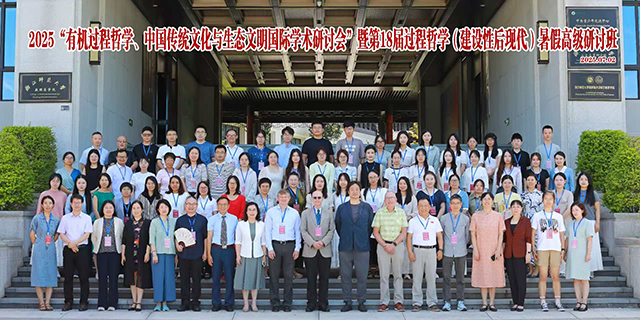
From July 1 to 8, I attended the International Symposium on Organic Process Philosophy, Chinese Traditional Culture, and Ecological Civilization and the 18th Process Summer Academy, hosted by Zhejiang Normal University. This was my second time joining this annual gathering, following our participation the previous year in the 17th International Symposium and Summer Academy on Process Philosophy in Zhuhai, organized by the Center for Whitehead Studies of Beijing Normal University–Hong Kong Baptist University United International College.


1. Why I Returned to the Process Summer Academy?

Twice now, I have devoted seven or eight days to this event—a clear sign of my deep commitment to it. Process philosophy holds that the essence of the universe is not a material substance, but pure, interrelated experience: a ceaseless, creative process with creativity as its primary principle. This cosmology challenges the prevailing materialist worldview and resonates profoundly with the traditions of Taoism, Confucianism, and Buddhism in the East.

Yet it is also a philosophy that evolved entirely within the Western scientific and philosophical tradition. Alfred North Whitehead (1861–1947), its chief architect, was born nearly half a century after Karl Marx. Whereas Marx lived in an age dominated by Newtonian physics, Whitehead’s lifetime coincided with the emergence of electromagnetic theory, relativity, and quantum physics.

Whitehead was not only a philosopher but also one of the most distinguished mathematicians and logicians of the twentieth century. Together with his student Bertrand Russell—also a mathematician and philosopher—he co-authored Principia Mathematica, one of the most influential works in the history of mathematics. In The Principle of Relativity (1922), he critiqued Einstein’s theory of relativity and proposed an alternative.

After retiring from the University of London at age 63, Whitehead was invited to Harvard University as Professor of Philosophy, entering a remarkably productive phase in metaphysics. During his Harvard years he authored Science and the Modern World (1925), Process and Reality (1929), and Adventures of Ideas (1933), works that laid the foundations of process philosophy.

At the outset of Process and Reality, Whitehead stated unequivocally that the philosophy he sought to construct was speculative philosophy, whose aim was “to frame a coherent, logical, necessary system of general ideas in terms of which every element of our experience can be interpreted.”

Speculative philosophy, as he saw it, stood in contrast to analytic philosophy, which confines itself to the analysis of language and formal logic, avoiding engagement with the nature of human experience and the cosmos. In the analytic view, all thought about the nature of the universe is unverifiable speculation and therefore meaningless; if philosophy has any function, it is limited to linguistic analysis—or, in Wittgenstein’s famous words, “Whereof one cannot speak, thereof one must be silent.”

Whitehead disagreed. Humanity, he argued, is inevitably compelled to think systematically about the nature of the universe. This is not only necessary but unavoidable. There are no “pure facts” independent of a cosmological framework; every “fact” we perceive reflects the cosmology we hold. To avoid being trapped in outdated or rigid thinking, we must continually reflect upon our worldview (Process and Reality, pp. 14–15).

For me, process philosophy is like warm, brilliant sunlight, illuminating with unprecedented clarity the deep structures of both the material and spiritual worlds—and revealing that those structures are, in essence, the same. Here, “structure” is a metaphor: more precisely, it is about relations and processes. There are no fixed structures, only the ceaselessly unfolding and transforming web of relations and processes.

In coming to understand Whitehead’s process philosophy, I realized that my own background had given me certain advantages. My doctoral research in legal philosophy had already convinced me that the essence of life—or “human nature”—is a question that has been reinterpreted throughout history and remains open to further exploration. This awareness gave me both the courage and openness to face a question that most people might never consciously engage with.

Shortly after completing my doctorate, I was diagnosed with lymphoma. That diagnosis provided a powerful motivation to put philosophical reflection into direct practice. The turning point came when I encountered Taoist meditation techniques and experienced the improvement in my health brought about by the flow and circulation of qi. This led me to contemplate more deeply the relationship between body and mind, and to ask how far they could be transformed into one another through sustained meditation.

Once my experience of qi reached a certain depth, high-level dialogue and reflection on questions about the nature of the universe and life itself would trigger an intense surge of inner energy. This in itself was healing, integrative, and developmental—indeed, essential to maintaining the ongoing health and growth of life.

On the first day of the seminar, Professor Guo Haipeng, Director of the Center for Whitehead Study at Beijing Normal University–Hong Kong Baptist University United International College, gave a talk on Whitehead’s The Function of Reason. His presentation offered compelling evidence for the very point I had long intuited: that reason is indispensable for meditation and for the continual growth and evolution of life. I will return to this topic later.

This is also why I returned to the summer academy. To pursue meditation in depth over the long term, one cannot limit oneself to Taoist, Confucian, or Buddhist traditions alone. It is necessary to step outside those frameworks and adopt a more universal conceptual structure—one capable of bridging the spiritual and material worlds and of being applied across all scientific fields. So far, process philosophy is the most expansive, systematic, and rigorous framework I have found that aims to account for the whole of human experience.

To truly master process philosophy, one cannot simply listen to its principles once and be done. Unlike technical fields such as physics or law, philosophy—especially process philosophy—aims to account for the entirety of human experience: sensory, intellectual, aesthetic, moral, and religious. Studying it requires deliberate, meticulous awareness and reflection on all these domains of experience. When we do this, our capacity to experience the world is transformed and elevated; our intellectual, aesthetic, moral, and even sensory capacities grow.

At the opening of the seminar, Professor Jay McDaniel, Director of the Center for Process Studies in the United States, said in his video greeting:

“Process thought matters because it shows us how we live within—not outside of—a living Earth and a living Universe, in which there is something like life, energy, or qi at every level of existence. It invites us to recognize that we are participants in a vast web of becoming, interconnected with all other beings. “ and “Chinese traditions remind us that knowledge is not just a matter of logic or abstraction, but also of intuition, embodied practice, and reverent attention to the patterns of heaven, earth, and human life.” In this respect, process thought and Chinese tradition are in profound harmony.

This means that studying process philosophy is like engaging in the Taoist, Confucian, or Buddhist path: it requires the unity of knowledge and action, bringing about the ongoing transformation of life. My own decade-long meditation practice, rooted in these traditions, has made me feel this deeply. Even the most basic concepts in process philosophy—“actual entity,” “prehension,” “concrescence”—require repeated reflection and discussion. Intellectual exchange of this kind stimulates the deeper unfolding of my inner energy.

Equally important are the people one interacts with, the environment, and the atmosphere. The study of process philosophy transforms life, and transformation happens through interaction—with others and with the world. This, in turn, transforms others and the world. In philosophical study, explanation and transformation are inseparable.

The faculty at this seminar represented the highest level of process philosophy research in China, along with scholars from other countries, academics from different universities, and professionals from diverse fields. It was a rare opportunity to explore the full range of topics in process philosophy, reflect on their relevance to China and the world today, meet like-minded people, and achieve transformation in body and mind—while contributing to a better world.

Among the faculty, Dr. Wang Zhihe—Executive Director of the China Project at the Center for Process Studies in the United States and Executive President of the Institute for Postmodern Development of China—stands out as the first person, since 1949, to reintroduce Whitehead’s process philosophy into China and give it wide social influence. Together with Dr. Fan Meijun, he has worked tirelessly to “bring Whitehead home,” making outstanding contributions to advancing process studies and ecological civilization in China. They have done more than merely promote process philosophy; they have created a host of new concepts grounded in organic process thinking, such as the “Second Enlightenment,” “Chinese Harmonism,” “Chinese Process Zen,” “Earth-Honoring Education,” “Holistic Education,” and “Dao-Democracy.”

Other distinguished faculty included:

  • Professor Wang Kun, Dean of the School of Marxism at Zhejiang Normal University, author of Whitehead and the First Handshake with Chinese Philosophy and A Comparative Study of Zhu Xi and Whitehead’s Philosophy.
  • Professor Guo Haipeng, Dean of the School of General Education and Director of the Center for Whitehead Studey at Beijing Normal University–Hong Kong Baptist University United International College.
  • Professor Yang Fubin, Dean of the School of Liberal Arts, Guangzhou Nanfang College, translator of Whitehead’s Process and Reality and Alfred North Whitehead: The Man and His Work.
  • Professor Yang Li, doctoral supervisor at the School of Education Science, Harbin Normal University, with deep expertise in applying process philosophy to education.

International participants included American process philosopher Professor Paul Custodio Bube, Emeritus Professor of Lyon College, whose research focuses on ethics, process thought and ecological civilization; and Professor Justin Heinzekehr, Director of Institutional Research and Assessment at Goshen College and co-author of Organic Marxism, specializing in process philosophy in relation to political philosophy and religious studies. From South Korea came Dr. Yunjeong Han, Dr. Youngjoon Kim, and Dr. Jungeun Park of the Korean Institute for Ecological Civilization, all focusing on process philosophy and ecological civilization.

I was also delighted to meet Chris Hughes, my classmate from the 2024 online Certificate Program in Process Thought and Practice at the Cobb Institute in the U.S. A British native who later immigrated to Canada, Chris became Director of the Cobb Institute’s Certificate Program in 2025. His grandfather taught Chinese philosophy at Oxford University, and both his parents spent their childhood in China. This was his first visit to the country, and he was thrilled that process philosophy had rekindled his family’s historical ties with China.

Over eight days, the seminar featured some thirty lectures and presentations on topics ranging from the fundamental concepts and theories of process philosophy to the function of reason; from Whitehead’s view of the relationship between life and non-life to comparisons with Zhu Xi’s philosophy; from the history of process philosophy’s entry into China to its intersections with law, politics, ethics, and ecological civilization. Compared with the 2024 Zhuhai academy, this year’s program was broader, with valuable extensions into law, political science, and ethics. I can only hope that future academies will expand further into physics, biology, medicine, mathematics, economics, and the arts, as well as into dialogues between process philosophy and Buddhism, Christianity, Islam, and Judaism.

The inclusion of three Korean scholars this year—alongside Chinese and American participants—was another important development, giving us insight into how process philosophy is being received and applied in South Korea’s cultural and social context.


2. The Function of Reason

As I noted earlier, process philosophy aims to provide a unified intellectual framework for understanding all human knowledge and experience—including the nature of the universe and life. Achieving such a goal demands careful, detailed examination. Yet understanding is not merely an intellectual exercise; genuine understanding requires the engagement of the whole person—body and mind—bringing about transformation and growth.

This raises a fundamental question: What is the function of reason?

Since beginning my meditation practice in early 2013 for self-healing, I have believed that meditation—though traditionally tied to Buddhist and Taoist religious contexts and emphasizing teacher–student transmission—should also be open to scientific and rational study. I resolved not to follow any single teacher but to approach the practice academically, combining direct experience with wide reading, steadily deepening my understanding.

This attitude departs sharply from traditional perceptions of meditation, which often hold that it bypasses reason altogether, relying solely on direct intuition.

In this academy, Professor Guo Haipeng’s lecture, The Function of Reason and the Doctrine of the Mean, introduced the central ideas of Whitehead’s 1929 book The Function of Reason. His discussion thrilled me, for it confirmed my long-held conviction that reason is indispensable to meditation and to the continual evolution of life—while offering a deeper philosophical foundation for that belief.

Whitehead observed that history reveals two universal trends. One is a slow, natural decline, in which vitality steadily weakens. The other is the upward trajectory of biological evolution. Reason, he argued, is the self-discipline of the originative element in history; without it, the originative element is anarchic. For Whitehead, the highest role of reason is to promote the art of life.

He rejected the idea that “survival of the fittest” alone could explain evolution. That view depicts life as merely adapting passively to environmental change. In reality, animals also act upon and transform their environments. The more advanced the organism, the greater its capacity for such transformation. Whitehead saw life as driven by three impulses:

  1. To live
  2. To live well
  3. To live better

The universe, then, contains two opposing tendencies: toward extinction (entropy increase, disorder) and toward ascent (entropy decrease, order), the latter propelled by a mysterious impulse to raise its energy. This implies the presence of a final cause—a purpose embedded in the very fabric of reality.

Reason is our response to this upward-driving purpose. It operates in two forms: practical reason, evolved over millions of years to solve concrete problems in animal behavior; and speculative reason, which emerged around 6,000 years ago with the maturation of Greek logic and mathematics, eventually integrating with practical reason.

For Whitehead, the highest task of reason is to construct a unified system of explanation—a cosmology—that integrates all sciences and all human experience. Its aim is not merely to maintain stability but to promote progress. Speculative reason must both respect the authority of facts and transcend current empirical analysis, making genuine progress and evolution possible.

As he put it, reason is the force that transforms entropy into evolution, ensuring that the universe’s downward trend ultimately encounters humanity’s strong resistance toward upward ascent. The challenge facing civilization lies in balancing speculative and practical reason— to embrace rigorous inquiry while resisting dogmatism.

Over nearly thirteen years of meditation, my experience of the flow and circulation of qi has deepened continually. Without question, qi is the foundation of physical and mental balance and health. The deeper one’s experience of qi, the greater the integration of body and mind—and the more resilient one becomes.

In Whitehead’s metaphysics, the universe is not made of inert matter but of “drops of experience.” He called these actual entities—usually translated in Chinese as “现实实有.” I prefer to translate the term as “动子”(dongzi ), paralleling scientific and philosophical concepts such as “原子(atom)” “电子(electron)” and “单子(monad)” that likewise denote fundamental units of reality.

Actual entities possess a capacity akin to feeling. Life can feel because the actual entities composing it can feel. Each has both a physical pole and a mental pole, and in seeking its own satisfaction, it “prehends” other experiences, evolving in the process. This resonates with Taoism’s view of qi as the universe’s essence and with the yin–yang account of its movement.

Like Aristotle, Whitehead affirmed the existence of a final cause driving all change. In my view, this final cause arises as a result of the fact that all actual entities are one and mutually immanent. This oneness and mutual immanency exist initially only as possibility. It’s the inner yearning of actual entities to  turn this possibility into actuality — a process that brings satisfaction and joy and fuels the continual evolution of life.

Life, therefore, cannot remain in a static state. The affirmation of a final cause implies an eternal call from the universe. To remain healthy and vibrant, we must be aware of and respond to this call. The function of reason is precisely to perceive and respond to this ultimate purpose, and in this course balance the physical and mental poles, that is, body and mind, through thoughtful discernment.

Therefore, analytical judgment—mathematics being the clearest example—is only part of reason’s function. Its deeper role is to attune us to the ultimate driving force of existence, guiding all life, and especially human life, toward the full realization of its potential.

Two important quotes from Taoism and Confucianism are relevant here. One is Chapter 42 of The Dao De Jing:“The Dao gives birth to One, One gives birth to Two, Two gives birth to Three, and Three gives birth to the ten thousand things. The ten thousand things carry yin and yang, and achieve harmony through the mediation of qi.” And the other one is the famous paragraph inThe Doctrine of the Mean: ”Only through true sincerity can one fulfil one’s true nature; when one fulfills one’s true nature, one can understand the human nature in general; when one understands the human nature in general, one can understand the nature of all things; when one understands the nature of all things, one can participate in the creative work of the cosmos; when one can participate in the creative work of the cosmos, one is equal to the cosmos.   ” Both resonate powerfully with Whitehead’s thought.

Among the world’s great spiritual traditions, Taoism and Confucianism were likely the least familiar to Whitehead. He had no knowledge of meditation practice based on the cosmology and view of life of Taoism and Confucianism and centered on the circulation of qi.

Yet starting from mathematics, and drawing upon a lifetime of engagement with Western science and philosophy, Whitehead arrived at a cosmology that aligns strikingly with that of Taoism and Confucianism. Moreover, he extended and clarified the insights of Taoism and Confucianism through the unique precision of speculative reason. When Taoist and Confucian wisdom—rooted in direct intuition of life—is confirmed by the rigorous analysis of process philosophy, the boundary between material and spiritual dissolves completely. This greatly strengthens our confidence that life can be freed from the endless cycle of birth, sickness, aging, and death, and deepens our resolve to pursue the path of personal cultivation.


3. Ecological Civilization: A New Form of Civilization Based on the Process Cosmology and View of Life

At this summer academy, Dr. Yunjeong Han from South Korea delivered a lecture titled Whitehead’s Thought on Life and Lifeless. She argued from another angle that life—not lifeless—is the true essence of the universe.

In Modes of Thought (1938), Whitehead rejected the traditional dualism separating life from lifeless. Even lifeless objects such as rocks, he claimed, are composed of the most primitive forms of life, evolving over long periods through their interaction with the environment. Life and lifeless are not strictly divided but form a continuum; life simply possesses a greater capacity for self-regulation and experience.

If even rocks are full of vitality, why then do human bodies decline, decompose, and die? The answer, I believe, lies in our failure to observe ourselves deeply, to study humanity’s intellectual and spiritual heritage thoroughly, and to apply our reason courageously—asserting the judgments formed through rigorous observation and analysis.

During the academy, Professor Wang Kun recalled that the Chinese philosopher Zhang Junmai (1887–1969) greatly admired Whitehead and even visited him in the United States in 1946, when Whitehead was 85 (he died in 1947). Unfortunately, by then Whitehead’s mind had already slowed.

This reminded me of Kant, who obviously had dementia in his later years, as well as the renowned German jurist Reinhold Zippelius, whose books I translated (Introduction to Law, Methodology of Law, and Philosophy of Law). I have long admired Zippelius’s integrative vision, but when I visited him in Erlangen in 2019, at age 91, his memory and thinking had already declined significantly.

I do not believe that aging and death are humanity’s inescapable fate. Process philosophy may well be the most brilliant gem in the history of Western thought. With irrefutable rigor, Whitehead demonstrated that eternal creativity and evolution are the essence of the universe—a view entirely consistent with the Yijing and with Taoist and Confucian traditions.

Today, the most prominent application of process philosophy is in the movement for ecological civilization—a movement born in response to the ecological crisis, and one of the central themes of this academy.

In her opening video address, Dr. Fan Meijun, Director of the China Project at the Center for Process Studies, Dean of Cobb Eco-Academy, and co-founder of the Global Alliance for Ecological Education, remarked:

“Three hundred years ago, Descartes’ cogito ergo sum set the rational framework of modernity, placing humanity on a path of separation from nature. Today, in a time of ecological crisis and civilizational disorientation, we urgently need a new philosophy—one centered on ‘experience, relationship, becoming, and harmony’—to guide us toward a sustainable future and to create a new form of civilization: ecological civilization. The encounter between Chinese traditional philosophy and process philosophy is not an accident, but a deep resonance… Chinese philosophy has long advocated ‘the unity of Heaven and humanity,’ ‘unceasing generation,’ and ‘harmony without uniformity,’ valuing wholeness, becoming, and relationship. Whitehead’s process philosophy, with its rigorous logic, explains that ‘to exist is to become, and relationships are reality,’ likewise rejecting dualism and static thinking.… More importantly, the two do not merely resemble one another; they complete one another. Chinese philosophy needs the contemporary expression of process philosophy to meet present challenges and participate in building ecological civilization, while process philosophy needs the nourishment of Eastern wisdom to expand its cultural depth and vitality.”

Dr. Fan’s remarks captured with great clarity the shared vision, wisdom, and spiritual core of Chinese traditional culture and process philosophy, as well as their complementarity in providing a philosophical foundation for ecological civilization.

Yet ecological civilization is often misunderstood as solely a matter of the human–nature relationship—something relevant only to those whose environments are directly threatened by climate change or pollution, or to especially altruistic environmentalists. In fact, both Chinese traditional culture and process philosophy speak not only to our relationship with nature, but also to our relationships with one another, and with the very being of our own. They address our understanding of the very essence of the universe and of life.

From an ecological perspective, humans and the plants, animals, soil, rivers, lakes, oceans, mountains, air, and sunlight around them form an ecosystem. But our inner world—cells, microorganisms, bodily fluids, organs, bones, hair—are no less an ecosystem in their own right. The inner ecosystem and the outer natural ecosystem are relatively distinct yet intimately connected, forming one whole. The wisdom of the Confucian and Taoist traditions, like that of process philosophy, applies equally to the macro-ecosystem outside us and the micro-ecosystem within.

If we understand the external ecological system as fundamentally non-material—constituted by experience and relationship, with creativity as its primary principle—why should our own body–mind be any different?

To truly grasp the wisdom of Chinese traditional culture and process philosophy, and to appreciate the full importance of ecological civilization, we must return to close observation of our own body–mind. We must learn to perceive the non-material nature of our own bodies, to sense the spontaneous coordination among our cells, tissues, and organs, and to recognize in ourselves an innate capacity for self-repair, healing, and integration. This is how we come to understand the universe itself as a ceaseless, creative process—a foundational truth shared by both the Confucian–Taoist tradition and process philosophy.

Compared with process philosophy, the Yijing, Taoism, and Confucianism have historically applied their cosmology more directly to individual life and daily practice. Chinese cuisine, medicine, qigong, tai chi, music, calligraphy, painting, moral custom, and even approaches to education, politics, and economics all reflect a lived cosmology and view of life. Process philosophy’s advantage lies in its speculative power, drawing together different branches of science, such as mathematics, physics, biology, etc., and the Western religious and philosophical heritage. If Chinese cosmology leans toward intuition and practice, process philosophy leans toward theory and speculation. Their complementarity could not be more natural.

This complementarity is not merely mutual affirmation, nor a simple sum of parts. Process philosophy offers rational validation for the Confucian–Taoist organic cosmology and integrates it with the frontiers of science. This strengthens the confidence of those traditions in life and enhances the practice of cultivation. In turn, the Confucian–Taoist emphasis on practice allows process philosophy’s theoretical framework to be tested, refined, and expanded through lived experience. Any philosophy, however elegant, that cannot guide and be tested by practice is destined to lose vitality.

We can therefore envision, with optimism, that when millennia of Confucian–Taoist life practice meet the speculative brilliance of process philosophy—augmented by the scientific and social advances of our age—human history will enter a new phase of awakening, from the individual to society as a whole.

In this process, each person’s affirmation of, confidence in, and passion for life—and the recognition that individual life cannot flourish in isolation but depends on a network of meaning sustained by all life—will ensure that humility, compassion, kindness, friendship, openness, cooperation, creativity, and initiative prevail over arrogance, indifference, fear, violence, hatred, competition, complacency, and self-enclosure. This is humanity’s truest and most enduring hope.

On such a foundation, every field of human knowledge and every institution—science, law, politics, ethics, education, medicine, art, religion, economics, industry, agriculture, finance—can be reinterpreted and rebuilt to serve the sacred work of leading both the individual and the human community toward freedom, prosperity, and peace.

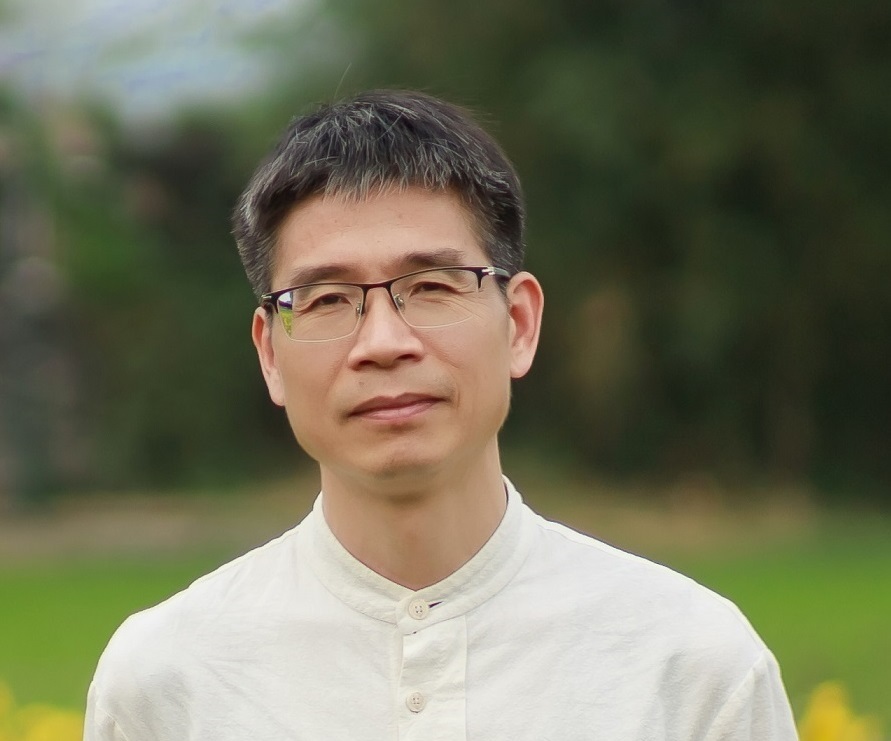
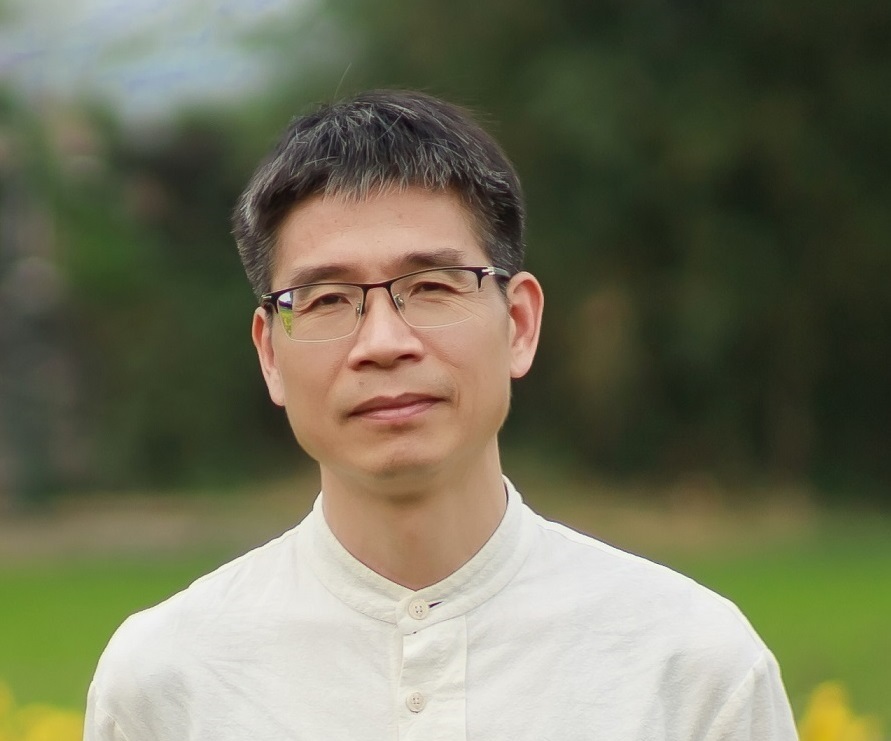
— Jin Zhenbao, PhD, Process Healer, Founder of the Shenzhen Actual Entity Meditation Healing Center

My Summary at the end of the 1st West-East Meditation, Philosophy and Dialogue Workshop (May, 2025)

This workshop is a pilot project. Thandeka as a theologian and philosopher has devoted herself to work on the relationship between mind and body, on the origins of religious emotion for more than 30 years, using insights from the brain science of emotions, Schleiermacher’s affect theology and insights from quantum physics. I have been fully engaged in the practice of meditation and the research on Taoism, Confucianism, Buddhism, the relating fields of science, including brain science and quantum physics, as well as philosophy, especially process philosophy of Alfred N. Whitehead in the past 13 years.

Both of us have started our journey first for healing ourselves. For Thandeka it’s her trauma in her early life. For me it’s my cancer. But we both come to realize that the effort to heal reveals a deeper reality, a deeper understanding of the relationship between  mind and body, about the human nature. And not only that. It also leads to a deeper understanding of our relationship with all beings, with the nature and the cosmos.

We both have found the critical importance of pause, often pause for a while in each day of our life so that we can really feel, really experience, and communicate with ourselves and with other people at the level of feelings and experiences, but not get stuck in our minds, not  try to convince each other simply through words and opinions. It’s only through systematic practice of pause with consciousness, we can get connected to our true self, and help each other to achieve their true selves.

On the other hand, Thandeka’s approach and my approach also differ in subtle but important aspects because of our different cultural backgrounds. While Thandeka’s approach also emphasizes the experience of the infinite universe felt in a finite moment of your own life she focuses on its locus: “the inbetween,” the place between events where the experience of energy surging begins between our mind and body, between our connections with ourselves and with other people, with nature and the cosmos, which is first felt by the body as infinite fullness—pure experience—while the mind, at the same time, is absolutely empty of thought and thus in a state of pure awareness. She emphasizes how this space for interconnection-consciousness  gets lost and how to find this space again.

My approach emphasizes the experience of the circulation of energy in us.

This circulation of energy is based on the Taoist cosmology of Yin and Yang. Yin and Yang are both manifestations and movements of Qi. Their dynamic interaction and balance sustain our life and its healthy development.  Its existence and great significance for healing  various types of physical and mental health issues, for deeper understanding of our true self and the relationship between mind and body, and for achieving the full capacity of each of us as human beings in our life, can be tested by each of us personally.

I’m sure both approaches can be integrated and lead to a more complete self-awareness and pure experience.

We believe our collaboration is of great importance for today’s world. As we all can see, our environment is getting toxic. Both in the US and in the world at large, the existing order is collapsing. People are under stress, become depressed and get angry easily. There are wars and more wars loom in the distance. 

At a time when science and technology have been highly developed and are still fast developing, especially in the area of AI, these symptoms hint at deeper problems, which are related to our belief. Both Thandeka and I believe the world is having a metaphysical crisis. Why? We do not know how to think about what ails us, because we can’t  feel what we’ve lost so there’s nothing to think of talk about. We need a new  vocabulary for this work. We need concepts that define what’s lost in the environment in which we live, which is why we call it a metaphysical problem: the conceptual ability to explain and prompt practices cultivating Qi. Without the right concepts the physical experiences are unknowable by the mind. 

Persons who live a little distance from their bodies get sick mentally and physically because they have lost access to the life-giving surging energy of Qi.

A society under the reign of a philosophy that separates mind from body falls apart. To really heal this rupture, we cannot simply target the symptom, but need to address the root problem. 

And we are not simply doing speculative analysis. We are doing real body and mind therapies. With the knowledge of circulation of Qi, combined with PDR, meditation and deep dialogue, reflection over our beliefs, the experience of energy flow and its healing effect, such insight and practice bring forth our personal wellbeing and the welfare of the society at large, national and international. This is why I believe  our online workshop model, albeit a small beginning, will gain momentum gradually and at a certain point, spread wide and vast.

West-East Meditation, Philosophy and Dialogue Workshop

Experience Our Interconnectedness

In this Intercultural Meditation, Philosophy and Dialogue Workshop

with The Rev. Dr. Thandeka and Dr. Zhenbao Jin

Facing ecological crises and our existential ennui, there is an urgent need for a deeper understanding of our interconnectedness.

This understanding can usher in a brighter story of human nature and its potential. 

Our physical and mental health and our ability to thrive are dependent upon our capacity to connect with our inner-most feelings, with others, with nature and with the Cosmos.

A deeper understanding of our interconnectedness won’t be gained in a science laboratory, but has to be explored by each individual through a systematic practice of self-observation and deep dialogue with others, drawing on resources from different traditions and insights from the latest findings in science and philosophy. And the process has to be experienced in an environment of safety, trust, joy, love, compassion, hope, vitality and the flow of Qi—the energy that nourishes life and sustains emotional, mental and physical development.

We invite you to participate in this world-engaging workshop. We will Zoom together across the globe to connect using a powerful combination of ancient Chinese wisdom, modern Western spiritual insights and contemporary findings in science and philosophy, so we can embark together on a new journey for humankind’s wellbeing, happiness and care.

The group will be small. The goal global: connecting the current divides between individuals, classes, societies and cultures, between religions and science, between mind and body, and between human beings, nature and the Cosmos.

Would you like to participate?

The workshop takes place Sundays, October 5-December 7 8amET/8pmBT. each session lasts 2 hours.

Tuition is only $300 for this world-engaging workshop!

Register here:        https://www.paypal.com/ncp/payment/3ER66U6UZ6SFE

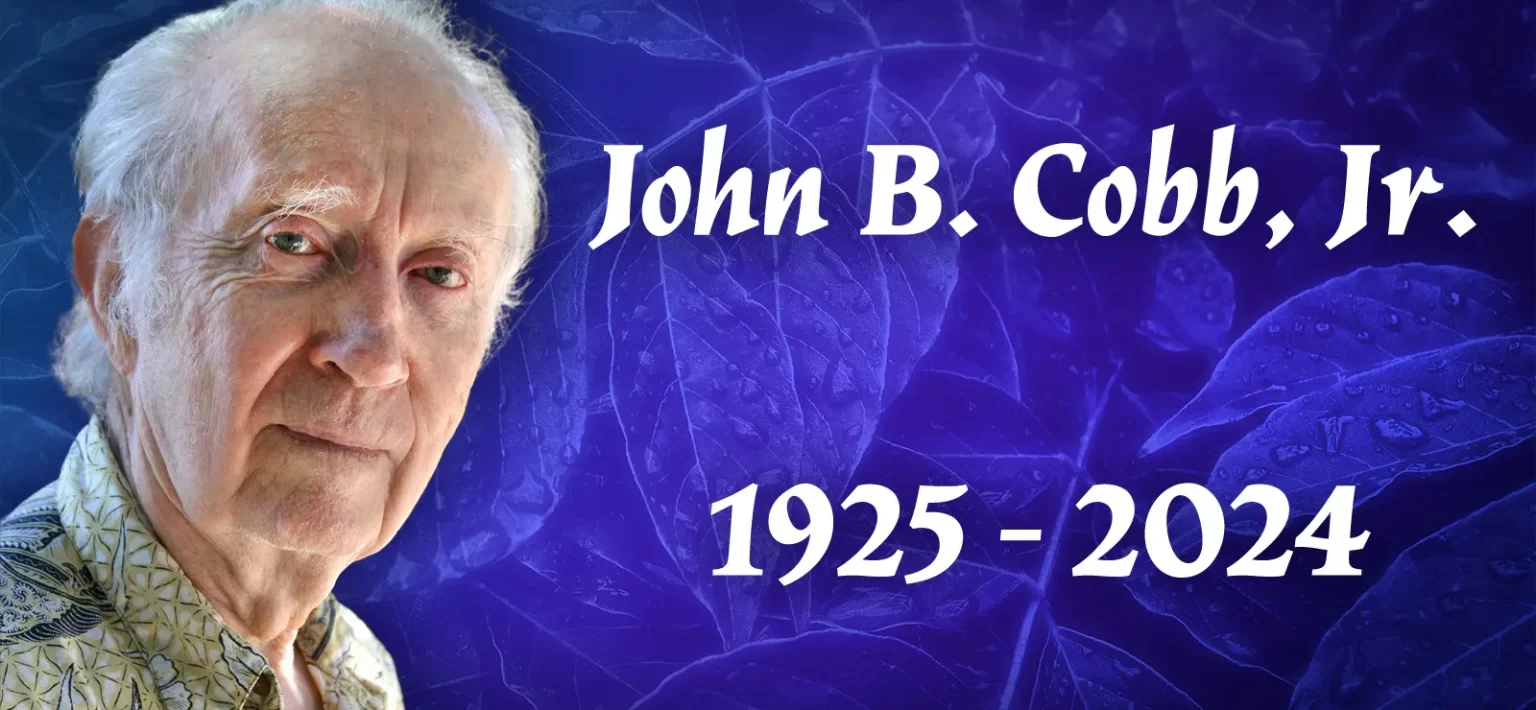
Dr. Zhenbao Jin has a PhD in law from China University of Politics and Law. He was a lawyer, law lecturer and his law-related research focused on philosophy of law. Since his diagnosis of lymphoma in 2012 (which he healed through his meditation practices), he has shifted his focus of research to Taoism, Buddhism, Confucianism and related branches of science, as well as philosophy, especially process philosophy as developed by Alfred N. Whitehead (1861-1947) and John B. Cobb, Jr. (1925-2024).   He has developed an integrative approach to meditation which is undertaken as a practice of philosophy rather than religious belief. It focuses on the flow and circulation of life energy or Qi and maximizes your potential as a living being in healing yourself from various mental and physical problems, while providing a promising path for each individual to explore the infinite potential of oneself and humanity.

His work on meditation––The Power of Quietness: the Philosophy, Methodology and Practice of Meditation is expected to be published in 2025. Additionally, Dr. Zhenbao Jin has translated 5 books from German into Chinese: Einfuehrung ins Recht (Introduction of Law, by Prof. Reinhold Zippelius, Chinese version 2007), Juristische Methodenlehre (Methodology of Law, by Prof. Reinhold Zippelius, Chinese version 2009), Rechtsphilosophie (Philosophy of Law, by Prof. Reinhold Zippelius, Chinese version 2011), Was ist Anthroposophie (What is Anthroposophy, by Heinz Zimmermann, Chinese version 2015) and Wo Stehe Ich und Wo Geht’s Jetzt Hin (Where am I now and Where am I Going: Biography Work in the Light of Anthroposophy, by Dr. Med. Susanne Hofmeister, Chinese version 2018), all of which have been published in China.

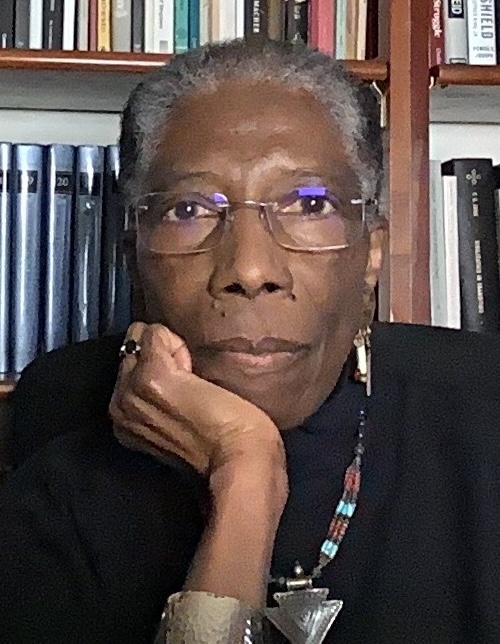
The Rev. Dr. Thandeka, PhD, is a Unitarian Universalist minister and one of America’s leading theologians. She is the founder of Contemporary Affect Theology, which uses research from the brain science of emotions, Affective Neuroscience (AN) to study how traumatized emotions get transformed into life-affirming feelings of interconnection revealing something universal: humans are inextricably interconnected with all of life and have an innate capacity to experience our interconnectedness––affirming the inherent worth and dignity of every person across partisan, cultural and religious divides.

Thandeka used insights from AN to track down the trauma foundational to 2000 years of Christian antisemitism (as documented in her book Love Beyond Belief: Finding the Access Point to Spiritual Renewal), 300 years of American racism (as documented in her book Learning to Be White: Money, Race, and God in America) and the emotional disarray in America today. These insights have been combined into a new body of work called The Untrolling Project, which reveals the sources of our divisions and the relational bridge we can use to reconnect––Universal Connections small group work. Her other publications include her book, The Embodied Self: Friedrich Schleiermacher’s Solution to Kant’s Problem of the Empirical Self, and essays in The Oxford University Handbook on Feminist Theology and Globalization and The Cambridge Companion to Schleiermacher. Her books and essays have helped secure her place as a “major figure in American liberal theology,” as Gary Dorrien notes in The Making of American Liberal Theology: Crisis, Irony, and Postmodernity, 1950-2005 (John Knox Press, 2006). Thandeka has taught at The Czech Unitarian Academy in Prague, Williams College, Harvard Divinity School and Brandeis University, and has been a Fellow at the Stanford Humanities Center at Stanford University, a Visiting Scholar at the Center for Process Studies at Claremont School of Theology in Claremont California and Union Theological Seminary in New York City.

Feedbacks of some Participants of the 1st Universal Connection as Qi Cultivation Workshop (Apr. 1st to May 2nd, 2025)

DJ

Throughout this five-week cross-cultural meditation workshop, I’ve witnessed the beautiful convergence of Eastern and Western perspectives on universal connections. My decade-long practice of Tai Chi provided me with experiences of qi and energy, but this workshop offered crucial frameworks to deepen my understanding.

The Western PDR approach complemented the Eastern stillness meditation beautifully. The most profound insight came through the parallel teachings about “gaps” – whether between musical notes as Thandeka described, or between breaths as taught by Zhenbao. Both recognized these spaces as portals to deeper awareness.  This integration of Eastern wisdom and Western approaches has fundamentally transformed my practice from seeking experiences to recognizing the awareness that’s always present.

The community aspect of this workshop provided essential support, making the path to self-discovery feel less solitary. Through the teachings and sharing at this workshop, my concept of True Self has evolved.  I now recognize that True Self isn’t separate from universal consciousness – it is the boundless awareness in which all things naturally reside.

In memory of the legendary Bruce Lee, I would like to share with you his famous teachings. “Be water my friend. You put water into a cup, it become the cup. You put water into a bottle, it becomes the bottle. To be like water, you must first clear the mind. Only then you can flow without hesitation; Adapt without limitation. Most see the mind and the body are separate things. This is the greatest delusion. They are one force in complete unity. Let your body and mind flow as one force, one unstoppable expression of your true self.”

SL

Humans are always trapped in something: hate, love, social relationships, political believes, genetic limitations, even in their own creativity and imagination… But ultimately, we are trapped in space and time; we become old and broken. Old is the limitation of time, and broken is the limitation of space. Language, this thing we use, is trapped in both. Meditation, Qi, praying to god—doesn’t matter what we call it—gives us a way out… When we become unlimited, we are interconnected. This is absolutely valuable to me, Because of you, I realize this clearer now, so I thank you all.  

RJ

My PDR:

There are sprouts in my planters

Seeds are amazing

How they can hold their core in tact for so long

In the dark

Just waiting to seek the light

 A new sprout is so beautiful, and it is a teacher

 And so are you all

 That’s the learning I received here

 The teachings are great

 But, it’s you… The community

 Similar people sharing human experiences

 Makes me feel not alone

 I thank you for that

Kevin

It’s a great experience to join the universal connections Qi cultivation courses organized and led by Dr. Zhenbao and Dr. Thandeka.

I understood how Qi flows inside my body as the form of energy and how we are connected with the rest of the universe.

I learned the methods to get into the peace state and the ways to discern inwardly to find the core of my true self.

With each breath accompanied with swelling and shrinking of the belly, I can feel the circulation of Qi goes through the vessels in my body freely, so rise the energy and power and courage and wisdom and health .

Most importantly, such practice can’t be done without love, only love to the world can lead us to better status.

I’m also very thankful to God of giving me such a wonderful opportunity to make so many friends at the class.

Universal Connection as Qi Cultivation Workshop (Beginning June 2nd)

East Connects with West in this Meditation, Philosophy and Dialogue Workshop 

with The Rev. Dr. Thandeka and Dr. Zhenbao Jin

At your deepest level, you know you are connected to all beings in the world, to your families and friends, to your neighbors and to people on the other side of the globe, to all animals, plants, mountains and rivers, planets and stars.

Our physical and mental health is dependent upon these connections. The harmony and peace of our community, be it local, national or global, is dependent upon these connections.

However, these connections get blocked in today’s world, leading to the collapse of personal health and the integrity of our family, our community and the planet.

To reconnect humanity, these connections have to be experienced as safety, trust, joy, love, compassion, hope and the flow of Qi, the energy that nourishes life and sustains emotional development. Qi makes the evolution of life and the Cosmos possible. 

The Rev. Dr. Thandeka and Dr. Zhenbao Jin help people cultivate those connections. 

Thandeka in the West and Zhenbao in the East. 

You’re invited to apply for a spot in this exciting new workshop. We will Zoom together across the globe––ideally 4 Eastern participants and 4 Western participants––to connect using a powerful combination of ancient Chinese wisdom, modern Western spiritual insights and contemporary findings in science and philosophy, so we can embark on a new journey for humankind’s wellbeing, happiness and care.

The group is small. The goal is global: a bridge connecting the divides between individuals, classes, societies and cultures, between religions and science,  between mind and body, and between human beings, nature and the Cosmos. 

Would you like to participate? 

The workshop takes place June 2-July 28 in the West and June 3-July 29 in the East. We will meet via Zoom Monday evenings (7-9:00ET) in the West which will be Tuesday mornings (7-9:00 Beijing Time) in the East. We’re offering an equity-based registration fee for this world-engaging workshop!

Register here:        https://www.paypal.com/ncp/payment/ZKKS7LMSH8U2U

Dr. Zhenbao Jin has a PhD in law from China University of Politics and Law. He was a lawyer, law lecturer and his law-related research focused on philosophy of law. Since his diagnosis of lymphoma in 2012 (which he healed through his meditation practices), he has shifted his focus of research to Taoism, Buddhism, Confucianism and related branches of science, as well as philosophy, especially process philosophy as developed by Alfred N. Whitehead (1861-1947) and John B. Cobb, Jr. (1925-2024).   

He has developed an integrative approach to meditation which is undertaken as a practice of philosophy rather than religious belief. It focuses on the flow and circulation of life energy or Qi and maximizes your potential as a living being in healing yourself from various mental and physical problems, while providing a promising path for each individual to explore the infinite potential of oneself and humanity.

Dr. Zhenbao Jin has translated 5 books from German into Chinese: Einfuehrung ins Recht (Introduction of Law, by Prof. Reinhold Zippelius, Chinese version 2007), Juristische Methodenlehre (Methodology of Law, by Prof. Reinhold Zippelius, Chinese version 2009), Rechtsphilosophie (Philosophy of Law, by Prof. Reinhold Zippelius, Chinese version 2011), Was ist Anthroposophie (What is Anthroposophy, by Heinz Zimmermann, Chinese version 2015) and Wo Stehe Ich und Wo Geht’s Jetzt Hin (Where am I now and Where am I Going: Biography Work in the Light of Anthroposophy, by Dr. Med. Susanne Hofmeister, Chinese version 2018). His work on meditation––The Power of Quietness: the Philosophy, Methodology and Practice of Meditation is expected to be published in 2025.

The Rev. Dr. Thandeka, PhD, is a Unitarian Universalist minister and one of America’s leading theologians. She is the founder of Contemporary Affect Theology, which studies how traumatized emotions get transformed into life-affirming feelings of interconnection revealing something universal: humans are inextricably interconnected with all of life and have an innate capacity to experience our interconnectedness––affirming the inherent worth and dignity of every person across partisan, political and religious divides. 

Thandeka’s insights and contemplative practices led her to create a spiritual strategy and philosophy aligned with the affective work of Friedrich Schleiermacher (1768-1834)—the father of modern theories of human understanding and the father of liberal theology. 

As a result, Thandeka freed herself from the trauma of her early childhood experiences. She creates Universal Connections groups so others can gain access to a liberation practice of freedom.

Thandeka’s books and essays have helped secure her place as a “major figure in American liberal theology” as Gary Dorrien notes in The Making of American Liberal Theology: Crisis, Irony, and Postmodernity, 1950-2005  (John Knox Press, 2006). 

Her books include The Embodied Self: Friedrich Schleiermacher’s Solution to Kant’s Problem of the Empirical Self (1995), Learning to be White: Money, Race and God in America (1999, German edition 2009) and Love Beyond Belief: Finding the Access Point to Spiritual Awareness (2018).

 Her essays include work in The Oxford University Handbook on Feminist Theology and Globalization (2011), and The Cambridge Companion to Schleiermacher (2005).

The Rev. Dr. Thandeka’s comments on my work

Dr. Zhenbao Jin re-affirms what Western Process Studies sometimes neglects: its experiential, non-speculative  foundation. 

Alfred North Whitehead, the founder of process thought,  affirmed this foundation in his magnum opus Process and Reality, when noting: “Your acquaintance with reality grows literally by buds or drops of perception. Intellectually and on reflection you can divide these into components, but as immediately given, they come totally or not at all.”

The revered scholar, beloved teacher and process philosopher Dr. John B. Cobb Jr. affirmed this foundational claim of Whiteheadian studies when noting process studies can be thought of as a “philosophy of emotions.”

 Dr. Jin explores these percepts of process thoughts—the emotions—as Qi: “The ability to directly experience the flow of energy in us,” which can strengthen and mobilize the flow of energy in us and restore “the balance of energy flow in our body, which is the basis of physical and mental health.”

His practice of creating these actual occasions of experience cured him of cancer.

As a consequence, Dr. Jin not only analyzes Process Studies, but also leads workshops to help participants achieve healing experiences.

Dr. Jin’s thus uses insights from ancient Chinese wisdom to rescue process studies from the realm of speculative Western metaphysics. He also readily acknowledges his indebtedness to it, when noting he would not be able to fully understand the this-worldly experience of life itself that permeates in his culture profound meaning without his research in the Western way of thinking of process studies: how these philosophers structure their reasoning when trying to understand true reality.

Dr. Jin’s work thus enriches process thought as it enriches his ability to reaffirm Qi as a life-transforming practice.

This meeting of East and West in his work makes him a master teacher and practitioner.

In April, Dr. Jin and I will offer a  biweekly, five-week workshop and course called Qi and Universal Connections. It’s goal: the creation of new small groups as a USA/Chinese cultural exchange program for spiritual health and wellbeing.

The Rev. Dr. Thandeka, Ph.D.

Newton, Massachusetts, USA

Founder and co-Director of Universal Connections small group workshops

https://revthandeka.org/small-groups

universalconnections.world

Co-director and co-writer of The Untrolling Project

https://revthandeka.org/the-untrolling-project

untrolling.org

Qi and its Circulation from the Perspective of Process Philosophy

With his philosophy, Whitehead aimed to “frame a coherent, logical, necessary system of general ideas in terms of which every element of our experience can be interpreted.” How is this possible? How can our experience of physical matters, like our touch of a stone or a bar of steel, our smell of a flower, and our feeling of truth and falsehood, goodness and evil, beauty and ugliness, as well as our experience of health and sickness, our experience of religions, including their different forms and traditions, and the different branches of science, etc., be subjected to the same scheme of interpretive principles?

With respect to this issue, Whitehead argued that “the primary method of philosophy is descriptive generalization.” He further explained this method of philosophy with his famous metaphor of the flight of an aeroplane: ”It starts from the ground of particular observation; it makes a flight in the thin air of imaginative generalization; and it again lands for renewed observation rendered acute by rational interpretation.”

That is, for him, the method of philosophy can be described as a way of imaginative construction, which has to be undertaken under strict conditions. “In the first place, this construction must have its origin in the generalization of particular factors discerned in particular topics of human interest”, such as in physics, in physiology, or in psychology, aesthetics, etc. Then, “the success of the imaginative experiment is always to be tested by the applicability of its results beyond the restricted locus from which it originated.”  In this way, “the partially successful philosophic generalization will, if derived from physics, find applications in fields of experience beyond physics.”

Therefore, it can be properly said that the whole edifice of the process philosophy is based on this method of imaginative generalization and construction, which means “the utilization of specific notions, applying to a restricted group of facts, for the divination of the generic notions which apply to all facts.”

Both philosophy and religion aim to give an answer to the question concerning the ultimate nature of reality. While the answer of religion simply requires belief, somewhat like a bold leap into the darkness, the answer of philosophy has to be understood and tested in a rational way. As Whitehead had put it, it has to be ”a coherent, logical, necessary system of general ideas in terms of which every element of our experience can be interpreted.”

So, the emphasis here is put on “a system of general ideas”. And Whitehead had managed to come up with a system of general ideas, including those with respect to actual entity, prehension, eternal object, God and its primordial nature and consequent nature, etc. However, a person who does not specialize in philosophy, especially the one elaborated by Whitehead, may raise  the question: how can I know?

This is a critical question. According to Whitehead, all our experience, that is, “everything of which we are conscious, as enjoyed, perceived, willed, or thought, shall have the character of a particular instance of the general scheme.”

If so, how can I know that “actual entities are the final real things of which the world is made up”? He said that these actual entities are drops of experience, complex and interdependent. If this is true, how can I experience it, and as a result, know it? After all, knowing has to be based on a certain form of experiencing.

It can be argued that Whitehead himself had reached these understandings through his personal powerful cognitive capacity and his lifelong work as scientist and philosopher. And he reached his understandings mainly through mental speculation.

The point is, can his findings, especially those core findings concerning actual entities, prehension, concrescence, and God be verified through the personal experience of everyone who has the interest to do so, or is it sufficient that these ideas remain as some interesting thoughts that exist only in the mind of Whitehead?

Whitehead obviously did not think the development of philosophy or metaphysics can occur only through speculation. It has to be able to have some impact upon our practical experience and go through its test: the aeroplane has to “land for renewed observation.”

The question is, how can our experience be interpreted according to the Whiteheadian philosophy?

For this purpose, the concept of Qi and its circulation which is of critical importance in the philosophy of Taoism can be very helpful. What’s more, I would like to argue that most probably the experience of Qi and its circulation can turn the Whiteheadian philosophy into an empirical scholarship whose scheme of ideas can be tested by the personal experience of each person who is interested to do so. Accordingly, philosophy will attain the same status as that of physics or any other branch of science which relies upon the test of their application in real life for their continual development.

In addition to that, philosophy and the different branches of science will find a new bondage with each other so that the transformation of human life and human consciousness and the development of scientific research fuel each other powerfully.

By contrast with process philosophy, Taoism is far more empirical than speculative. It is based on our personal experience, especially through the practice of meditation.

Whitehead wishes to develop a general scheme of ideas under which all our experience as enjoyed, perceived, willed or thought can be interpreted. By contrast, Taoism does not aim to simply “interpret”. It understands the cosmos as a process of evolution based on the functioning of Tao. I would argue the concept of Tao is comparable with that of God in Whiteheadian philosophy.

According to Chapter 42, Tao Te Ching, “Tao begets one, one begets two, two begets three and three begets myriad forms of beings. All forms of beings carry Yin and Yang and are harmonized through the mediation of Qi.”

This chapter obviously points to an evolutionary cosmology, under which the cosmos is a ceaseless and infinite process of evolution.  What “one”, “two” and “three” here mean is not very clear. I believe “one” could be interpreted as Qi, which is considered as the ultimate component of the cosmos. Zhuangzi (c.369 BC-c.286 BC), one of the two founders of Taoism in addition to Laozi, said “the whole cosmos is nothing but Qi. Life is the condensation of Qi and death is the dissipation of Qi.”

It would be inspiring and helpful to regard Qi as the counterpart of actual entity in Taoism. Like actual entity, Qi is not physical entity. We can only experience Qi through its flow, its movement. As a matter of fact, we can experience nothing without Qi, as without Qi or when Qi is weakened to a certain level, we die.

It would be very suitable to define Qi as “drops of experience”, as Qi is what we need to experience. We can even say we are ourselves Qi in a structured way.

There is prevailing opinion that “two” means Yin and Yang. Yin and Yang are two basic movements of Qi, with Yin as the tendency of condensation, which is the process of physical formation, and Yang as the tendency of dissipation, which is the development of consciousness.

According to Whitehead, an actual entity is essentially dipolar, with its physical and mental poles. The mental pole originates as the conceptual counterpart of operations in the physical pole. The two poles are inseparable in their origination.

We could say Yin is the physical pole of Qi and Yang is its mental/conceptual pole.

Yin and Yang can be experienced by each of us through the practice of meditation. They are not simply the product of imagination, but are findings that are gained through observation that is rendered acute by rational interpretation.

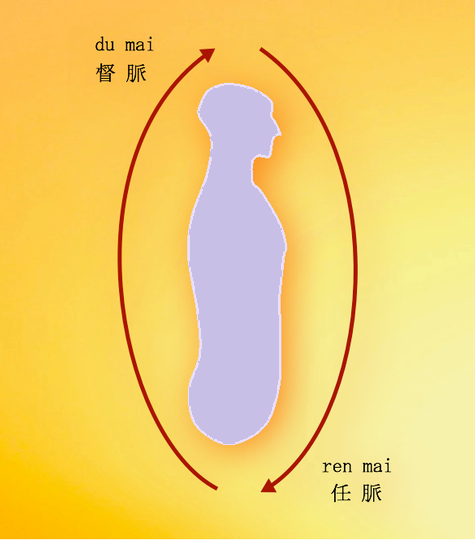
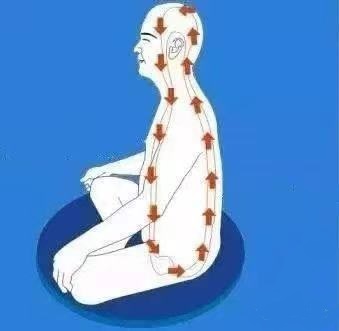
According to Taoism, Yin and Yang are represented by two major meridians in the body: the Ren meridian and the Du meridian. The Ren meridian goes from the chin downward along the chest, the belly to the perineum, while the Du meridian goes from the perineum upward along the spine, to the back neck and the head top (Baihui acupoint), then downward along the nose to the  philtrum. The Ren meridian and the Du meridian form a circle.

Ren means “pregnancy”. That is, the Ren meridian is responsible for the accumulation of Qi, which nourishes the body and is important for reproduction. It sustains the maintenance and development of the physical body. Accordingly, it’s the major Yin meridian.

Du means “leadership”. The Du meridian is responsible for the consumption of Qi, transporting Qi up to the brain for its work and development. It is of critical importance for the development of our consciousness. Accordingly, it’s the major Yang meridian.

The circulation of Qi along the circle formed by the Ren meridian and the Du meridian is always there. It determines the basic rhythm of our life, like outbreathing and inbreathing, awakeness and sleeping, etc. Normally we don’t experience this circulation of Qi, unless we start to practice meditation with the awareness that there is such a circulation.

People who practice meditation that is based on the Buddhist philosophy, like Zen meditation, vipassana, mindfulness, etc., normally don’t experience the circulation of Qi, even when they have practiced for more than 10 years. This is because what we can experience in our practice of meditation is determined by our understandings about life and the cosmos. There is no concepts of Yin and Yang and their circulation in the philosophy of Buddhism. Its focus is more placed on the experience of impermanence. With such mental state, the inherent pattern of energy circulation can not be discerned and fostered in a reliable way. Rather, its momentum will be ignored and suppressed.

For many people, the flow of Qi or life energy is actually their daily experience. It takes only a small step for them to imagine that there is such a circulation in the body. But for this small step one needs a whole philosophy and cosmology to make it meaningful.

In my personal case, I started to practice meditation according to the Taoist tradition around 11 years ago, for the purpose of healing myself from non-hodgkin lymphoma and some other chronical problems. I soon experienced the flow of Qi, and then its circulation. With the progress of the experience of Qi and its circulation, all the chronical problems have been fully healed and the lymphoma never deteriorated, without using any medicine, including chemical medicine and herbal medicine.

It seems to me that the Buddhist philosophy is more focused on the interrelatedness and interpenetration of the whole universe, instead of emphasizing its evolution, which, however, is a key principle of the process cosmology.

This evolution of the cosmos is achieved through the evolution of the actual entities in the form of prehension. Again, here the experience of Qi and its circulation can be very helpful for the understanding of the concept of prehension.

According to Whitehead, the essence of an actual entity consists solely in the fact that it is a prehending thing and its is constituted by its prehensions. There are physical prehension and conceptual prehension.

With intensified experience of Qi and its circulation through the practice of meditation, we can somehow experience how the process of prehension, including physical prehension and conceptual prehension occurs in a personal and direct way. When I have practice meditation for some years, I find that my experience of eating and reading changes.

When I ate something, like an apple, or a kiwi fruit, before I started to practice meditation, the experience of eating basically stayed in the area of my mouth and my tongue. It could be tasty or not. The rest of my body experienced very little from my eating. However, after some years of the practice of meditation, I can feel that with the eating of a fruit, the energy circulation in me is immediately strengthened. And now I can tell the quality of the food according to the strength and quality of the energy flow that it triggers in me. If the experience is strong and balanced, the food should be good quality, like organic vegetables and fruits. If the experience is weak and not balanced, the food is not that good in quality, like over-processed food.

I tend to think of my body as a circulation of energy. When I eat, that is, “prehend” some food, if the food is good in energy, my circulation will be directly strengthened with it. All the actual entities in that food will become the components of my body. Not like the normal understanding of digestion according to biology, I do not simply take over the nutrients from the food into my body, but the energy of the food is merged into the circulation of Qi in me and strengthen it: “many become one and is increased by one.”

The process of conceptual prehension, that is, prehension of eternal objects, can also be understood in a similar way. That explains why I’m enthusiastic about the study of process philosophy and taking the courses offered by the Cobb Institute. The speculative cosmology developed by Whitehead, together with its major concepts, including actual entities and its mental pole and physical pole, prehension, concrescence, God and its primordial nature and consequent nature, sounds to me resonant very well with my experience of meditation. When I read about them, or feel that my experience is beautifully interpreted in the course, I can feel that the circulation of Qi in me is greatly activated and strengthened. It seems to me that these concepts can be understood as eternal objects. When they are “prehended”, they become the constituting components of my consciousness, and strengthen the circulation of Qi in me.

As for the concept of God and its primordial nature and consequent nature, as God is an actual entity according to Whitehead, we can also directly experience it through the experience of Qi and the practice of meditation.  The concept that is comparable with God in Taoism is of course the concept of Tao, which is said by Mencius (BC 372-BC 289), another founder of Confucianism in addition to Confucius, to go together with Qi.  That is, if one can experience the flow of Qi deeply, he is coming close to Tao.

With the concept of God, Whitehead tries to pinpoint the permanence of things, in addition to the notion of the flux of things. Indeed, it’s the same with Tao in Taoism. According to Tao Te Ching, Tao is totally permanent. It never changes. At the same time, it is productive and is the mother of all the elements and beings in the universe.

On the other hand, both God and Tao can be described as the concept of emptiness in Buddhism. Emptiness is permanent, but it is the permanent source of creation and novelty.

This can also be experienced in the circulation of energy through the practice of meditation. We sink into emptiness when we practice meditation. However, it’s exactly in this emptiness of meditation, we experience the flow of Qi and its circulation, the source of life in the universe. With that, we grow and heal ourselves from various kinds of physical and mental problems.

And I would even argue that with this experience of Qi and its circulation through the practice of meditation, we can also free ourselves from declining due to aging. Life will no longer be a process doomed to end and die.  According to the cosmology of process philosophy, actual entities are the final real things of which the world is made up. So each of us as human being are also made up of actual entities.

That means, if we can personally experience this fact through the experience of the circulation of Qi in us, we will share the same capacity of an actual entity that keeps evolving through the interaction of its physical pole and mental pole. The point is that we need to become more and more aware of this and turn our life into a continual process of prehension, so that all the food we eat and all the ideas and knowledge we learn can be organically merged into the circulation in us and have it increased. This process should be able to go on forever, and there seems to me no reason that it will be prevented and stopped by some unsurmountable barriers.

I would say this process of human evolution is the final reality of the universe, as the human being is the highest exemplification of its principles. With this in mind, the task of the different branches of science is no longer to find the final truth, but to foster the interrelationship between the human beings and the universe, so that the ongoing evolution of each individual and the mankind as a whole can occur efficiently, peacefully and successfully.

Actually this is exactly the ideal of Confucianism since its very beginning. According to Da Xue, or the Big Learning, one of the founding works of Confucianism, the lifelong journey of a person shall be “If one wishes to bring peace to the world, one has to first bring peace to his kingdom; if one wishes to bring peace to his kingdom, one has to first bring peace to his family; if one wishes to bring peace to his family, one has to first cultivate his personality/body; if one wishes to cultivate his personality/body, one has to first make his mind upright; if one wishes to make his mind upright, one has to first to be true and honest; if one wishes to be true and honest, one has to first know the true reality; if one wishes to know the true reality, one has to have direct experience.”

With this ideal, the cultivation of one’s personality and body, the attainment of knowledge and the service for the peace of the world are not separate or conflicting tasks, but are mutually conditioned upon each other. The scholars of Confucianism in the history all had tried to shed more light on this ideal. With the insights from process thoughts and the ongoing development of knowledge in different branches of science, the preconditions for the true achievement of this ideal are ripening.

How Process Philosophy is related to Taoism?

I take interest in the Whiteheadian philosophy as I wish to find some intellectual support in the Western thoughts for my understanding and practice of Taoism. The cosmology of Taoism and its understanding of the human nature is very special in comparison to the other spiritual traditions and religions, like Buddhism, Christianity, Islam, Judaism, etc.. It is special as it hints at the possibility that we as human have the potential of infinite developing and evolving, body and soul together. Although this is against the “common sense” of people in general, the possibility and desire for eternal life lies in the deepest psyche of the mankind.

As an ex-lawyer and law lecturer in a university in China, I started to do research on Taoism 11 years ago for the purpose of deepening my practice of meditation. I was diagnosed to have non-Hodgkin’s lymphoma  in 2012. Thanks to my intuitive belief that the human body has the potential to heal itself, I started to practice a type of meditation based on Taoism. My practice of meditation soon brought very strong and amazing experience of the flow of Qi in the body. My health condition was obviously improved as a result. In addition to lymphoma, I also had atrophic gastritis, prostatitis and ankylosing spondylitis at the time. All the symptoms relating to these diseases were alleviated dramatically and have all gone by now with the deepening of my experience in the practice of meditation. At the same time, my lymphoma never deteriorated. In this course, I didn’t use any medicine, neither chemical medicine, nor any herbal medicine.

I believe the magic of spontaneous healing lies in the functioning of the flow of Qi. According to Taoism, Qi is the force and energy of life. Or put it more exactly, it’s the force and energy of Tao, which is the ultimate cause and logos of the cosmos. As the force and energy of life and Tao, Qi sustains all forms of elements, phenomena and life in the cosmos.

The cosmos in Taoism is not static. It’s an infinite process of evolution, driven by the movement of Qi, which functions in the interactive polarity of Yin and Yang. All forms of life, including the human life, are the result of this cosmic process of endless evolution. Chapter 42 of Tao Te Jing says: Tao begets one, one begets two, two begets three and three begets myriad forms of being. All forms of being carry Yin and Yang, and are harmonized through the mediation of Qi.

Therefore, the understanding of the cosmos and the understanding of life, including the life of each of us as human being, are fully consistent with each other in Taoism. As the matter of fact, the life of each of us as human being is regarded as the embodiment of Tao as the cosmic force and cause. Accordingly, we can find the existence of Tao and its functioning through systematic and persistent observation of ourselves, including our body, feelings, emotion, perception, energy flow, etc..

The practice of meditation should be understood as systematic and persistent observation of ourselves and accordingly a scientific undertaking. Different from our observation of anything else, our observation of ourselves as practiced in the form of meditation inevitably leads to some changes in ourselves. First of all it leads to the change of our mood, our perception and mental state. Then it leads to the change of our energy flow, and finally the transformation of our physical conditions.

As a matter of fact, according to Taoism, through the practice of meditation, the body can rectify itself, as is clearly said in Chuangtse (BC 369-BC286): ”Without looking, without listening, hold the mind in quietness, the body will rectify itself. ” In the Inner Canon of Emperor Yellow (compiled between BC 200- BC 100), another important piece of classic Taoist work and the founding work of traditional Chinese medicine, it’s said, “Desire nothing and empty one’s mind, Qi will flow and disease will be avoided. “

The Inner Canon of Emperor Yellow also mentioned that Qi flows in the body in a circle, with no beginning and no ending. All kinds of diseases are caused as a result of persisting interruption and weakening of this circulation, because of emotional disturbance, too much stress from physical or mental labor, or exposure to negative environment like coldness, etc.

These understandings are extensively applied in the folk culture in China, in basically all forms of Qigong and traditional Chinese medicine, and are proved very useful. And it’s widely knon that Qi flows in a circle that goes downward in the front of the body and goes upward in the back of the body. It has been tested by myself through my experience of meditation and by a lot of the trainees who have practiced meditation under my instruction. Whether a trainee can successfully experience the circulation of Qi in the body is an issue of time, if they practice meditation properly and persistently. It can range from 5 days to some months, depending on the trainees’ health condition, personality, gender, etc., and how intensive they practice.

Simply through restoration and strengthening of this inner circulation of Qi through the practice of meditation, healing of various types of diseases, including cancer, can be achieved. In this sense, the practice of meditation should not be limited to sitting meditation,  but should include at least moving meditation like walking and jogging. And I would further argue that each moment of our life should be spent in the principle of meditation, that is, with some degree of awareness of the state of energy flow and circulation in us. In the past 11 years, I feel that my experience of the circulation of Qi keeps deepening and strengthening through the practice of meditation.

Step by step I have come to this idea: does that mean my life as whole, including the body, energy and consciousness, can be developed and transformed through the practice of meditation infinitely, thus defying the fate of inevitable mortality? This is not that absurd as most people would think. They might argue that nothing stays and change of the body can not be avoided. However, I’m not wishing that my life will always stay as it is now. I clearly understand that each moment it’s going through subtle changes and after some years it will be a very different being than I am now. I’m simply wondering that as through my practice of meditation and relating research, I’m more and more becoming one with Tao, which is the ultimate force and cause of cosmos and brings forth life and evolution, I’m no longer simply a physical being that will sooner or later perish, but a being that can be continuously transformed through the functioning of Tao in me.  I can keep on strengthening the circulation of Qi in me so that my body will always be strengthened and upgraded.

That’s why I’m not satisfied with this idea of perpetual perishing related to the process philosophy. It seems to me that the Whiteheadian cosmology with all its concepts and principles actually depicts a cosmos that is in an infinite process of evolution that brings novelty, creativity and beauty. As this potential originates in the fundamental components of the cosmos, that is, actual entity, with all its features as defined in the Whiteheadian cosmology, each individual human being should have the same potential as the cosmos has.

Why even Whitehead himself didn’t make any hint at this possibility? I think there might be two reasons. One is that Whitehead had developed his cosmology basically through academic speculation, with his resources from his research in mathematics, physics and western philosophy. Indeed he was also influenced by Buddhism. However, in comparison with Taoism, Buddhism is much more speculative and does not emphasize the significance of the body as much as Taoism does.

The other reason is that Whitehead had no idea and experience of the inner circulation of Qi or life energy as introduced above. He had ingeniously come up with the concept of actual entity, which, as the fundamental components of the cosmos, are drops of experience, complex and interdependent. Each actual entity is essentially dipolar, with its physical and mental poles. However, most probably this concept of actual entity for him is basically the result of intellectual speculation assisted with his powerful intuition.

The concept of Qi in Taoism is very much comparable with the concept of actual entity. It’s regarded as the final real element of the cosmos. It’s not dead matter, but mediates between the physical dimension and the dimension of consciousness and can be cultivated in an organic way. It manifests itself in the interaction and inter-becoming of Yin and Yang, each of which is immanent in the other pole. We can say Yin and Yang is the two poles of Qi, which are comparable with the physical pole and the mental pole of an actual entity.

By contrast, the concept of Qi does not simply stay in theory. It can be fully experienced through the practice of meditation. In order for Qi to be fully experienced, it’s inevitable for us to experience of its circulation, going down in the front of the body and going up in the back of the body. The downward flow is more related to the functioning of the body and its development, while the upward flow is more related to the functioning of the mind and its development. They constitute respectively the physical pole and the mental pole of our being. Most probably this circulation of Qi is the manifestation of the interrelationship of the mental pole and physical pole of an actual entity in human as a society of actual entities, after innumerable years of cosmic evolution.

This circulation of Qi can be experienced and recognized spontaneously and naturally in the practice of meditation, as it is the inherent pattern of energy flow in us. However, it has to be recognized and confirmed by us, and intentionally deepened and strengthened in our practice of meditation. That is to say, a decision has to be made for us to continuously deepen our experience of this circulation. This decision is obviously also our confirmation of the value of life and our desire to live, to live well and to live better, just as Whitehead has said with respect to all living beings (Science and the Modern World, 1967, 18).

That explains why many people who have practiced meditation for many years have no idea and no experience of this inner circulation of life energy in the body, as their practice of meditation is based on a different philosophy which believes that the body is foredoomed to perish and the purpose of meditation is for us to be liberated from any attachment of the body and the life. 

My understanding of the process and relational philosophy is still in the very beginning. However, by intuition I believe that it provides an intellectually much more sophisticated cosmology that is based on the latest findings in science and the rich reservoir of western philosophy and at the same time confirms the traditional beliefs and doctrines of Taoism. On the other hand, Taoism as a spiritual tradition and scholarship that is fully embedded in its practical application in the ways of Qigong, meditation, traditional Chinese medicine, etc. can be very inspiring for the speculative cosmology of the process and relational philosophy to become a handbook of practice for people to become the master of their own health, healing and longevity. Through the practice of meditation, all the concepts, doctrines and principles of the process and relational philosophy can be empirically tested and further developed. This would be a very fruitful and promising hand-shaking and marriage between the Western thoughts and the Eastern tradition.

An Introduction of Healing Meditation

  1. What is Healing Meditation?

Healing meditation is developed by Dr. Zhenbao Jin in the process of his self-healing in the past 10 years after he was diagnosed to have lymphoma in 2012. It is based on an integrative understanding of Taoism, Confucianism, Buddhism, philosophy, especially process philosophy founded by Alfred N. Whitehead, and relating branches of science, such as contemplative neuroscience.

Meditation, as understood by Dr. Zhenbao Jin, is the consistent and systematic practice of observing one’s own body in a contemplative way, which means the thinking activity is suspended so that the energy flow and its inherent pattern can be experienced, revealed and cultivated. For that purpose, in addition to sitting meditation and standing meditation, different ways of moving meditation such as jogging, walking or doing Taiji are also important and necessary.

With the restoration and enhancement of the energy flow, our life will be revitalized in general, which helps to alleviate most of the apparent and latent health problems. The transformation of body, life and consciousness achieved through meditation will lead to new insights into our life, our existence and our relationship with other people and beings in the world.

2. Intellectual Basis of Healing Meditation

Healing is actually a side effect of meditation. Meditation is, in its essence, an intentional exploration of the true reality of our being and the cosmos. Through the experience of energy flow that keeps deepening, we will become aware of the fact that our life is an ongoing process of transformation and growth. It’s because we get trapped in a rigid mindset and become disconnected from the deeper reality of our life, that we start to weaken and get sick.

Dr. Jin’s approach of meditation is mainly inspired by Taosim, Confucianism, Buddhism and process philosophy, as well as relevant branches of sciences.

According to Taoism, our life consists of 3 dimensions: body (xing,形), energy (qi,气) and consciousness (shen,神). They are 3 manifestations of the same reality, and are closely related to each other. Energy serves as a bridge between body and consciousness. It flows in a circle, going down in the front and going up in the back, as shown in the drawing on the right.

The downward flow of energy is the process of energy accumulation that nourishes the body. The upward flow of energy is the process of energy consumption that supports the development of consciousness, with the brain as the major organ of consciousness.This pattern of energy flow directly relates to the symbol of Taoism: Taiji.

Although the energy flows in circulation all the time when we are alive, the practice of meditation leads to its strengthening so that this pattern of flow in circulation can be directly experienced and purposefully cultivated, which is of fundamental importance for our physical and mental health, healing of health problems and ongoing development.

Both Taoism and Confucianism are based on the cosmology of I Ching (the Book of Changes,易经), according to which, the Cosmos is an ongoing process of evolution that brings forth life and the human being and the Cosmos are one. While Taoism focuses more on the Cosmos (or Tao), Confucianism focuses more on the human nature as the embodiment of the Cosmos. Accordingly, the human being has the potential of ongoing development and growth. For that purpose, ethical behavior and concerns in our daily life are necessary and should be cultivated as meditation in daily practice, instead of in a dogmatic way.

While Taoism and Confucianism regard the human being as a whole and propose the development of body, energy and consciousness in dynamic balance, Buddhism has very deep insights in the nature and functioning of consciousness and the inter-relatedness of all beings.

Taoism, Confucianism and Buddhism all focus on the ongoing transformation of our own consciousness and/or our being itself. While the effects of such transformation can be measured by scientific means, like the physiological changes and development in the brain and the whole body, its mechanism and potential are beyond the reach of scientific research and fall into the realm of philosophy. In this sense Taoism, Confucianism and Buddhism, as well as other religions and spiritual traditions in the world can be understood as different traditions and schools of philosophy.

In this regard the process philosophy founded by Alfred N. Whitehead can be very helpful as it proposes an organic cosmology that depicts the Cosmos as an infinite process of development and evolution of creativity. Accordingly, it can serve as an powerful intellectual framework for us to understand meditation, different religions and spiritual traditions and their relationship to each other and to science.

3. How is an HM Workshop Organised?

Our body is the embodiment of the cosmic process of evolution. This has to be experienced in a conscious way and cultivated purposefully. Physical and mental problems, including various kinds of cancer occur when the inner process of development and transformation is ignored and suppressed. On the other hand, when we cultivate our consciousness of this inner process of transformation in a consistent and systematic way, natural healing will occur, often much faster than normally expected.

This workshop of healing meditation is designed for the purpose of cultivating the energy flow and our consciousness of it and its pattern so as to achieve the general improvement of health condition and the natural healing of various kinds of health problems. It can also serve as an empirical way to understand Taoism, Confucianism, Buddhism and process philosophy.

Different ways of meditation, including sitting meditation, standing meditation, jogging meditation and walking meditation will be introduced and practiced, with sitting meditation as major subject of training. It is suggested to do sitting meditation on a chair for beginners. The practice of sitting meditation normally begins with 10 minutes a session and is then extended gradually. After each session the participants will share their experience during the session and Dr. Jin will give his opinions and comments.

The workshop lasts 7 days, each day 2 and a half hours respectively in the morning and in the afternoon. For people with relatively good health conditions, they may experience evident energy flow in the first one to three days. For people much weakened due to health problems or aging, it may take 3 to 6 days to experience evident energy flow. The experience of energy flow is normally accompanied with improvement of health conditions, including digesting, sleeping, physical strength and alleviation of symptoms, such as pain.

4. Introduction of Dr. Zhenbao Jin

Dr. Zhenbao Jin is born in 1974 in China. He got a PhD degree in law for his research on philosophy of law at China University of Politics and Law in 2011. He had been a lawyer and a law lecturer in China. He speaks English and Chinese and can read in German.

In July 2012, Dr. Zhenbao Jin was diagnosed to have lymphoma. At the same time he had some other health problems including atrophic gastritis, prostatitis, ankylosing spondylitis, allergic rhinitis, etc. Dr. Jin started to do meditation at the advice of a friend, with an approach that is mainly based on Taoism. He soon had strong experience of energy flow and experienced its magic effect upon his health conditions.

Dr. Jin decided that this could be a good solution for his health problems. As a scholar, Dr. Jin believed that the mechanism of meditation and its effect could and should be explored in a rational way. Therefore, he didn’t follow any master or guru, but based his practice upon his study and research of Taoism, Buddhism, Confucianism, philosophy, anthroposophy, as well as relevant branches of science such as psychology, medicine, quantum physics, brain and neural science, science of consciousness, etc. Such research and study provide guidance for his practice of meditation and experience of energy flow. Dr. Jin has written around 600 articles in Chinese regarding his personal experience of meditation, his research and the reports of patients on the effect of meditation upon their health in his wechat blog (wechat is the most popular app for social networking in China) in the past 10 years.

Gradually the said chronic health problems have all alleviated and the lymphoma has never deteriorated in the past 10 years without the use of any chemical or herbal medicine. With the deepening experience of energy flow and the improvement of his health condition in general, Dr. Jin has realized that it’s not simply about healing, but about the exploration of the true reality of our being and the ongoing transformation of our life. In addition to that, meditation might be taken as the practical dimension of philosophical study, so that the study of philosophy is no longer simply speculative, but can be tested in a way as practical and experimental as in particular branches of science.

Dr. Jin now lives in Shenzhen, China, working as a meditation teacher and doing relevant research as an independent researcher.

In September, 2019, Dr. Jin wrote an expert evidence for the Science and Technology Committee of the House of Lords of the UK in response to its inquiry of solution for an aging society, which is published at the Committee’s website:https://committees.parliament.uk/writtenevidence/344/pdf/.

here are two online presentations Dr. Jin have made, one for the Cobb Institute, California, and the other one for Milwaukee Zen Center, Wisconsin.

Healing in a Chinese Process Way, Cobb Institute, California, Dec.7,2023
Meditation for Healing and Transformation, Feb. 7, 2023, Milwaukee Zen Center, Wisconsin

5. Feedbacks from Previous Participants and a case report

(1) Klara, Chinese Canadian, 51, lung cancer State IV

Klara received online private tutoring of meditation by Dr. Jin in July and August, 2021, after she was diagnosed to have lung cancer. She had 15 times of online private tutoring, each time 1 hour. After that she practiced meditation on her own. In addition to meditation, she took targeted medicine. Below is her report in March, 2022, which is translated into English by Dr. Jin.

“In the evening of Mar. 8, 2022, when I started to do meditation, I soon felt that Qi, which normally flew from the tailbone upwards along the spine and stopped at the back neck, went further upward to the back head and flowed into the nostrils, then it slowly went down the throat and reached the lower belly. After that I lost the control of my breathing.

The flow of Qi started to take control of the pace of my breathing automatically. It seemed as if I no longer needed breathing. With each out-breathing, Qi flowed into the belly and with each in-breathing, Qi flowed into the brain. Qi flowed throughout the whole body at the rhythm of breathing, as if the whole body was breathing. After the meditation, I felt very relaxed, energetic and joyful. Walking upstairs was as easy as walking on the ground for me.”

On October, 2022, she further reported that her CT examination indicated that a tumor in her right lung had become smaller, from 2.3*1.7 cm to 1.7*1.2 cm. No new tumor was found. All the existing tumors had become smaller or remained the same. Her oncologist, who knew she had been practicing meditation, was very impressed with the test result and said whatever she did worked perfectly for her.

(2)Janaina, Brazilian, 22, attended the workshop from May 30 – June 1, 2016 in Beijing

When Leo (Dr. Zhenbao Jin) told us about his meditation workshop, I got really interested and curious about how it would be. It seemed like a good idea, as I am a very anxious person, always in a hurry with my work and studies. Furthermore, it would be a great opportunity to know a little bit more about Chinese culture, one of my main goals in my trip to the country. 

When we first came to the meditation center, it was afternoon and we were supposed to have dinner together. After the dinner, Leo suggested us to have a small training of meditation for twenty minutes, just so we would have a first contact with it.

He taught us the basic rule of breathing, explaining us that we had to focus on the breathing out. At the beginning, I felt really insecure and apprehensive, especially because I am a worrywart, always concerned about several things at once. For me, it is hard to be calm and to concentrate in myself, in my interior, in my own body and mind.

As the minutes passed, I started to get calmer. It is really difficult to explain what I felt in these first twenty minutes of meditation. Initially, I felt really hot and my hands started to sweat a lot. Later, I forgot these sensations, and I felt much more comfortable and self-confident. An immediate response of my body was to salivate more than usual, and this symptom persists until now.

Also, I felt my mouth stretched, specially my jaws. It seemed like something was happening with my body, but I couldn’t explain in words what it was. I can assure, however, it was a good sensation.

After this first session, we have made some stretching together. In this moment, I realized my body was absolutely out of shape. There were some stretching positions I couldn’t do very well, and it was hard to maintain in the same way for long time. Last year was so hectic, I let all physical activities aside. 

On the day that followed, we started in the morning with a twenty-minute session of meditation. This second time was much stronger than the first and little by little I started to feel the energy flowing in my body. After this session, we have made the same stretching again, and step by step I felt my body more flexible. With practice, as time passed, it was much easier to achieve and maintain the stretching positions I found hard in the beginning.

The most interesting thing for me was that in the end of the day, I felt my posture much better and it was very easy to get straight. In the past years, I had problems of bad posture. I’d done many years of physiotherapy but keeping a good posture has always been a trouble for me. Now, I realize meditation is the only practice that really helps me to maintain a good body posture.

This made me think much about the “western” culture, in which I had been educated: in all of those years, I had been concerned with strengthening the muscles of my back, as I was taught that by doing so I could improve my posture. After the workshop, I learned to see things under another perspective, and now I see that focusing on energy helps me to understand better my own body and how it works. For me, it was very interesting to see the difference of cultures during the workshop. This experience made me more conscious about aspects of my education I had never realized before. 

As the days passed, I started to feel different sensations about floating energy and my capacity of concentration improved substantially. I felt less and less stressful with life in general. It was a really good experience, one of the most remarkable I had in China. I could learn to deal better with my own body and mind.

Besides, I could get in touch with Chinese cultures, religions and philosophies. I wish I can learn more and more about this country and its culture, which is so great and rich in all its diversity. I am very grateful to have had the opportunity to participate in this workshop and I am sure I will take this experience for the rest of my life.          

(3)Douglas, British, 38, attended the workshop from Mar. 16 to 18, 2019

I had been practicing meditation for some years before meeting Leo (Dr. Jin), I had been practicing in the Buddhist way, and I wanted to learn the Taoist way. I found Leo’s method very easy, natural and helpful. I agree with his opinions about the difference between Buddhist and Taoist meditation. So for me the course helped find a way of meditation that can heal me.

On the first session I could feel the energy moving to where it needs to go, and I could sense my thoughts and emotions moving with the current of energy. With each session I found the flow was stronger. Leo’s teachings are very simple and straight forward. It is obvious that he has come up with his own technique. It is fast and easy to learn from him as he embodies what he teaches.

Also the course was held in beautiful scenery and I felt more enthusiastic about physical exercise and jogging than usual. I still feel this way since finishing the course. I have been practicing his way of meditation ever since and I can see that it is effecting me and I am confident I can heal blocks in my body and mind with this practice.

It was also a great Chinese cultural experience, as I live in a modern Chinese city, and this is the kind of wisdom that I wanted to learn when I chose to live here. I think this course would be very good for a beginner as you can get a lot of results without all the discipline and hard work that is often taught with other meditation styles.

(4) Mrs. Lv, Chinese, 63, received private tutoring from Apr. 24 to June 7, 2023

Dr. Jin: Mrs. Lv was diagnosed to have lymphoma with bone metastasis in the beginning of 2022. She was hospitalized and had several rounds of chemotherapy. I was invited by her daughter to give her private tutoring. She could hardly move and had a lot of pain when the tutoring started. My work with her lasted for nearly 40 days and the training includes sitting meditation, standing meditation, walking, stretching, jogging, etc. Little by little her mobility improved and her pain was slowly alleviated. By the end of the tutoring she could jog slowly and walk in the mountain for half an hour. I hereby attach a video showing her change from April 24 to June 2.

6.some photos of Dr. Jin’s previous workshops:

July, 2019, London, 2-day workshop    

Oct. 2019, Madrid, Spain, 3-day workshop

Oct. 2019, Beijing, 5-day workshop                   

March 2023, Shenzhen, 7-day workshop

A Summary of My 2022

Dear friends,

As the year is coming to the end, it’s time to reflect upon what has occurred to us in the past year and what changes we have gone through. Life keeps flowing and changing, little by little. I wish I could keep a track of it, as life does not simply flow, but it strives to grow, like a tree. By keeping an eye on it, I can stay in tune with and consciously nurture its growth.

In the beginning of the past year I had two cases of intensive private tutoring of healing meditation. The clients, two women at their 60s, were both cancer patients. One is Mrs. Lv, who has lymphoma with bone metastasis, and the other one is Mrs. Long, with lung cancer.

Mrs. Lv had had several rounds of chemotherapy before she came to me. She could hardly move and had a lot of pain when the tutoring started. My work with her lasted for nearly 40 days and the training includes sitting meditation, standing meditation, walking, stretching, jogging, etc. Little by little her mobility improved and her pain was slowly alleviated. By the end of the tutoring she could jog slowly and walk in the mountain for half an hour. I hereby attach a video showing her change from April 24 to June 2.

Mrs. Long started practicing meditation under my instruction soon after she was diagnosed, without having any medical treatment, as her daughter in law had followed my wechat blog for more than 2 years. Her mother had lung cancer and died after many rounds of medical treatment. So she persuaded her husband and her mother in law to try a more natural and holistic way. Due to the serious epidemic situation in Shenzhen, I was invited to their hometown and gave the tutoring for the woman as well as her son, daughter and the daughter in law in March. I worked with them for 10 days. The woman had been a farmer all her life and was basically healthy. Her experience in meditation deepened quickly. By the end of the 10-day workshop, she already had strong feeling of Qi circulation in the body and really enjoyed practicing meditation. Before the workshop she had no movement except her labor as farmer. It was a great burden for her to jog in the beginning. By the end of the workshop she could already jog quite easily. After the workshop she attended my online meditation group. The group met two nights per week. She later started to take targeted medicine besides meditation. Now she jogs each morning for several kilometers and does rope skipping in addition to sitting meditation every day. Some weeks ago she reported that her tumor has shrunk from the size of an egg to the size of a small grape.

Mrs. Long and her son and daughter practiced meditation after walking as warming up.

There are other successful cases for healing cancer through meditation based on Taoism in the past year. They indicate the great significance of meditation for boosting the power of spontaneous healing in us. So meditation is not only for psychological benefits, and works only at the mental level. Rather, it directly relates to the function of the whole body and corrects any defects that are caused by our continuous neglect of our physical and mental state.

I have to point out that my understanding of meditation is based on Taoism and Confucianism, which have a cosmology that is different from modern science as well as from Buddhism. According to the cosmology of Taoism and Confucianism, the cosmos is not static, but keeps on evolving by its very nature. Ying and Yang are the two opposite, but mutually supporting and nourishing processes of energy flow which propels the evolution of the cosmos. As a result, myriad forms of life come into being. There is the same dipolar energy flow in us, which constitutes the circulation of Qi. If this circulation goes smoothly without interruption or suppression, we keep on evolving as an individual and remain healthy both physically and mentally. Or else we suffer various forms of emotional disturbance and become too weak to resist the harmful elements in the environment, including virus.

In the past year I have been trying to find in the western heritage of culture a philosophy or cosmology that is compatible with this one. I read some interesting books, such as Irrational Man by William Barrett (a knowledgeable book for existentialism), Einführung in die Philosophie (Introduction of Philosophy) by Karl Jaspers, Hegel by Frederick Beiser, Aristotle by Jonathan Barnes, etc. I realize that indeed there is a thread of intellectual development in the west which regards the cosmos as an organic process of evolution rather than a mechanical machine that runs according to some physical laws.

What’s more interesting is, in the last several months of this year, I found that the philosophy of Alfred North Whitehead is an even more marvellous elaboration of such a cosmology, which is a genius combination of strict scientific reasoning and talented imagination. There are many concepts in Whiteheadean philosophy which I like very much. First of all it argues for a one-substance cosmology, in which ‘actual entities’ are the final real things of which the world is made up. Actual entities are not physical objects like atoms, but ‘drops of experiences’. In addition to that, ‘creativity’ is the universal of universals characterizing ultimate matter of fact, which is also the inherent nature of each actual entity.

I haven’t had the time to explore the Whiteheadean philosophy deeply. I just took two courses given by the Cobb Institute in the US (The Cobb Institute) on the Whiteheadean philosophy and started to read some of Whitehead’s works, such as Process and Reality, Adventures of Ideas, etc. My first encounter with Whitehead is very enlightening and I will do more research.

In Process and Reality, Whitehead said:“Whatever thread of presupposition characterizes social expression throughout the various epochs of rational society must find its place in philosophic theory. Speculative boldness must be balanced by complete humility before logic and before fact. It is a disease of philosophy when it is neither bold nor humble, but merely a reflection of the temperamental presuppositions of exceptional personalities. By providing the generic notions philosophy should make it easier to conceive the infinite variety of specific instances which rest unrealized in the womb of nature.”

Such a cosmology that is compatible with modern sciences and also strives to reconcile them with our religious experience is exactly what I’m searching for. It makes the experience of Qi and the healing effect of meditation even more intelligible. And I believe it is philosophy, rather than particular branches of sciences, be it neurology, brain science or quantum physics, that provides the proper vehicle for understanding meditation and meanwhile the guiding principles for it.

In early December, I had the chance to give an online presentation in English with the title “Healing in a Chinese Process Way” at the Cobb Institute. 97-year-old Prof. John Cobb, Jr., one of the leading scholars on process philosophy in our time attended the presentation and gave very warm and affirmative comments. The recording has been uploaded to the online archive of the Cobb Institute and can be retrieved via this link: Meeting Recordings – 2022 | Cobb Institute.

By the date of Jan. 13, 2023, it will be totally 10 years since I first started to practice meditation for the purpose of healing my lymphoma. From the very beginning I decided to approach meditation in a scientific and rational way, so that the healing effect of meditation could be strictly tested and, if it does have such effect, its mechanism should be understood in an intelligible way. I have followed this approach strictly in the past 10 years and now I can say I have fully achieved the goal. Not only I have recovered from my lymphoma, as well as other chronic problems including prostatitis, atrophic gastritis, ankylosing spondylitis, etc. in a totally natural way, without using any drugs or therapies except sitting and moving meditation, but also I have helped a lot of people achieve the same result by sharing my experience with them. What’s more, I can now explain in a very practical and intelligible way why this is possible and how we can achieve it in a most reliable and efficient way.

In the presentation I said that a new story of life is possible when we can integrate the intellectual heritages of the West and the East. With that I mean a form of life that is not doomed to become more and more vulnerable as we slowly get older. There is an inherent driving force in each of us that continuously nourishes and leads the development of our life so that it keeps evolving as the cosmos does. Or we can even say the conscious evolution of each of us by itself is a cosmic event, as each of us is the particular embodiment of the cosmic process.

After 3 years’ of entanglement with the corona virus, we finally see the light of free movement in China again. People in the world have suffered a lot from the virus. However, as always in our life, suffering can be a call and an urge for evolution.

I wish you all merry Christmas and a healthy, peaceful and happy New Year!

Zhenbao

From Shenzhen, China