- What is Healing Meditation?
Healing meditation is developed by Dr. Zhenbao Jin in the process of his self-healing in the past 10 years after he was diagnosed to have lymphoma in 2012. It is based on an integrative understanding of Taoism, Confucianism, Buddhism, philosophy, especially process philosophy founded by Alfred N. Whitehead, and relating branches of science, such as contemplative neuroscience.
Meditation, as understood by Dr. Zhenbao Jin, is the consistent and systematic practice of observing one’s own body in a contemplative way, which means the thinking activity is suspended so that the energy flow and its inherent pattern can be experienced, revealed and cultivated. For that purpose, in addition to sitting meditation and standing meditation, different ways of moving meditation such as jogging, walking or doing Taiji are also important and necessary.
With the restoration and enhancement of the energy flow, our life will be revitalized in general, which helps to alleviate most of the apparent and latent health problems. The transformation of body, life and consciousness achieved through meditation will lead to new insights into our life, our existence and our relationship with other people and beings in the world.
2. Intellectual Basis of Healing Meditation
Healing is actually a side effect of meditation. Meditation is, in its essence, an intentional exploration of the true reality of our being and the cosmos. Through the experience of energy flow that keeps deepening, we will become aware of the fact that our life is an ongoing process of transformation and growth. It’s because we get trapped in a rigid mindset and become disconnected from the deeper reality of our life, that we start to weaken and get sick.
Dr. Jin’s approach of meditation is mainly inspired by Taosim, Confucianism, Buddhism and process philosophy, as well as relevant branches of sciences.
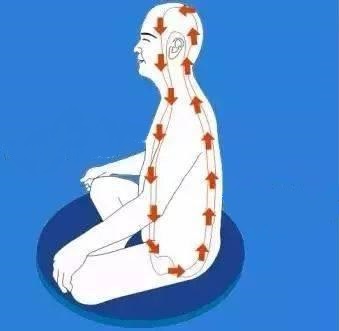
According to Taoism, our life consists of 3 dimensions: body (xing,形), energy (qi,气) and consciousness (shen,神). They are 3 manifestations of the same reality, and are closely related to each other. Energy serves as a bridge between body and consciousness. It flows in a circle, going down in the front and going up in the back, as shown in the drawing on the right.
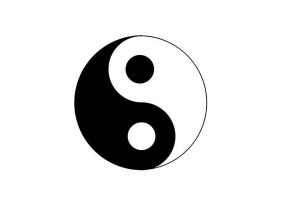
The downward flow of energy is the process of energy accumulation that nourishes the body. The upward flow of energy is the process of energy consumption that supports the development of consciousness, with the brain as the major organ of consciousness.This pattern of energy flow directly relates to the symbol of Taoism: Taiji.


Although the energy flows in circulation all the time when we are alive, the practice of meditation leads to its strengthening so that this pattern of flow in circulation can be directly experienced and purposefully cultivated, which is of fundamental importance for our physical and mental health, healing of health problems and ongoing development.
Both Taoism and Confucianism are based on the cosmology of I Ching (the Book of Changes,易经), according to which, the Cosmos is an ongoing process of evolution that brings forth life and the human being and the Cosmos are one. While Taoism focuses more on the Cosmos (or Tao), Confucianism focuses more on the human nature as the embodiment of the Cosmos. Accordingly, the human being has the potential of ongoing development and growth. For that purpose, ethical behavior and concerns in our daily life are necessary and should be cultivated as meditation in daily practice, instead of in a dogmatic way.
While Taoism and Confucianism regard the human being as a whole and propose the development of body, energy and consciousness in dynamic balance, Buddhism has very deep insights in the nature and functioning of consciousness and the inter-relatedness of all beings.
Taoism, Confucianism and Buddhism all focus on the ongoing transformation of our own consciousness and/or our being itself. While the effects of such transformation can be measured by scientific means, like the physiological changes and development in the brain and the whole body, its mechanism and potential are beyond the reach of scientific research and fall into the realm of philosophy. In this sense Taoism, Confucianism and Buddhism, as well as other religions and spiritual traditions in the world can be understood as different traditions and schools of philosophy.
In this regard the process philosophy founded by Alfred N. Whitehead can be very helpful as it proposes an organic cosmology that depicts the Cosmos as an infinite process of development and evolution of creativity. Accordingly, it can serve as an powerful intellectual framework for us to understand meditation, different religions and spiritual traditions and their relationship to each other and to science.
3. How is an HM Workshop Organised?
Our body is the embodiment of the cosmic process of evolution. This has to be experienced in a conscious way and cultivated purposefully. Physical and mental problems, including various kinds of cancer occur when the inner process of development and transformation is ignored and suppressed. On the other hand, when we cultivate our consciousness of this inner process of transformation in a consistent and systematic way, natural healing will occur, often much faster than normally expected.
This workshop of healing meditation is designed for the purpose of cultivating the energy flow and our consciousness of it and its pattern so as to achieve the general improvement of health condition and the natural healing of various kinds of health problems. It can also serve as an empirical way to understand Taoism, Confucianism, Buddhism and process philosophy.
Different ways of meditation, including sitting meditation, standing meditation, jogging meditation and walking meditation will be introduced and practiced, with sitting meditation as major subject of training. It is suggested to do sitting meditation on a chair for beginners. The practice of sitting meditation normally begins with 10 minutes a session and is then extended gradually. After each session the participants will share their experience during the session and Dr. Jin will give his opinions and comments.
The workshop lasts 7 days, each day 2 and a half hours respectively in the morning and in the afternoon. For people with relatively good health conditions, they may experience evident energy flow in the first one to three days. For people much weakened due to health problems or aging, it may take 3 to 6 days to experience evident energy flow. The experience of energy flow is normally accompanied with improvement of health conditions, including digesting, sleeping, physical strength and alleviation of symptoms, such as pain.
4. Introduction of Dr. Zhenbao Jin
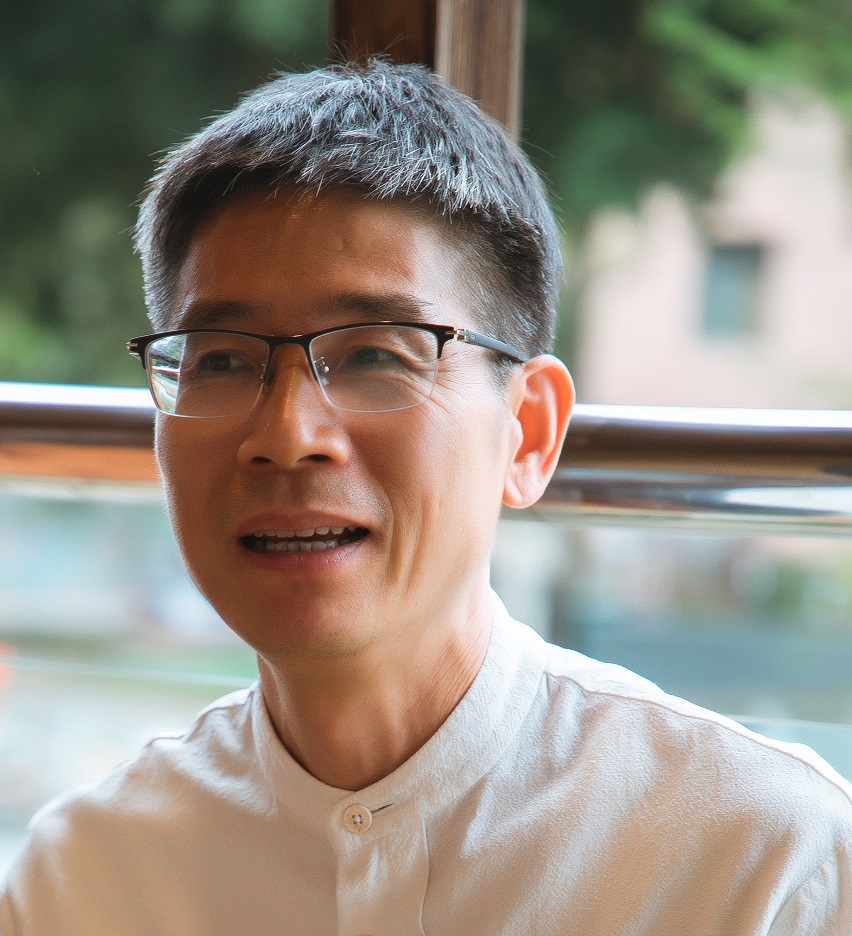
Dr. Zhenbao Jin is born in 1974 in China. He got a PhD degree in law for his research on philosophy of law at China University of Politics and Law in 2011. He had been a lawyer and a law lecturer in China. He speaks English and Chinese and can read in German.
In July 2012, Dr. Zhenbao Jin was diagnosed to have lymphoma. At the same time he had some other health problems including atrophic gastritis, prostatitis, ankylosing spondylitis, allergic rhinitis, etc. Dr. Jin started to do meditation at the advice of a friend, with an approach that is mainly based on Taoism. He soon had strong experience of energy flow and experienced its magic effect upon his health conditions.
Dr. Jin decided that this could be a good solution for his health problems. As a scholar, Dr. Jin believed that the mechanism of meditation and its effect could and should be explored in a rational way. Therefore, he didn’t follow any master or guru, but based his practice upon his study and research of Taoism, Buddhism, Confucianism, philosophy, anthroposophy, as well as relevant branches of science such as psychology, medicine, quantum physics, brain and neural science, science of consciousness, etc. Such research and study provide guidance for his practice of meditation and experience of energy flow. Dr. Jin has written around 600 articles in Chinese regarding his personal experience of meditation, his research and the reports of patients on the effect of meditation upon their health in his wechat blog (wechat is the most popular app for social networking in China) in the past 10 years.
Gradually the said chronic health problems have all alleviated and the lymphoma has never deteriorated in the past 10 years without the use of any chemical or herbal medicine. With the deepening experience of energy flow and the improvement of his health condition in general, Dr. Jin has realized that it’s not simply about healing, but about the exploration of the true reality of our being and the ongoing transformation of our life. In addition to that, meditation might be taken as the practical dimension of philosophical study, so that the study of philosophy is no longer simply speculative, but can be tested in a way as practical and experimental as in particular branches of science.
Dr. Jin now lives in Shenzhen, China, working as a meditation teacher and doing relevant research as an independent researcher.
In September, 2019, Dr. Jin wrote an expert evidence for the Science and Technology Committee of the House of Lords of the UK in response to its inquiry of solution for an aging society, which is published at the Committee’s website:https://committees.parliament.uk/writtenevidence/344/pdf/.
here are two online presentations Dr. Jin have made, one for the Cobb Institute, California, and the other one for Milwaukee Zen Center, Wisconsin.
5. Feedbacks from Previous Participants and a case report
(1) Klara, Chinese Canadian, 51, lung cancer State IV
Klara received online private tutoring of meditation by Dr. Jin in July and August, 2021, after she was diagnosed to have lung cancer. She had 15 times of online private tutoring, each time 1 hour. After that she practiced meditation on her own. In addition to meditation, she took targeted medicine. Below is her report in March, 2022, which is translated into English by Dr. Jin.
“In the evening of Mar. 8, 2022, when I started to do meditation, I soon felt that Qi, which normally flew from the tailbone upwards along the spine and stopped at the back neck, went further upward to the back head and flowed into the nostrils, then it slowly went down the throat and reached the lower belly. After that I lost the control of my breathing.
The flow of Qi started to take control of the pace of my breathing automatically. It seemed as if I no longer needed breathing. With each out-breathing, Qi flowed into the belly and with each in-breathing, Qi flowed into the brain. Qi flowed throughout the whole body at the rhythm of breathing, as if the whole body was breathing. After the meditation, I felt very relaxed, energetic and joyful. Walking upstairs was as easy as walking on the ground for me.”
On October, 2022, she further reported that her CT examination indicated that a tumor in her right lung had become smaller, from 2.3*1.7 cm to 1.7*1.2 cm. No new tumor was found. All the existing tumors had become smaller or remained the same. Her oncologist, who knew she had been practicing meditation, was very impressed with the test result and said whatever she did worked perfectly for her.
(2)Janaina, Brazilian, 22, attended the workshop from May 30 – June 1, 2016 in Beijing
When Leo (Dr. Zhenbao Jin) told us about his meditation workshop, I got really interested and curious about how it would be. It seemed like a good idea, as I am a very anxious person, always in a hurry with my work and studies. Furthermore, it would be a great opportunity to know a little bit more about Chinese culture, one of my main goals in my trip to the country.
When we first came to the meditation center, it was afternoon and we were supposed to have dinner together. After the dinner, Leo suggested us to have a small training of meditation for twenty minutes, just so we would have a first contact with it.
He taught us the basic rule of breathing, explaining us that we had to focus on the breathing out. At the beginning, I felt really insecure and apprehensive, especially because I am a worrywart, always concerned about several things at once. For me, it is hard to be calm and to concentrate in myself, in my interior, in my own body and mind.
As the minutes passed, I started to get calmer. It is really difficult to explain what I felt in these first twenty minutes of meditation. Initially, I felt really hot and my hands started to sweat a lot. Later, I forgot these sensations, and I felt much more comfortable and self-confident. An immediate response of my body was to salivate more than usual, and this symptom persists until now.
Also, I felt my mouth stretched, specially my jaws. It seemed like something was happening with my body, but I couldn’t explain in words what it was. I can assure, however, it was a good sensation.
After this first session, we have made some stretching together. In this moment, I realized my body was absolutely out of shape. There were some stretching positions I couldn’t do very well, and it was hard to maintain in the same way for long time. Last year was so hectic, I let all physical activities aside.
On the day that followed, we started in the morning with a twenty-minute session of meditation. This second time was much stronger than the first and little by little I started to feel the energy flowing in my body. After this session, we have made the same stretching again, and step by step I felt my body more flexible. With practice, as time passed, it was much easier to achieve and maintain the stretching positions I found hard in the beginning.
The most interesting thing for me was that in the end of the day, I felt my posture much better and it was very easy to get straight. In the past years, I had problems of bad posture. I’d done many years of physiotherapy but keeping a good posture has always been a trouble for me. Now, I realize meditation is the only practice that really helps me to maintain a good body posture.
This made me think much about the “western” culture, in which I had been educated: in all of those years, I had been concerned with strengthening the muscles of my back, as I was taught that by doing so I could improve my posture. After the workshop, I learned to see things under another perspective, and now I see that focusing on energy helps me to understand better my own body and how it works. For me, it was very interesting to see the difference of cultures during the workshop. This experience made me more conscious about aspects of my education I had never realized before.
As the days passed, I started to feel different sensations about floating energy and my capacity of concentration improved substantially. I felt less and less stressful with life in general. It was a really good experience, one of the most remarkable I had in China. I could learn to deal better with my own body and mind.
Besides, I could get in touch with Chinese cultures, religions and philosophies. I wish I can learn more and more about this country and its culture, which is so great and rich in all its diversity. I am very grateful to have had the opportunity to participate in this workshop and I am sure I will take this experience for the rest of my life.
(3)Douglas, British, 38, attended the workshop from Mar. 16 to 18, 2019
I had been practicing meditation for some years before meeting Leo (Dr. Jin), I had been practicing in the Buddhist way, and I wanted to learn the Taoist way. I found Leo’s method very easy, natural and helpful. I agree with his opinions about the difference between Buddhist and Taoist meditation. So for me the course helped find a way of meditation that can heal me.
On the first session I could feel the energy moving to where it needs to go, and I could sense my thoughts and emotions moving with the current of energy. With each session I found the flow was stronger. Leo’s teachings are very simple and straight forward. It is obvious that he has come up with his own technique. It is fast and easy to learn from him as he embodies what he teaches.
Also the course was held in beautiful scenery and I felt more enthusiastic about physical exercise and jogging than usual. I still feel this way since finishing the course. I have been practicing his way of meditation ever since and I can see that it is effecting me and I am confident I can heal blocks in my body and mind with this practice.
It was also a great Chinese cultural experience, as I live in a modern Chinese city, and this is the kind of wisdom that I wanted to learn when I chose to live here. I think this course would be very good for a beginner as you can get a lot of results without all the discipline and hard work that is often taught with other meditation styles.
(4) Mrs. Lv, Chinese, 63, received private tutoring from Apr. 24 to June 7, 2023
Dr. Jin: Mrs. Lv was diagnosed to have lymphoma with bone metastasis in the beginning of 2022. She was hospitalized and had several rounds of chemotherapy. I was invited by her daughter to give her private tutoring. She could hardly move and had a lot of pain when the tutoring started. My work with her lasted for nearly 40 days and the training includes sitting meditation, standing meditation, walking, stretching, jogging, etc. Little by little her mobility improved and her pain was slowly alleviated. By the end of the tutoring she could jog slowly and walk in the mountain for half an hour. I hereby attach a video showing her change from April 24 to June 2.
6.some photos of Dr. Jin’s previous workshops:
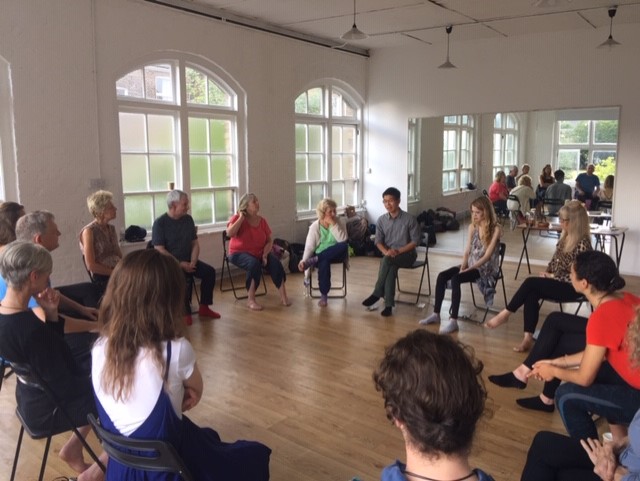
July, 2019, London, 2-day workshop
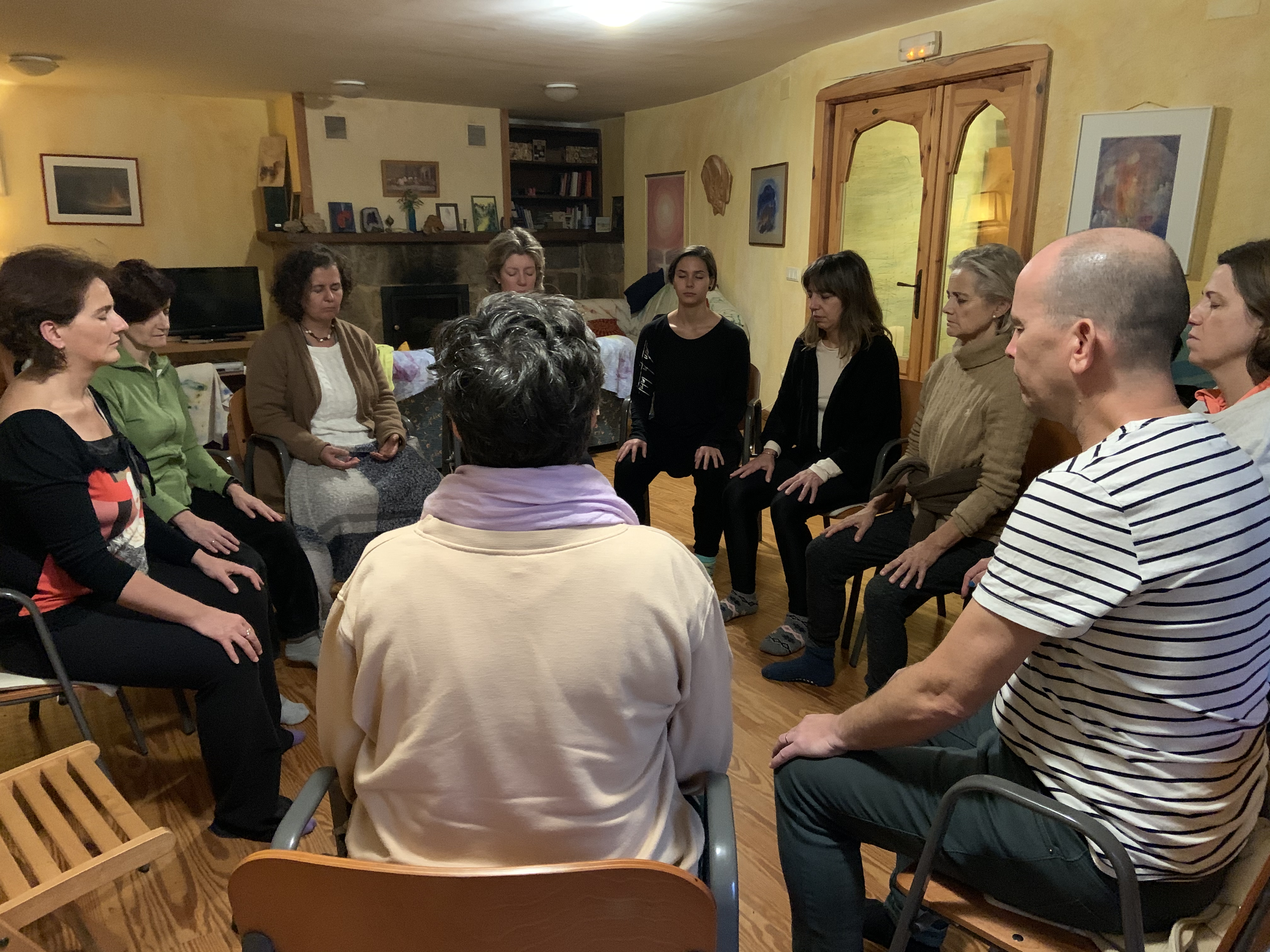
Oct. 2019, Madrid, Spain, 3-day workshop
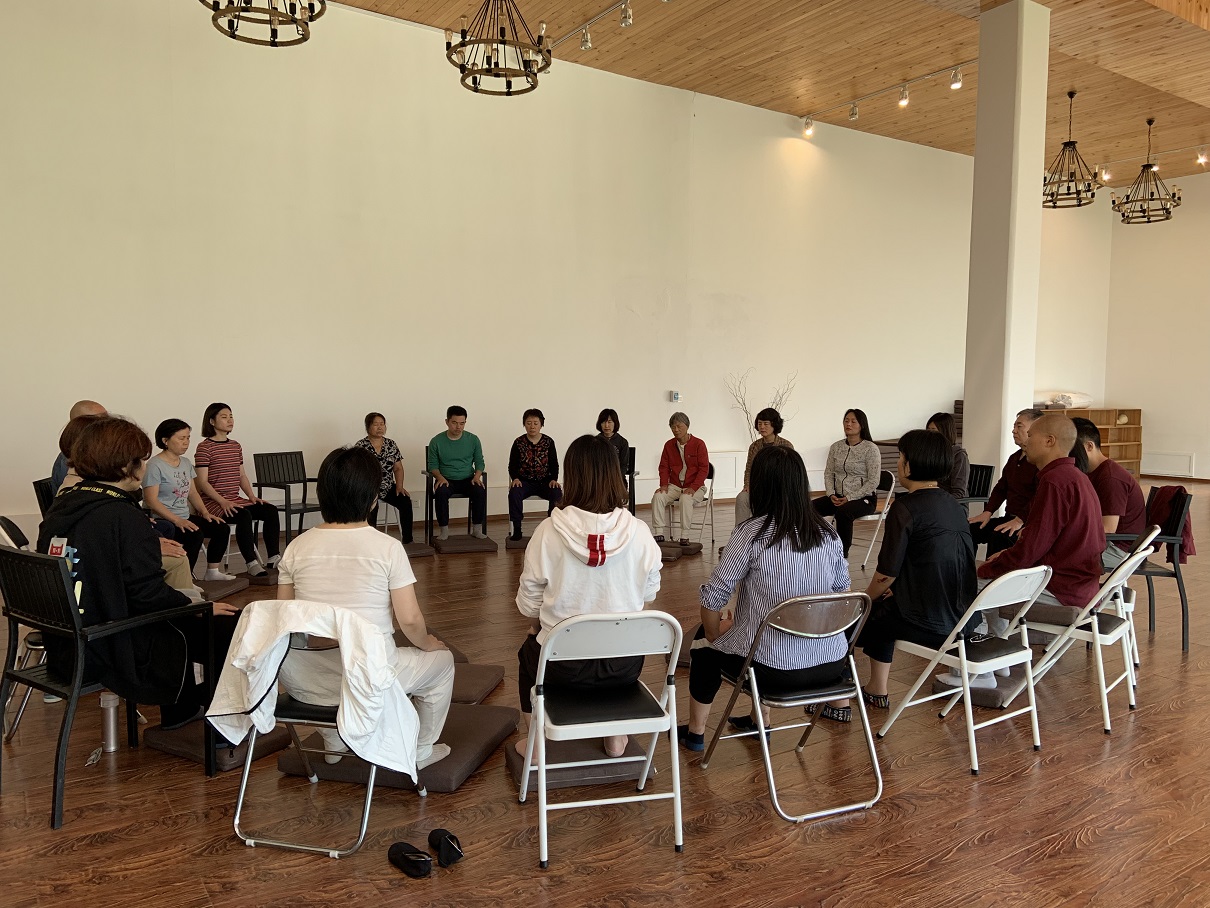
Oct. 2019, Beijing, 5-day workshop

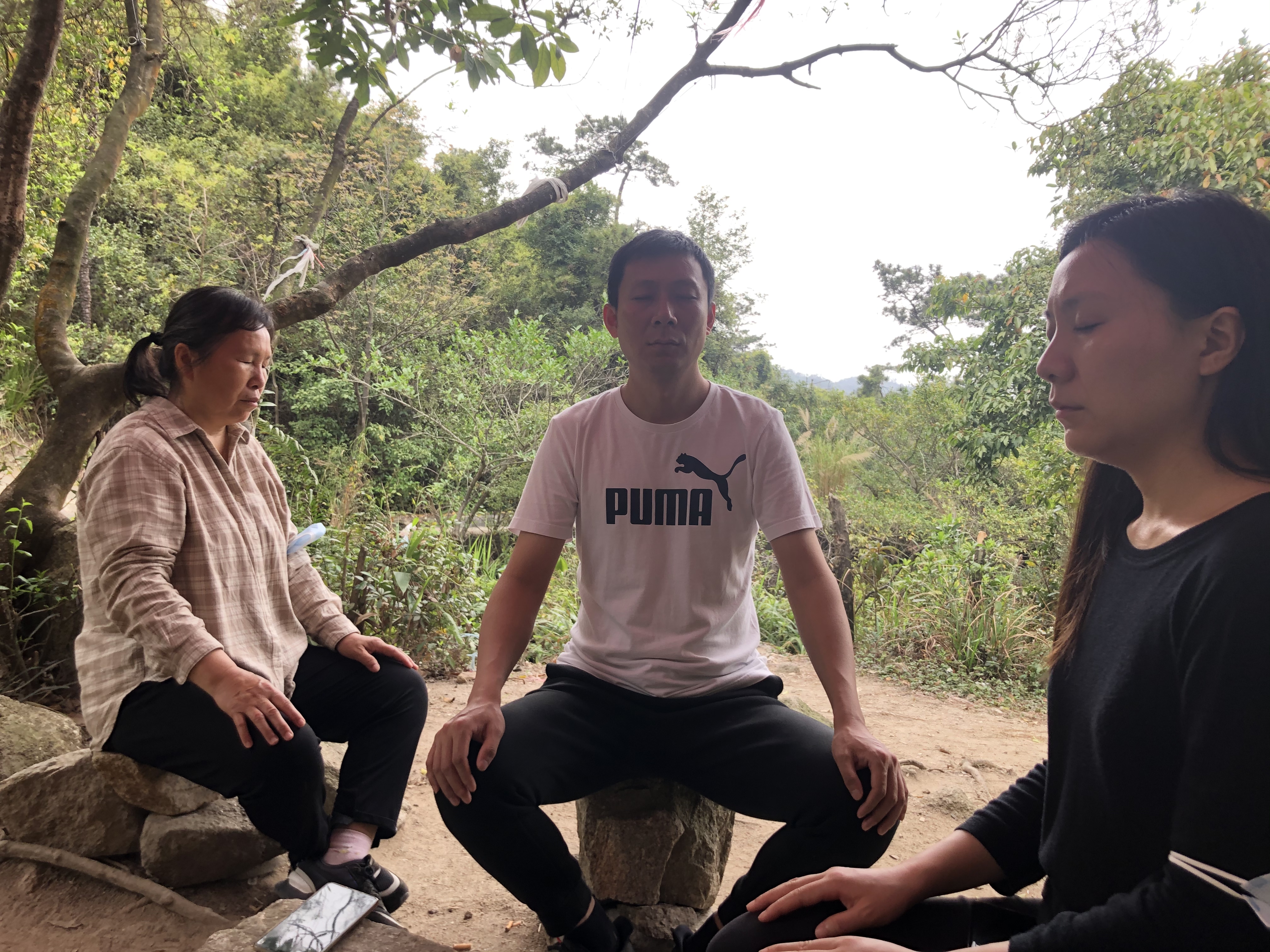
March 2023, Shenzhen, 7-day workshop

 meditationtaoist