- The Social and Cultural Background of Meditation in China
- My Journey into Meditation
- Features of the Integrative Approach of Meditation
- Meditation as Bridge between Different Traditions of Wisdom, Science and Philosophy
- Photos from Meditation Courses, Workshops and Retreats I have Organized and Guided
- Feedback from Participants
- The Social and Cultural Background of Meditation in China
As mentioned at the website of the United Nations, meditation dates back to 5000 BCE and the practice has ties to all great traditions, including that of China. Different types of meditation have been developed in different traditions, which respectively correspond with the views of life and cosmos of those traditions. In this sense, we can say philosophical pondering by itself is also a form of meditation which dates back to ancient Greek. As with the other traditions of meditation, it aims to achieve calm, clarity, balance and liberation from sufferings, while focusing more on knowing than becoming.
Taoism, Confucianism and Buddhism in China traditionally have developed their respective approaches of meditation. However, as there is a big gap between the underlying philosophy of Taoism, Confucianism and Buddhism and the prevailing philosophy which is characteristic of physicalism, the practice of meditation has long been ignored in China, especially since mid-20th century.
In the end of the 20th century in China there was a massive movement of Qigong, a major approach of meditation based on Taoism, which soon went astray and caused a lot of social unrest. Accordingly the Government took measures against the Qigong movement. Since then Qigong and meditation have become much controversial in China. They are still widely practiced, but the public opinions have very divided positions on them.
2. My Journey into Meditation
Grown up in such a time in China, I had had no idea about Qigong or meditation until I was diagnosed to have lymphoma in 2012 after I had finished my PhD in law and started working as a lawyer for nearly one year. I believe my body has the capacity to heal itself, as it was obvious to me that the health crisis was caused by too much work and pressure in the past several years. At the advice of a friend I started to practice a type of Qigong meditation as introduced in a book. I soon experienced strong flow of Qi and its circulation in me which I had never experienced before, and the physical and mental benefits that come with it. I was greatly amazed and intuited that this could be the best solution for my health problem.
With my PhD research focusing on philosophy of law, which has to deal with the scientific nature of law, I have realized that scientific research is not about finding the absolute truth or final facts, but rather an endeavor to reach consensus, which cannot be finally achieved, but can be continuously developed. Accordingly, I decided that my practice of meditation should be in a scientific and rational way. I should consult all the traditional wisdoms and the relevant findings in science and philosophy and meanwhile test them through the practice of meditation. That is, they should be evaluated according to their relevance to my experience.
In this way my research in the past 13 years has extended from Taoism, Buddhism and Confucianism to traditional Chinese medicine, psychology, neurology, biology, quantum physics, science of complexity, science of consciousness, etc., and to philosophy, esp. anthroposophy as founded by Rudolf Steiner (1861-1925) and process philosophy as founded by Alfred N. Whitehead (1861-1947). At the same time my experience of Qi and its circulation continuously intensifies itself. My lymphoma has never deteriorated and I have also recovered from some other chronic problems including atrophic gastritis, ankylosing spondylitis, prostatitis, etc., without using any medicine.
Since 2014 I have started to teach meditation to people with physical and mental problems, including cancer patients. In this course a systematic approach of meditation which is based on the cosmological framework of Taoism and Confucianism and integrates the other traditional wisdoms as well as science and philosophy is developed. In Aug. 2026, my book “The Power of Stillness: The Philosophy, Methods and Practice of Meditation”, which systematically introduces this integrative approach of meditation was published in Chinese.
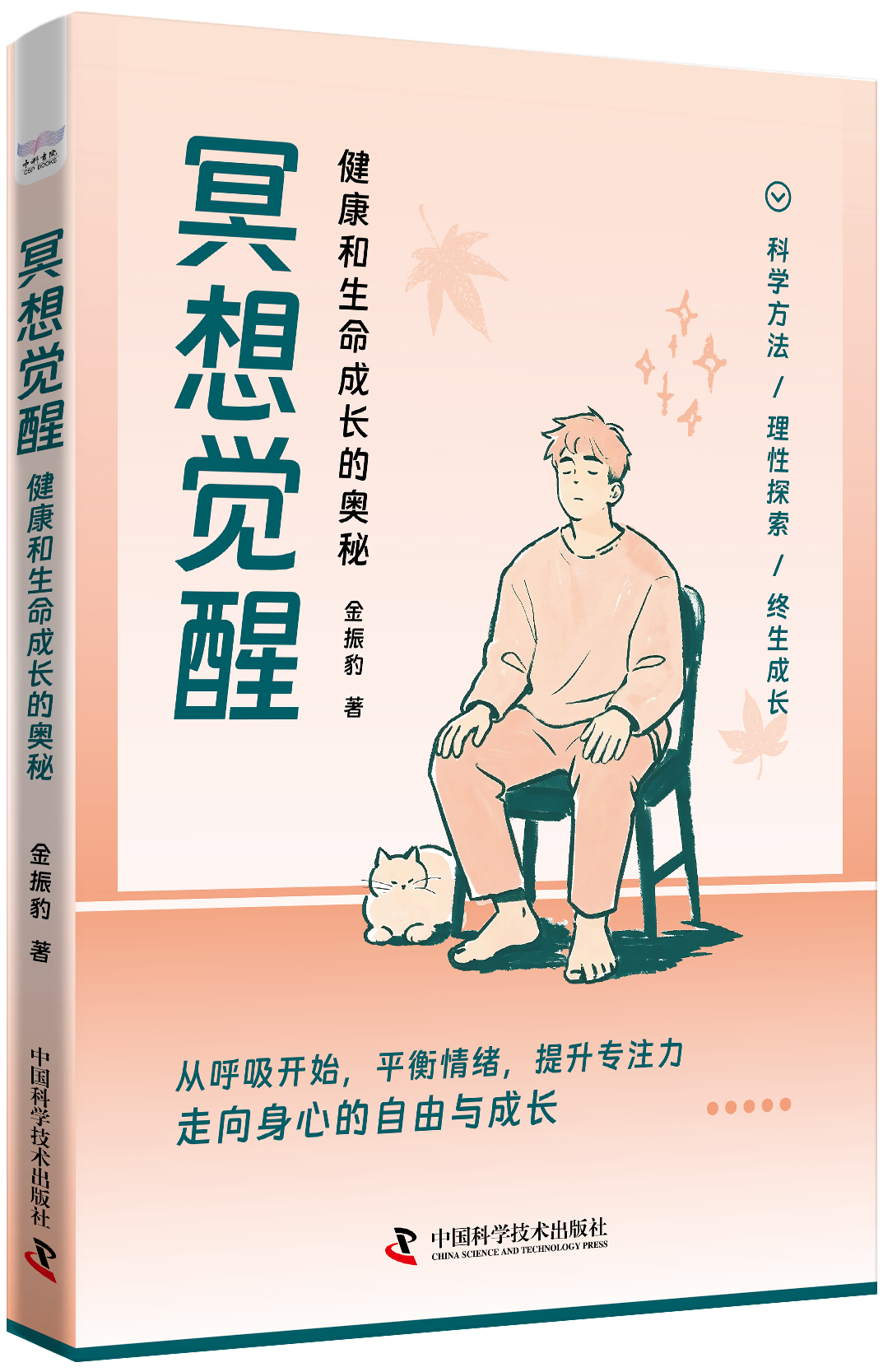
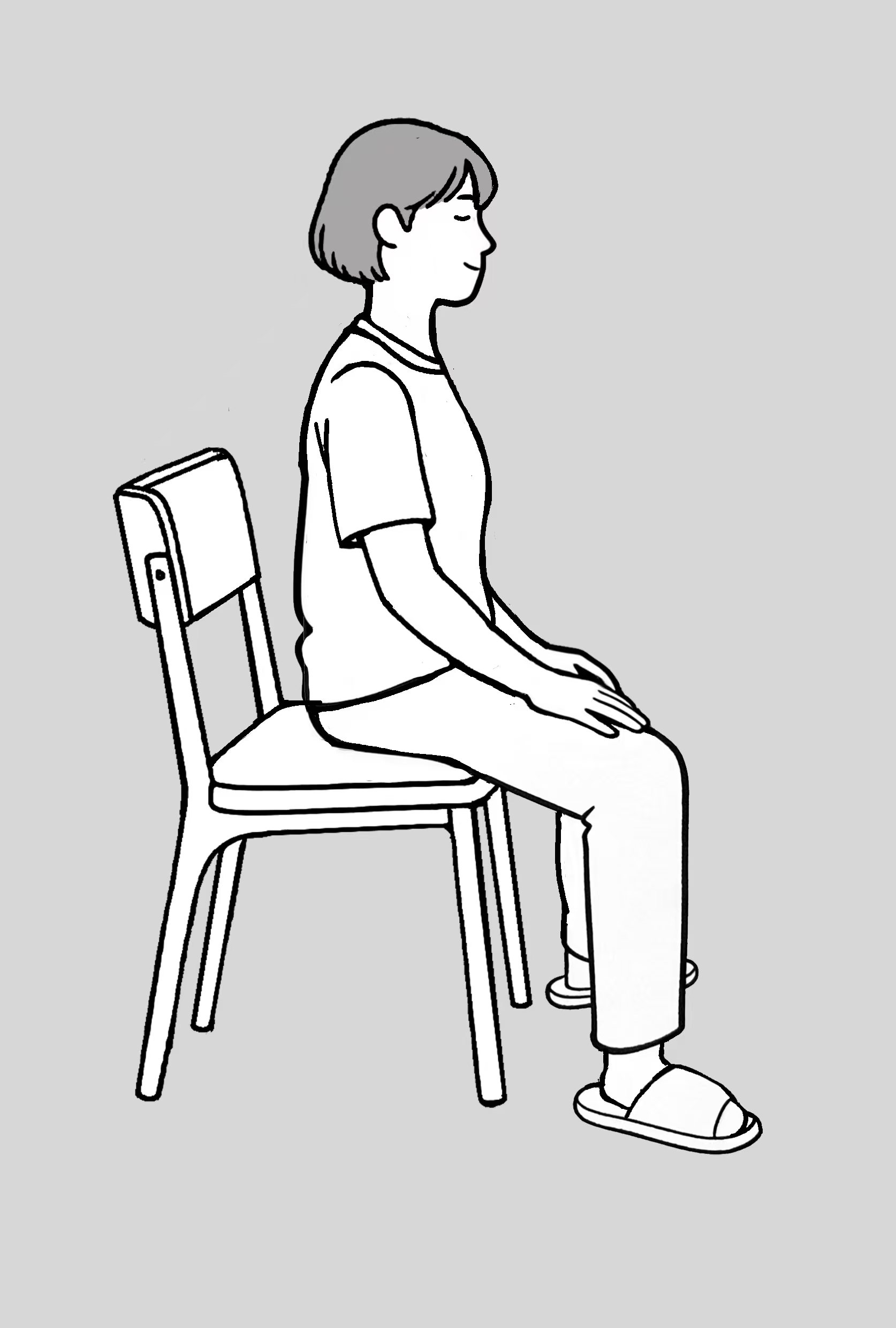
This approach combines sitting meditation and moving meditation, including walking, jogging, Taiji and some other traditional movements, like Five-animal Exercise and Baduanjin Qigong. With sitting meditation, the lotus position is not necessary. Sitting on a chair is recommended as the basic posture of meditation.
It proves that this integrative approach of meditation focusing on the flow and circulation of Qi is very helpful in improving one’s physical and mental condition in general and has very positive effect upon the healing of physical and mental problems, including traumatic experience, depression, anxiety, insomnia, various types of pain, gastrointestinal disorders, cardiovascular disorders, etc., as well as various types of cancers.
Through deepening experience of the flow and circulation of Qi, one understands how body, emotion and mind affect each other, how their interconnection can be fostered in a rational and reliable way and how to achieve a lifelong development of one’s personality, while at the same time one understands the interconnectedness between oneself and the family, the community, the tradition and the nature, and learns how to find balance between them.
The feedback of some practitioners who I have instructed are listed below.
3. Features of the Integrative Approach of Meditation
The most important features of this approach of meditation are its focus on the experience of Qi and its circulation and its philosophical basis.
The experience of Qi and its circulation, which has a particular pattern, that is, downward in the front and upward in the back, lies in the core of the Taoist philosophy.
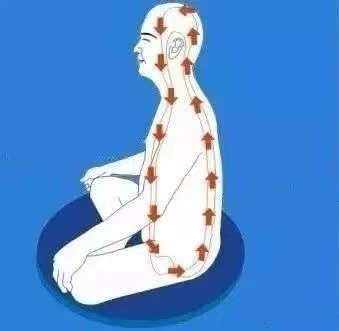
Ch. 42 of Tao Te Ching says, “Tao begets One, One begets Two, Two begets Three and Three begets myriad of things. Myriad of things carry with them Yin and Yang and are mediated into harmony through the flow of Qi.” This paragraph introduces the Taoist understanding of the Cosmos, the life and their oneness in a very concise way. However, this understanding does not remain as philosophical speculation or belief, but can be directly experienced and verified in an embodied way through the practice of meditation. Qi, which is the movement of Tao as experienced, is the basis of life and health. When restored and intensified through the practice of meditation, it leads to revitalization of our life, natural healing of various types of health problems and most probably, the continuous development of life.
Philosophically it can be compared with similar concepts in the other traditions, like consciousness in Buddhism, prana in Hinduism, Holy Spirit in Christianity, Pneuma in ancient Greek, etc. Its circulation indicates the relationship between the body and the mind, the matter and the consciousness, the actuality and the potential. Therefore, the experience of Qi provides a good basis upon which a meaningful dialogue between different traditions can occur.
The description of Qi in Taoism also very much aligns with some of the most sophisticated philosophies of our time. For example, process philosophy proposes that the final real things of which the world is made up are drops of experience, or “actual entities” in its terminology. Actual entities have physical pole and mental pole. Prof. Harald Atmanspacher, an emeritus senior scientist at Collegium Helveticum, ETH Zurich and the University of Zurich, proposes dual-aspect monism as an alternative to other positions, mainly dualism, physicalism and idealism, for the understanding of consciousness and its place in nature in his book “Dual-aspect Monism and the Deep Structure of Meaning (2022)”. According to this position, the mental and the physical are two aspects of one underlying undivided reality that is psychophysically neutral.
It’s important to interpret the experience of Qi in a philosophical way, meanwhile have its effect tested in a scientific way, so that the experience of Qi can be recognized, rationalized, cultivated and continuously intensified.
4. Meditation as a Bridge between Different Traditions of Wisdom, Science and Philosophy
Meditation is not simply for relaxation, cultivation of concentration or healing. Traditionally it’s for complete liberation from suffering, full development of human potential, union with the divinity, or exploration into the ultimate nature of life and cosmos. All these goals arise from the deepest nature of humanity. They are still valid and have become even more urgent with converging ecological, technological, social, spiritual, and geopolitical crises in our time, including the challenges posed by an aging population and the ever-fast development of AI.
Therefore we need the ongoing dialogue and collaboration between all traditional wisdoms, science and philosophy so that a more complete and integrative understanding of humanity and the cosmos can be developed. Accordingly the practice of meditation can be regarded as the practice of philosophy, so that philosophical speculation can be directly tested through personal experience and lead to continuous transformation of the state of consciousness, including the physical dimension and the mental dimension.
That means, the practice of meditation would no longer be limited to temples, monasteries, meditation centers and commercial courses, but can be integrated into the curriculum of schools, colleges and universities and be organized in local communities. It will also increase the interest and respect of a society in the other traditions of wisdom and their ways of living and thinking. Meanwhile the interest in science and philosophy, as well as art, compassion and care for socially vulnerable groups will be recognized and fostered in a natural way.
Since this year I have been admitted as a member of the World Meditation Day Committee and have had the chance to attend the symposiums held by WMDC in Seoul and in Rome, where I could further deepen my understandings of meditation through communication with masters of meditation from the other traditions and scholars in related fields of science and share the integrative approach of meditation as a representative of the Taoist and Confucian tradition. I’m also entrusted by WMDC to serve as a project coordinator and facilitator in the drafting of an AI + meditation Whitepaper through the collaboration between Shanghai AI Research Institute, masters of different traditions and scholars.
I believe that the further development or even survival of human civilization is dependent upon a profound breakthrough in human’s self-understanding. I’m glad I could participate in this meaningful process and contribute to it as a mediator between the different traditions of wisdom, especially those of the East and the West. For that purpose I’m grateful that I had had the health crisis 14 years ago, which has initiated an adventurous, while alchemical journey for me.
4. Photos from Meditation Courses, Workshops and Retreats I have Organized and Guided
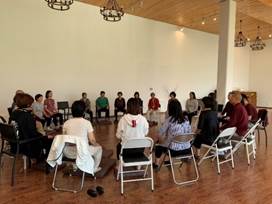
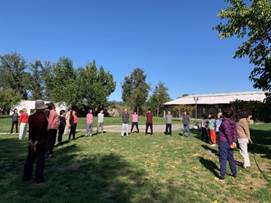
(a 5-day meditation retreat held in Beijing, 2019)
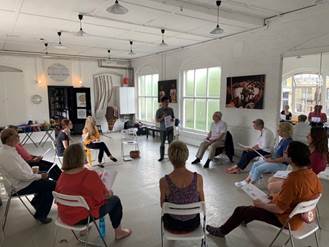
(a 3-day meditation retreat held in London in 2019)
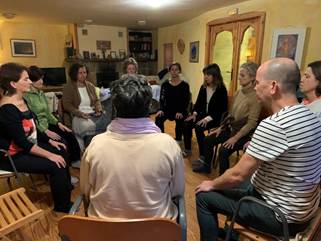
(a 3-day meditation retreat held in Spain, 2019)

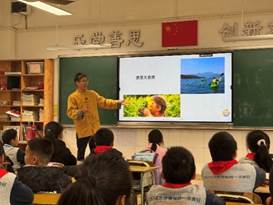
(Introducing meditation in a primary school in Guangdong Province, 2024)
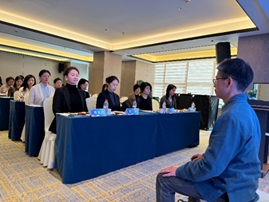
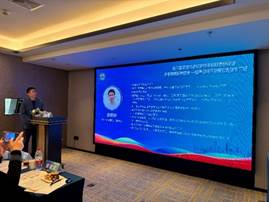
(introducing meditation at a conference on geriatric nursing in Shenzhen, 2024)
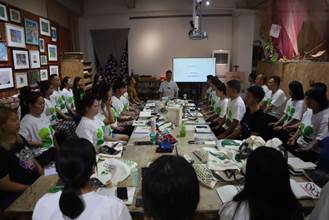
(Guiding meditation at a 5-day non-profit program supporting teachers of fine art in public schools of undeveloped areas in China, 2024)
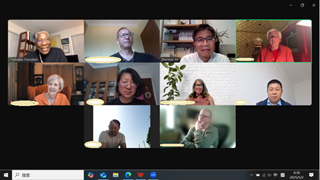
(a 10 session online workshop titled “Universal Connections as Qi Cultivation” co-designed and co-guided by Rev. Dr. Thandeka, a US theologian and philosopher and me for 8 participants from US and China, 2025 , each session 2 hours)
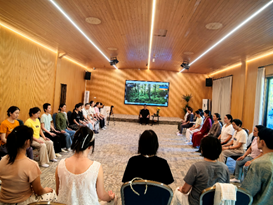
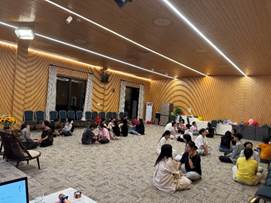
(a 2-day meditation retreat in Shenzhen, 2025)
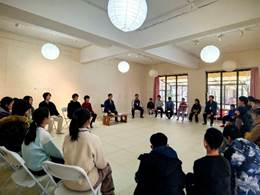
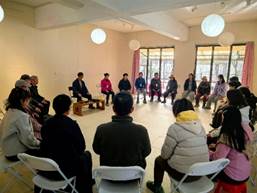
(guiding meditation for parents and children at an 8-day winter camp in Yunnan, 2026)
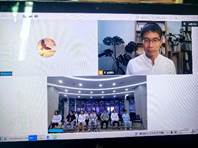
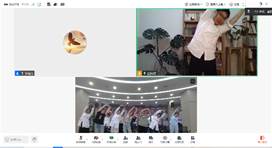
(a 9-session online meditation for around 10 doctors and nurses in a hospital in Shanghai, 2026, each session 40 minutes)
5. Feedback from participants
- Janaina from Brazil, Visual Artist, 26 years old, attended a 3-day meditation workshop in 2016
When Leo (Dr. Zhenbao Jin) told us about a meditation workshop in his meditation center, I got really interested and curious about how it would be. It seemed like a good idea, as I am a very anxious person, always in a hurry with my work and studies. Furthermore, it would be a great opportunity to know a little bit more about Chinese culture, one of my main goals in my trip to the country.
When we first came to the center, it was afternoon and we were supposed to have dinner together. After the dinner, Leo suggested us to have a small training of meditation for twenty minutes, just so we would have a first contact with it. He taught us the basic rule of breathing, explaining us that we had to focus on the breathing out. At the beginning, I felt really insecure and apprehensive, especially because I am a worrywart, always concerned about several things at once. For me, it is hard to be calm and to concentrate in myself, in my interior, in my own body and mind.
As the minutes passed, I started to get calmer. It is really difficult to explain what I felt in these first twenty minutes of meditation. Initially, I felt really hot and my hands started to sweat a lot. Later, I forgot these sensations, and I felt much more comfortable and self-confident. An immediate response of my body was to salivate more than usual, and this symptom persists until now. Also, I felt my mouth stretched, specially my jaws. It seemed like something was happening with my body, but I couldn’t explain in words what it was. I can assure, however, it was a good sensation. After this first session, we have made some stretching together. In this moment, I realized my body was absolutely out of shape. There were some stretching positions I couldn’t do very well, and it was hard to maintain in the same way for long time. Last year was so hectic, I let all physical activities aside.
On the day that followed, we started in the morning with a twenty-minute session of meditation. This second time was much stronger than the first and little by little I started to feel the energy flowing in my body. It was curious that when I told the group how I felt the flow of energy, Leo said it was the first time he found someone like me: the energy starts to flow from my neck, going down my spine to my legs, and after it goes up to my belly and to chest and arms. After this session, we have made the same stretching again, and step by step I felt my body more flexible. With practice, as time passed, it was much easier to achieve and maintain the stretching positions I found hard in the beginning.
The most interesting thing for me was that in the end of the day, I felt my posture much better and it was very easy to get straight. In the past years, I had problems of bad posture. I’d done many years of physiotherapy but keeping a good posture has always been a trouble for me. Now, I realize meditation is the only practice that really helps me to maintain a good body posture. This made me think much about the “western” culture, in which I had been educated: in all of those years, I had been concerned with strengthening the muscles of my back, as I was taught that by doing so I could improve my posture.
After the workshop, I learned to see things under another perspective, and now I see that focusing on energy helps me to understand better my own body and how it works. For me, it was very interesting to see the difference of cultures during the workshop. This experience made me more conscious about aspects of my education I had never realized before.
As the days passed, I started to feel different sensations about floating energy and my capacity of concentration improved substantially. I felt less and less stressful with life in general. It was a really good experience, one of the most remarkable I had in China. I could learn to deal better with my own body and mind. Besides, I could get in touch with Chinese cultures, religions and philosophies. I wish I can learn more and more about this country and its culture, which is so great and rich in all its diversity. I am very grateful to have had the opportunity to participate in this workshop and I am sure I will take this experience for the rest of my life.
- Douglas from UK, 33 years old, attended a 3-day meditation workshop in 2019
I had been practicing meditation for some years before meeting Leo (Dr. Jin), I had been practicing in the Buddhist way, and I wanted to learn the Taoist way. I found Leo’s method very easy, natural and helpful. I agree with his opinions about the difference between Buddhist and Taoist meditation. So for me the course helped find a way of meditation that can heal me. On the first session I could feel the energy moving to where It needs to go, and I could sense my thoughts and emotions moving with the current of energy. With each session I found the flow was stronger. Leo’s teachings are very simple and straight forward, it is obvious that he has came up with his own technique. It is fast and easy to learn from him as he embodies what he teaches. Also the course was held in beautiful scenery and I felt more enthusiastic about physical exercise and jogging than usual. I still feel this way since finishing the course.
I have been practicing his way of meditation ever since and I can see that it is effecting me and I am confident I can heal blocks in my body and mind with this practice. It was also a great Chinese cultural experience, as I live in a modern Chinese city, and this is the kind of wisdom that I wanted to learn when I chose to live here. I think this course would be very good for a beginner as you can get a lot of results without all the discipline and hard work that is often taught with other meditation styles.
- Kevin, 51 years old, entrepreneur, attended the 10-session online “Universal Connections as Qi Cultivation” guided by Rev. Dr. Thandeka and Dr. Zhenbao Jin in 2025
It’s a great experience to join the universal connections Qi cultivation courses organized and led by Dr. Zhenbao and Dr. Thandeka.
I understood how Qi flows inside my body as the form of energy and how we are connected with the rest of the universe. I learned the methods to get into the peace state and the ways to discern inwardly to find the core of my true self. With each breath accompanied with swelling and shrinking of the belly, I can feel the circulation of Qi goes through the vessels in my body freely, so rise the energy and power and courage and wisdom and health . Most importantly, such practice can’t be done without love, only love to the world can lead us to better status.
I’m also very thankful to God of giving me such a wonderful opportunity to make so many friends at the class.
- Klara, 52, software engineer, lung cancer State IV, written reports after having practiced meditation for 7 months starting from 2022, translated into English by Dr. Jin.
“In the evening of Mar. 8, 2022, when I started to do meditation, I soon felt that Qi, which normally flew from the tailbone upwards along the spine and stopped at the back neck, went further upward to the back head and flew into the nostrils, then it slowly went down the throat and reached the lower belly.
After that I lost the control of my breathing. The flow of Qi started to take control of the pace of my breathing automatically. It seemed as if I no longer needed breathing. With each out-breathing, Qi flew into the belly and with each in-breathing, Qi flew into the brain. Qi flew throughout the whole body at the rhythm of breathing, as if the whole body was breathing.
After the meditation, I felt very relaxed, energetic and joyful. Walking upstairs was as easy as walking on the ground for me.”
On Jan. 12, 2022, she reported: “Yesterday’s CT scan results came back: one nodule in my right lung has shrunk from 2.3 × 1.7 cm to 1.7 × 1.2 cm. There have been no changes in other parts of the lung. Compared with previous bone‑scan findings, no new cancerous lesions have been detected. Existing cancerous lesions have either shrunk, become undetectable, or shown reduced tracer uptake.”
On Jan. 13, 2023, she reported: “My oncologist was quite surprised by my latest test results today. She said what I’ve been doing is working extremely well for me. I should quit my job and teach people this. Alternatively, she could hire me to teach meditation to people at the hospital.”
- Ms. Wang, 70 years old, retired teacher, oral sharing in Chinese recorded in January, 2026, transcribed and translated into English by Dr. Jin.
I started practice of meditation in May, 2024, following Dr. Jin’s online course. It’s nearly 21 months by now. My benefits from the practice are twofold, physically and mentally. Physically, I had an 8‑mm pulmonary nodule detected in a physical examination before I started meditation. During this year’s physical check‑up, it shrank down to 5 millimeters. As for colon polyps, two were found in last year’s exam. When I had my check‑up this year, one of them had disappeared. That disappearance was quite remarkable. One day I was meditating on a bus, when suddenly I felt a sharp, stabbing pain in my lower abdomen, below the navel. I even wondered at the time whether the polyp might have dislodged. Roughly a week later I went for my physical exam, and one of the two colon polyps was gone. The one that vanished was exactly the one located in the sigmoid colon — right below my navel, where I had felt that pain. All of this is documented in my medical reports.
Another improvement relates to my eye floaters. At one point last year, the floaters went away entirely, and I was overjoyed. Unfortunately, I have been spending too much time on my phone at night lately, and they have come back. Still, when I visited doctors about this condition, they all said there was no real treatment for floaters and I would simply have to live with them. Yet they did disappear for a while, and now they are not severe. I believe that with more meditation practice, they should clear up again.
Psychologically, after over a year of meditation practice, I feel my cognition has improved and my emotions are far more stable. Most importantly, I have learned to reflect, which allows me to hold space for other people’s emotions.
Let me give you an example. I look after my grandson, who is in junior high school and going through adolescence. He can act very unreasonable at times. When he comes home from school, he throws his schoolbag on the floor, kicks off his shoes and socks, and leaves them lying around, creating quite a stink. When I tell him not to leave them scattered about, he replies, “Don’t worry about it. I will tidy them up myself. I didn’t ask you to do it.” He also skips breakfast in the morning. When I urge him to eat breakfast because skipping it harms the stomach, he retorts, “It’s my stomach that hurts, not yours. Why do you have to meddle so much?”
How would I have reacted in the past? I would certainly have forced him to pick up his shoes and socks and argued with him about who was right and who was wrong. That was exactly how I treated my own son back then — whoever was in the right should get their way. Inevitably, that would lead to head‑on confrontation. Neither of us would back down, and everything would end up in total chaos.
But after all this time meditating, I understand what Teacher Jin talks about: when you are not meditating, your energy stays trapped up high and cannot sink down. Your mind becomes muddled, without clear thinking. In that state, you can easily act impulsively. Through meditation, your energy sinks inward, and your mind becomes clearer and calmer. Without meditation, I would quickly grow angry and think, “You cannot behave like this.” Now, after meditating, I ask myself: Why is he acting this way? What are the underlying causes?
He is going through adolescence, just as I once went through menopause. I know that both adolescence and menopause can bring wildly erratic moods; I remember what that was like for me. So I have adopted a different approach now. I give him one gentle reminder and then say nothing more. First, I hold space for his emotions and accept them. Later, once his mood has settled, I bring the matter up gently again and say, “Please tidy these things up. If you won’t, I will do it for you.” Still, the issue cannot simply be brushed aside. At an appropriate moment, we talk it through properly so that boundaries are clear. This way, we avoid arguments and maintain harmony. I truly credit this shift to meditation. Just as Teacher Jin says, when your energy sinks, you can genuinely hold everything. This represents important psychological growth for me, and it has brought enormous benefits to harmony within my family.
Overall, I have three key takeaways. First, consistency matters. There was a period when I was very busy and barely practiced meditation. During that time, my physical condition declined and my mood suffered. Once I resumed consistent practice, things gradually got better again.
Second, as Teacher Jin has said, real progress comes from both input and output. Simply sitting passively without reflection may yield little benefit. Input means studying and reading to absorb knowledge. Output means sharing what you have learned. Writing helps, though I am lazy and rarely write. Even so, I can confirm firsthand that sharing and output make a real difference.
Third, practicing meditation alone is not as powerful as group practice. When I studied under you, you organized us into five‑person practice groups. Our group has kept meeting right up to this day. Following the input‑output principle you taught us, we keep learning together. Our sessions start with roughly ten minutes of sharing and discussion, followed by forty minutes of group meditation, and then we share our meditation experiences and insights from our studies. People share very grounded, real‑life observations, including everyday family‑life trivialities. I have benefited immensely from this.
At my age, it is easy to become entrenched in one’s own views, the kind of stubbornness common among older adults. Within our practice group, others point out my blind spots, and that helps me recognize my own patterns. I gain self‑awareness and keep working to improve. Group practice with several people is truly valuable.
I am grateful to Teacher Jin for guiding me into meditation, which has benefited me for my whole life.
- Ryan, high school student, 16 years old, attended a 7-day meditation retreat in Aug. 2024. Oral feedback transcribed and translated into English by Dr. Jin.
I’m a high‑school student. After school broke for summer vacation, I spent the first week or two at home by myself. Then throughout July, I was attending training courses outside. Once those July classes ended, following my old pattern, I would have just gone all‑out playing for the whole of August before school started again.
Yet something felt missing. Even though I was learning things, I would easily get overwhelmed with anxiety and slip into extreme states. I would either study relentlessly, or completely burn out and slack off. This pattern goes all the way back to my first year of high school, even to Grade Nine. I have never really found a healthy balance in my studies and daily life; everything feels chaotic.
I realised that if I wanted to break this cycle, I could not keep repeating my old habits of cramming hard and then binge‑relaxing. That pattern is not sustainable for my upcoming second year of high school. It takes a toll on my physical health, and even when I push myself to the breaking point, the results are often unsatisfying. That is why I decided to try this meditation retreat. My father meditates at home, so I was curious to give it a go. He found this programme, and I signed up for the seven‑day retreat.
My experience over these seven days: from day one to day two, I felt really agitated. It was hot, and sitting there brought me no special sensations; I was just forcing myself to sit. I kept thinking that I could be doing something more productive — doing homework, memorising vocabulary, anything would feel better than just sitting there. I was really frustrated.
Around days three, four and five, my mind quietened down. I was neither particularly irritated nor especially joyful; I simply sat. Then on day six or seven, yesterday actually, I suddenly had a sense of coming back into my own body. It was an extraordinary feeling. My mind used to race non‑stop, preoccupied with assignments, deadlines for various activities and countless other thoughts, constantly carried away by my own thinking. Starting around day six, I truly began to feel my body sitting here: my feet, my hands, my whole physical self.
My dad had told me before that I might have this kind of present‑moment awareness, but back then I thought he was just talking nonsense, because I could not feel it at all. Now I have experienced it for myself, and it feels wonderful.
Secondly, my mind feels lighter, less heavy. Even though many thoughts still arise during meditation, most of them are light, pleasant, or dream‑like half‑sleep musings. Overall there is much less mental clutter and mental weight compared with before.
Thirdly, regarding sleep: I no longer need excessive sleep, and I do not suffer from constant drowsiness. Normally after lunch I would feel extremely sleepy. I would nap for one or two hours, wanting to keep sleeping on and on. Sometimes I would lie in bed from the afternoon all the way into the evening, and the whole day would slip away, yet I would still feel exhausted. After practising meditation, I am far less fatigued. I wake up naturally after a reasonable amount of rest. This is a remarkable shift.
Here are my reflections on meditation. I find the idea that meditation helps you build connection with the world very compelling, and to me it holds real truth. For me, it means reconnecting with my own body — not merely going through the motions of living, but living with conscious awareness. After this retreat, I no longer resist studying. Instead, I have built a healthier relationship with it. My body and mind work together, and I can even find enjoyment in the learning process.
I also have gained new appreciation for traditional Chinese culture. I used to hold very superficial, stereotyped views on Confucianism and Taoism. I only knew the concepts in theory, without experiencing their subtle wisdom firsthand. Ancient thinkers really had profound insights, and it is worthwhile to draw on and embody that wisdom as I move toward the future.
I also used to have a shallow stereotype about meditation: just sitting there waiting for some great insight to dawn on me. I tended to romanticise it and link it to religion. Direct personal practice has changed that view. Meditation has scientific grounding; its effects are tangible. I can physically feel the movement of inner energy within me.
Another point is that meditation cannot rely solely on quiet sitting. Movement and stillness need to complement each other. I have experienced how powerful that combination can be.
To sum up: this balanced state is sustainable. I intend to keep up meditation, physical exercise, and intellectual exploration, integrating them into my regular school life and daily routine. I want to stay consciously aware of my body and my surroundings. These seven days have proven to me that this practice works. I hope I can keep it going and make real progress in my studies.
- Miss Wang, 21 years old, attended a 7 day meditation retreat in Aug. 2025. Oral feedback transcribed and translated into English by Dr. Jin.
I have gained so much from these seven‑day meditation retreat and have also found my life direction.
Physically, past traumas left my tailbone unable to hold itself upright or provide proper support. Yet on the very first day of meditation, I became aware of it. It shifted from that position [gesturing roughly at a 90‑degree angle with a hand] into an upright posture and regained its supporting capacity.
In the past, socialising with others exhausted me. Talking to people, being around others — everything felt draining, and I kept wondering why living had to be so tiring. After these seven days of meditation, I find human interaction comes naturally. I no longer need to rehearse conversations or mentally draft my remarks in advance. I simply speak what is on my mind. This has made my interpersonal relationships far lighter and more spontaneous.
To those who bullied me at school and those who mistreated me: what you did was wrong. I am no longer the person I used to be. I have inner strength now. Even though I forgive you, your behaviour was still unacceptable. I hope you will never hurt other people again. I feel grounded and powerful, completely renewed.
I have also learned a great deal. For instance, meditation allows rationality to reside in the mind and sensibility to settle in the body, where they reinforce one another in a continuous cycle. When rationality resides in the mind, we stay calmer and more reasonable when resolving conflicts in daily life. When sensibility settles in the body, we learn to listen to ourselves with kindness — tuning into physical sensations such as pain, itchiness, soreness and tightness, and attending to our body with compassion.
These seven days of sitting practice have been very kind to my nervous system. Communicating with others effortlessly without pre‑planning every word has helped my nervous system relax deeply.
I also picked up breathing techniques. I used to find mountain climbing extremely tiring. But on day one I learned the method Teacher Jin taught that makes climbing far less exhausting: breathing in for one count and breathing out for three counts. Using this rhythm, I reached destinations quickly and easily, without heavy panting or needing to stop for rest.
I felt the genuine care from Teacher Lifang (Dr. Jin’s partner) and Teacher Jin. Teacher Lifang guided us through aromatherapy with plant essential oils. One day, after inhaling the essential oil and sitting in meditation, my mind stayed calmly joyful. It felt like a quiet afternoon after a midday rest back in my school years, and that moment made me grow fond of meditation.
These seven days have boosted my self‑confidence. Mental space has opened up in my mind to hold more new and meaningful things. Old mental clutter has been cleared away, making room for positive new experiences.
Everything I have learned reminds me how much life still lies ahead and how much knowledge remains to be explored, which has ignited my curiosity for learning and reawakened my passion for life.
I see myself walking along the path of meditation in the future: first healing myself, and then supporting more other people, so I can realise my self‑worth. This worth is not defined by others; it comes from within and is self‑determined.
Over these seven days, my senses — eyes, ears, nose, tongue and body — have all become more open. I can hear sounds more vividly, smell scents more clearly, and express myself more naturally and fluently.
I believe everyone can learn to love themselves. To love oneself is the beginning of a lifelong romance. This meditation retreat has lifted my confusion. I can glimpse hope for the future, and I have found what I want to devote myself to.

